عالية التردد مقابل. التردد المتوسط مقابل. أفران الحث بتردد الطاقة: الاختلافات الأساسية وسيناريوهات التطبيق
يكمن الاختلاف الأساسي بين هذه الأنواع الثلاثة من أفران الحث في تردد التشغيل. الفرق في التردد يحدد بشكل مباشر عمق “تأثير الجلد” التيار داخل المعدن وحجم قوة التحريك الكهرومغناطيسي, مما يؤدي إلى اختلافات كبيرة للغاية في خصائص ذوبانها وسيناريوهات التطبيق.
فيما يلي تحليل مفصل للاختلافات الأساسية وسيناريوهات التطبيق:
مصفوفة مقارنة الاختلافات الأساسية
| ميزة | تردد الطاقة | التردد المتوسط | عالية التردد |
| تردد التشغيل | 50هرتز أو 60 هرتز (تردد التيار الكهربائي) | 150هرتز – 10كيلو هرتز | 10كيلو هرتز – 300كيلو هرتز وما فوق |
| عمق الاختراق الحالي | عميق | واسطة | ضحلة للغاية (السطح فقط) |
| قوة التحريك الكهرومغناطيسي | قوي للغاية | معتدل | ضعيف |
| طريقة البدء | يتطلب المعدن المنصهر المتبقي أو كتل البداية (لا يمكن أن تبدأ الباردة) | إمكانية البدء بالفرن البارد المباشر | إمكانية البدء بالفرن البارد المباشر |
| حجم المعدات | ضخمة | مدمج | صغير |
1. فرن الحث بتردد الطاقة: الحمولة الكبيرة “عقد بهيموث”
تستخدم أفران الحث بتردد الطاقة التيار المتردد 50 هرتز أو 60 هرتز مباشرة من شبكة الطاقة الصناعية دون الحاجة إلى أجهزة تحويل التردد.
- المزايا الأساسية: يضمن تأثير التحريك الكهرومغناطيسي المكثف تكوينًا معدنيًا ودرجة حرارة موحدة للغاية; بسبب عدم وجود خسائر تحويل التردد, الهيكل بسيط نسبيا ودائم.
- رئيسي القيود: لا يمكن البدء مباشرة من فرن بارد. بعد كل اغلاق, يجب الاحتفاظ بجزء من الحديد المنصهر في الفرن, أو يجب إضافة كتل البداية المخصصة لبدء التشغيل التالي; معدل تسخين أبطأ; انخفاض عامل الطاقة.
- سيناريوهات التطبيق: مناسبة للمسابك الكبيرة العاملة في الإنتاج المستمر. تستخدم في المقام الأول لصهر الحديد الزهر والمعادن غير الحديدية ذات الحمولة الكبيرة, وكذلك بمثابة أ “عقد الفرن” أو “فرن التكييف” في عمليات الذوبان المزدوج (على سبيل المثال, قبة فرن الحث المزدوج).
2. فرن الحث ذو التردد المتوسط: ال “العمود الفقري الشامل” من المسابك الحديثة
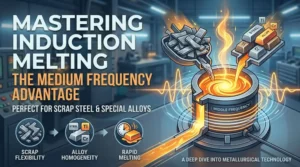
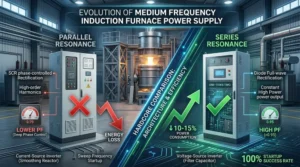
تستخدم أفران الحث متوسطة التردد تقنيات تحويل التردد, مثل سر (الثايرستور) أو IGBTs, لتحويل التيار المتردد ذو التردد الكهربائي إلى تيار متردد متوسط التردد. وهي حاليًا المعدات الأكثر استخدامًا على نطاق واسع في قطاعات الصب والتعدين الصناعية.
- المزايا الأساسية: يوازن بشكل مثالي بين كفاءة التسخين وتأثيرات التحريك. قادر على 100% بدء الفرن البارد المباشر, مما يجعلها مريحة للغاية لتفريغ موقد الفرن أو تبديل درجات الفولاذ; كثافة طاقة عالية, سرعة تسخين سريعة, والكفاءة الحرارية العالية; عملية مرنة.
- رئيسي القيود: يتطلب تكوينًا إضافيًا لخزانة إمداد الطاقة ذات التردد المتوسط, مما يجعل الاستثمار الأولي في المعدات أعلى قليلاً من الإعدادات التقليدية.
- سيناريوهات التطبيق: يغطي جميع متطلبات الصب التقليدية تقريبًا. تستخدم على نطاق واسع لصهر وعقد الفولاذ الكربوني, سبائك الصلب, فولاذ خاص, ومختلف المعادن غير الحديدية (نحاس, الألومنيوم, الزنك).
3. فرن الحث عالي التردد: ال “مشرط” للدقة والأسطح
يؤدي التردد العالي للغاية لأفران الحث عالية التردد إلى تركيز التيار بالكامل تقريبًا على الطبقة الخارجية للمعدن (تأثير الجلد المكثف).
- المزايا الأساسية: سرعة تسخين سريعة للغاية (يمكن استكمال تسخين السطح في غضون ثوان); الحد الأدنى من التأثير على الهيكل الداخلي لقطعة العمل, مما أدى إلى أكسدة محدودة للغاية وإزالة الكربنة.
- رئيسي القيود: عمق الاختراق الحالي ضحل جدًا, وقوة التحريك الكهرومغناطيسي ضعيفة للغاية, مما يجعلها غير قادرة على الذوبان الشامل لكميات كبيرة من المعدن.
- سيناريوهات التطبيق: يطبق بشكل رئيسي في التبريد السطحي للأجزاء المعدنية, المعالجة الحرارية الموضعية, واللحام عالي التردد (على سبيل المثال, أنابيب ملحومة عالية التردد). لأغراض الذوبان, ويقتصر بشكل صارم على إعداد كميات صغيرة من العينات في المختبرات, أو التكرير الجزئي للمعادن الثمينة مثل الذهب, فضة, والبلاتين.
توصيات موجزة
- إذا كنت بحاجة إلى تذوب بشكل مستمر نفس النوع من المعدن بكميات كبيرة, أو إذا كنت بحاجة إلى معدات حمل ذات سعة كبيرة, ال فرن الحث بتردد الطاقة يبقى الخيار التقليدي والاقتصادي.
- إذا كنت تعمل أ مسبك حديث لإدارة الأصناف المتعددة, دفعات صغيرة إلى متوسطة, في كثير من الأحيان تبديل أنواع السبائك, ويطالبون ببداية باردة عالية الكفاءة ومرنة, ال فرن الحث ذو التردد المتوسط هو الخيار الأمثل بلا منازع.
- إذا كان تركيزك على المعالجة الحرارية للأسطح المعدنية, أو التكرير الجزئي للمعادن الثمينة والاختبارات المعملية, يجب عليك الاستفادة من فرن الحث عالي التردد.