السلامة هي شريان الحياة للمسبك والنتيجة النهائية المطلقة لمديري المصانع وإدارتها. في محل الصهر, فحتى أدنى إهمال يمكن أن يتطور إلى كارثة لا رجعة فيها.
لمنع المشاكل قبل حدوثها, ويجب علينا إنشاء نظام صارم لإدارة السلامة يغطي المعايير التشغيلية, التحكم في المصدر, والاستجابة لحالات الطوارئ.
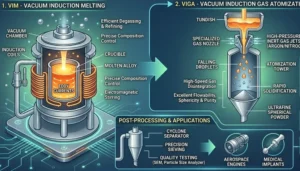
الملف ونظام التبريد للفرن التعريفي (هو مبين أعلاه) هشة للغاية تحت درجات الحرارة المرتفعة. أي فشل في الشحن أو التبريد بشكل غير صحيح يهدد بشكل مباشر سلامة المعدات والأفراد.
أنا. الخطوط والمعايير التشغيلية
“الغليان” (التموج العنيف وتناثر الحديد المنصهر) و “نفاد” (حرق الحديد المنصهر من خلال بطانة الفرن وتسربه) هي أفظع الحوادث في ورشة الصهر. يجب القضاء عليها من خلال الانضباط التشغيلي الصارم.
1. مبادئ شحن الفرن التعريفي
- جاف تمامًا: يجب أن تظل جميع المواد المشحونة المضافة إلى الفرن جافة. يجب خبز المواد الرطبة وتسخينها مسبقًا على منصة الفرن قبل دخولها إلى الفرن.
- منع “التجسير“: يُمنع منعًا باتًا تعلق القطع الكبيرة من المواد المشحونة عند فوهة الفرن. مرة واحدة “سد” يحدث, يسخن الحديد المنصهر في الأسفل ويتوسع, مما يجعلها عرضة للغاية لاختراق القشرة والتسبب في تناثرها بعنف (الغليان) أو حتى نفاد. بدس المتكررة والمراقبة إلزامية.
- الضوء أولا, الثقيلة في وقت لاحق: ضع قطعًا صغيرة من الخردة في الأسفل لحماية موقد الفرن, إضافة كتل صلبة ثقيلة في الأقسام الوسطى والسفلى, وإضافة الضوء, مواد رقيقة في الأعلى.
2. سلامة قياس درجة حرارة الحديد المنصهر
- تسخين مسبار درجة الحرارة: يجب تجفيف المزدوجة الحرارية جيدًا وتسخينها مسبقًا قبل إدخالها في الحديد المنصهر. إذا تم إدخال مسبار بارد أو رطب قليلا مباشرة في الحديد المنصهر ذو درجة الحرارة العالية, سوف تتسبب الرطوبة المتبخرة على الفور في حدوث انفجار موضعي للمعدن المنصهر.
- تحديد المواقع و معدات الوقاية الشخصية: يجب على المشغلين ارتداء ملابس واقية كاملة مقاومة للهب ودروع للوجه, والوقوف على الجانب (ليس مباشرة أمام فم الفرن) لقياس درجة الحرارة. يجب أن تكون الحركة “ثابت, دقيق, وبسرعة.”
3. معايير إمالة الفرن وصبه
- الحفرة الجافة والأرضية: قبل إمالة الفرن, ويجب التأكد من أن الحفرة أمام الفرن, المغرفة, وتكون منطقة الصب جافة تمامًا مع عدم وجود مياه راكدة. قطرة واحدة من الماء تتوسع 1,500 مرات على الفور في درجات حرارة عالية, وهو السبب الأكثر شيوعًا للانفجارات الكارثية في المسابك.
- فحص المعدات: تحقق مما إذا كان النظام الهيدروليكي مستقرًا وأن مرتكزات المغرفة آمنة قبل الإمالة. يجب أن يكون إجراء الإمالة سلسًا; ممنوع منعا باتا رفع أو خفض مفاجئ.
الثاني. إنشاء آلية تفتيش شاملة
حاويات مغلقة (مثل الاسطوانات الهيدروليكية, ممتصات الصدمات, وأنابيب الصلب مختومة) أو أن الخردة المعدنية المغطاة بالمياه والمختلطة بالخردة سوف تتحول إلى مادة مدمرة للغاية “القنابل” في الفرن عند درجات حرارة عالية.
إنشاء شامل “ثلاثة خطوط دفاع” آلية التفتيش:
1. تأمين مصدر المورد (خط الدفاع الأول):
يشمل “يمنع منعا باتا إدراج الحاويات المغلقة والمتفجرات” في عقد الشراء, تحديد تعويضات مقطوعة عالية للغاية (“حق النقض بضربة واحدة”). قم بإدراج الموردين الذين ينتهكون القاعدة بشكل متكرر في القائمة السوداء مباشرةً.
2. التفريغ والفرز المغناطيسي الفرز المزدوج (خط الدفاع الثاني):
يجب أن يتواجد ضابط سلامة متخصص “اقلب الكومة” والتفتيش عند تفريغ الخردة المعدنية في المصنع. عند استخدام ظرف كهرومغناطيسي للرفع, يجب على المشغل أن يتوقف في الهواء لبضع ثوان للتخلص من بعض الحطام, وإجراء فرز يدوي ثانوي أثناء التناثر. يمنع منعا باتا تخزين حمولة شاحنة كاملة مباشرة دون فرز.
3. ال “بطاقة الحياة أو الموت” قبل الشحن (خط الدفاع الثالث):
مدير الفرن هو الشخص الأول المسؤول. قبل إسقاط المواد في قادوس الشحن أو الفرن, يجب على مشغل الشحن فحص كل قطعة من الخردة المعدنية. يجب أن تكون الأنابيب أو الحاويات غير المحددة مغلقة من كلا الطرفين قطع مفتوحة أو مثقوبة بشعلة غاز قبل دخول الفرن; يجب فرز الخردة المعدنية مع الطلاء أو الشحوم وتسخينها مسبقًا.
ثالثا. خطة الاستجابة للطوارئ لمتجر الصهر
في حالة حدوث مفاجئة, انقطاع التيار الكهربائي أو المياه على نطاق واسع, سوف يتوقف دوران مياه التبريد في الفرن التعريفي على الفور. سوف تنتقل آلاف الدرجات من الحرارة المرتفعة داخل الفرن إلى الخارج بسرعة, حرق ملف الحث والتسبب في نفاذه أو حتى انفجاره.
فيما يلي سير العمل القياسي للاستجابة لحالات الطوارئ لانقطاع التيار الكهربائي/المياه:
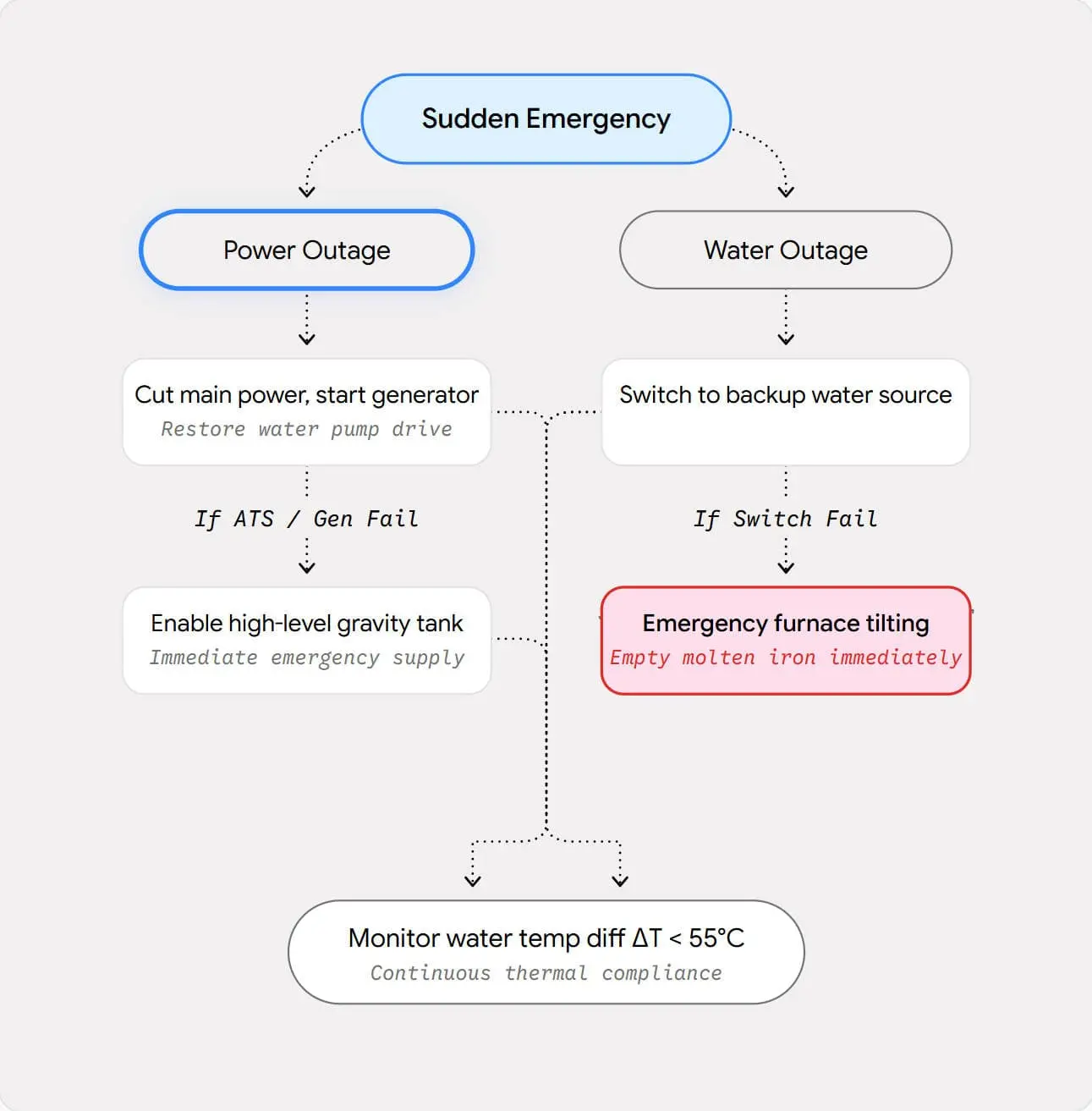
البصيرة الإدارية الأساسية: يعتمد نجاح خطة الطوارئ على ما إذا كان أ “حماية مزدوجة” (مولد الديزل الاحتياطي + خزان مياه ميكانيكي عالي الجاذبية) تم تكوينه في العمليات اليومية, وما إذا كان يتم اختبار هذين الجهازين بانتظام.
خطوات عملية الطوارئ التفصيلية هي كما يلي:
1. قطع الطاقة الرئيسية على الفور:الإجراء الأول المطلق في أي حالة。
في حالة انقطاع الماء أو الكهرباء, يجب أن تكون الخطوة الأولى هي قطع مصدر طاقة التسخين الرئيسي على الفور عن فرن الحث لوقف المزيد من إدخال الحرارة إلى الحديد المنصهر.
2. حماية جسم الفرن: الدفاع عن تداول مياه التبريد:يجب ألا يكون الملف بدون ماء أبدًا。
أثناء انقطاع التيار الكهربائي: قم بتشغيل مولد الديزل الاحتياطي على الفور لتشغيل مضخة مياه التبريد. إذا فشل المولد في البدء, افتح يدويًا صمام خزان مياه الطوارئ عالي المستوى يدويًا, استخدام الجاذبية للسماح بتدفق المياه عبر الملف واستنزافها (لا تعمم, استنزاف مباشرة), حتى تنخفض درجة حرارة الفرن إلى مستوى آمن.أثناء انقطاع المياه: قم بالتبديل فورًا إلى مصدر مياه احتياطي (مثل المياه البلدية أو بئر خاص). مراقبة درجة حرارة الماء المخرج عن كثب; لا يجوز تحت أي ظرف من الظروف السماح للمياه الموجودة في الأنبوب بالغليان والتبخر. بمجرد أن يؤدي التبخير إلى إنشاء قفل بخار, لا يمكن ضخ المياه فيها, وسوف يحترق الملف بسرعة.
3. حماية الحديد المنصهر والبطانة: التعامل مع المعادن ذات درجة الحرارة العالية:قرر ما إذا كنت تريد تفريغ الفرن بناءً على مدة الانقطاع أم لا。
إذا تم التأكد من عدم إمكانية استعادة الطاقة في وقت قصير (تجاوز زمن تصلب الحديد المنصهر): مع استمرار توفر الطاقة الهيدروليكية أو استخدام مضخة محرك بنزين احتياطية, صب الحديد المنصهر بشكل حاسم في حفرة طوارئ جافة أو قوالب رملية احتياطية. لا تسمح أبدًا للحديد المصهور بالتبريد والتصلب داخل الفرن; خلاف ذلك, لن يتم تدمير البطانة فقط, ولكن هناك أيضًا خطر كبير من التصدع والانفجار أثناء بدء التشغيل التالي.