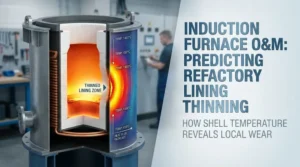
في مجال الأفران التعريفية (especially medium-frequency induction melting furnaces) and metallurgical smelting, the selection of furnace lining refractory materials directly determines the purity of the molten metal, furnace lining service life (campaign life), كفاءة الطاقة, and overall production costs.
Silica-based (حمض), Magnesia-based (أساسي), and Alumina-based (حيادي) are currently the three mainstream refractory lining systems. Below is an in-depth comparison across four dimensions: الخصائص الكيميائية, physical performance, metal compatibility, and total lifecycle cost.
أنا. Overview of Core Properties of the Three Major Refractories
| البعد المقارنة | Silica-based (SiO₂) | على أساس الألومينا (Al₂O₃) | Magnesia-based (MGO) |
| Chemical Nature | حمضية | حيادي (weakly acidic / amphoteric) | أساسي (قلوية) |
| Main Mineral Phases | Quartz, Cristobalite, ترايديميت | Corundum ( α-Al₂O₃), Mullite | Periclase (MGO), Magnesia-Alumina Spinel |
| Max Service Temp. | تقريبا. 1600℃ ~ 1650℃ | تقريبا. 1750℃ ~ 1850℃ | تقريبا. 1850℃ ~ 2000℃+ |
| مقاومة الصدمات الحرارية | ممتاز (low thermal expansion, resists rapid heating/cooling) | جيد (further improved with spinel or SiC additions) | فقير (high thermal expansion coefficient, prone to spalling) |
| Slag Erosion Resistance | Strong against acidic slag; vulnerable to basic and high FeO slags | Balanced resistance to both acidic and basic slags | Extremely strong against basic slag and high-iron-oxide slag |
| Thermal Expansion Behavior | Volume expansion during phase transformation (micro-expansion seals cracks) | Moderate and uniform linear expansion rate | High linear expansion rate; prone to shrinkage cracks upon cooling |
| Typical Metallurgical Risks | Easily reduced by strong reducing agents like C, Al at high temps (silicon pickup) | Forms low-melting-point phases in strongly basic slags at high temps | Prone to hydration (slaking); magnesium volatilization at high temps |
الثاني. Performance and Compatibility Across Different Metal Melting Applications
Refractory lining selection follows two primary metallurgical principles: “Slag-Lining التوافق“ (acidic slag requires an acidic lining; basic slag requires a basic lining) و “Thermodynamic Stability” (the lining must not undergo severe reduction reactions with alloying elements in the molten metal).
1. Cast Iron Melting (Gray Cast Iron, Ductile Iron)
- First Choice: Silica-based (Dry Ramming Mix)
- Performance Analysis: Cast iron melting temperatures typically range from 1450℃ to 1550℃, well within the safe operating window of silica refractories. During high-temperature sintering, silica sand undergoes polymorphic transformation (α-quartz → β-cristobalite), generating about 0.8% ~ 1.5% residual micro-expansion. This effectively seals thermal stress cracks and prevents molten iron run-outs. بالإضافة إلى ذلك, the high carbon and silicon content in molten iron prevents severe reduction of SiO₂.
- Special Cases: If ductile iron melting requires ultra-low sulfur levels with basic slag refining, or continuous high-temperature holding (> 1560℃), upgrading to Alumina-Magnesia Spinel يوصى به.
2. الكربون الصلب, Low-Alloy Steel, and High-Alloy Steel Melting
- First Choice: Magnesia-based (Fused Magnesia / Magnesia-Alumina Spinel) or Alumina-based (Corundum-Spinel)
- Performance Analysis:
- Why not Silica? Molten steel temperatures are high (1600℃ ~ 1650℃), approaching the softening point of silica. علاوة على ذلك, high FeO content in molten steel readily reacts with SiO₂ to form low-melting-point fayalite (2FeO·SiO₂, melting point only 1205℃), causing rapid lining erosion. بالإضافة إلى, deoxidizers in steel such as Al, MN, and Ti will reduce SiO₂, leading to silicon pickup and increased non-metallic inclusions.
- Magnesia vs. الألومينا (Magnesia-Alumina Spinel):
- Medium-to-Large Furnaces / التشغيل المستمر: Magnesia-based is preferred. It offers extremely high refractoriness and the strongest resistance to basic refining slags, making it suitable for ultra-low-carbon steel and high-manganese steel (high-manganese steel severely erodes acidic and standard alumina linings, making magnesia mandatory).
- Small-to-Medium Furnaces / عملية متقطعة (Frequent Thermal Cycling): على أساس الألومينا (Corundum-Magnesia Spinel) is preferred. Pure magnesia suffers from poor thermal shock resistance and cracks/spalls easily during shutdowns. في المقابل, corundum-spinel forms in-situ spinel during sintering, creating micro-expansion that suppresses cracks, providing far superior thermal shock resistance alongside solid slag resistance.
3. Copper and Copper Alloy Melting (Pure Copper, النحاس, البرونز)
- First Choice: Silica-based or Alumina-based (High-Alumina / Corundum)
- Performance Analysis:
- Although copper alloys have relatively low melting points (1000℃ ~ 1250℃), molten copper has extremely high fluidity and penetration (low surface tension), and high-leaded bronze or brass (containing zinc vapor) severely erodes linings.
- Standard Brass / البرونز: Silica-based أو Mullite-based (Aluminosilicate) linings are commonly selected for the best cost-effectiveness.
- نحاس خالي من الأكسجين / High-Purity Copper / Specialty Copper Alloys: High-purity Alumina (Corundum) يجب أن تستخدم. Under high-temperature reducing atmospheres, silica linings can introduce trace silicon impurities that degrade electrical conductivity. High-alumina linings offer higher density, superior resistance to molten copper penetration and zinc vapor erosion, and significantly longer campaign life than silica sand.
4. Aluminum and Aluminum Alloy Melting
- First Choice: على أساس الألومينا (High-Alumina / Corundum-Mullite + Non-Wetting Additives)
- Performance Analysis:
- Despite low melting temperatures (700℃ ~ 800℃), molten aluminum is chemically hyperactive and acts as a powerful reducing agent.
- Silica is Strictly Prohibited: Molten aluminum reacts violently with SiO₂ via a thermite-like reaction (4آل + 3SiO₂ → 2Al₂O₃ + 3و). This rapidly destroys the lining and causes severe “silicon pickup,” ruining the alloy composition.
- Magnesia is Unsuitable: Magnesium oxide is difficult to sinter at low temperatures, hydrates/powders easily, and reacts with magnesium elements and fluxes in aluminum alloys.
- Alumina Advantages: Adding non-wetting agents such as barium sulfate (BaSO₄) or cryolite into high-fired high-alumina/corundum mixes prevents molten aluminum from wetting or penetrating the lining, eliminating the formation of “corundum buildup” (آل₂O₃ dross accumulation).
ثالثا. Comprehensive Cost and Economic Analysis
Evaluating lining costs requires looking beyond initial material purchase price لحساب “Total Refractory Cost per Ton of Metal”—which includes material cost, installation/sintering energy and labor, lining life, downtime production losses, and power consumption differences.
1. Initial Material Purchase Price (Lowest to Highest)
- Silica-based: 1.0س (خط الأساس, أدنى). Natural quartz sand is abundant and simple to process, resulting in very low unit costs.
- Magnesia-based: تقريبا. 2.5x ~ 4.5x. High-grade fused magnesia and high-purity sintered magnesia are energy-intensive to produce and sensitive to magnesite mining and environmental regulations.
- على أساس الألومينا (Corundum / الإسبنيل): تقريبا. 3.5x ~ 6.0x. Fused white corundum, tabular alumina, and synthetic magnesia-alumina spinel carry the highest manufacturing and raw material costs.
2. Installation and Sintering Costs
- Silica-based: Installed via dry vibration/ramming using boric acid (or boron oxide) as a sintering aid. Drying and sintering times are short (typically 8–16 hours), with low energy consumption and high operational tolerance.
- Magnesia-based: Extremely sensitive to moisture during installation (must strictly avoid hydration). Requires high sintering temperatures (above 1600℃ ) to form a strong ceramic bond, leading to higher initial heat-up energy costs and stricter process control.
- على أساس الألومينا: Dry mixes are easy to install with moderate sintering temperatures. لكن, if wet ramming mixes or castables are used (على سبيل المثال, in aluminum melting furnaces), extended natural curing and low-temperature dry-out schedules are required, increasing time costs.
3. Campaign Life and “Refractory Cost per Ton of Metal”
- In Cast Iron Melting:
- Silica linings typically achieve 150 ل 300+ heats. Although alumina-magnesia linings may last 400–600 heats, their unit price is over 3 times higher. لذلك, silica remains the lowest-cost option per ton of iron in conventional cast iron production.
- In Steel Melting:
- Forcing the use of silica results in fewer than 10 ل 20 heats, accompanied by extreme run-out hazards and scrapped steel losses, driving overall costs sky-high.
- Switching to Magnesia or Alumina-Magnesia Spinel stabilizes lining life at 80 ل 200 heats (depending on steel grade and tapping temperature). Despite higher upfront material costs, the amortized refractory cost per ton of qualified steel drops significantly while ensuring production continuity.
- التكاليف الخفية: الموصلية الحرارية and Power Consumption:
- Silica-based has the lowest thermal conductivity (تقريبا. 1.5 ~ 2.0 W/(m·K)), offering the best thermal insulation, minimal heat loss during induction melting, و lowest electricity consumption per ton of metal.
- Magnesia-based has the highest thermal conductivity (تقريبا. 3.5 ~ 5.0 W/(m·K)), leading to higher heat loss and slightly higher power consumption. لكن, higher thermal conductivity helps form a protective “freeze lining” (slag skull) on the furnace wall, shielding the refractory from severe erosion by superheated steel.
- على أساس الألومينا sits in the middle (تقريبا. 2.5 ~ 3.5 W/(m·K)), striking an effective balance between energy conservation and erosion resistance.
رابعا. Quick-Reference Selection Matrix
| معدن / Alloy Type | Recommended Lining Material | الأساس المنطقي | Prohibited / Caution Materials |
| Gray Iron / Ductile Iron | Silica-based (with boric acid) | Unbeatable cost-effectiveness; micro-expansion seals cracks; superior thermal shock resistance | Pure Magnesia (cracks under thermal cycling; unnecessarily expensive) |
| Plain Carbon / Low-Alloy Steel | Alumina-Magnesia Spinel (متقطع) Magnesia-based (Continuous/Large) | High refractoriness; resists reduction by alloying elements; balanced thermal shock & slag resistance | Silica-based (insufficient refractoriness; severe erosion & silicon pickup) |
| غير القابل للصدأ / High-Manganese Steel | High-Purity Magnesia / Magnesia-Chrome | Strongly basic environment; resists erosion from high-Mn and high-Cr oxide slags | Silica-based, Standard High-Alumina (severely eroded by MnO) |
| Standard Brass / البرونز | Silica-based or Mullite-based | Lower operating temperatures; controllable cost; meets standard smelting needs | Magnesia-based (unnecessary; prone to hydration) |
| Oxygen-Free / High-Conductivity Copper | High-Purity Corundum (الألومينا) | High density prevents copper penetration; eliminates silicon pickup to protect conductivity | Silica-based (risk of trace silicon pickup in reducing atmospheres) |
| الألومنيوم & سبائك الألومنيوم | Non-Wetting High-Alumina / Corundum | Contains non-wetting additives; chemically inert to molten Al; prevents corundum buildup | Strictly NO Silica (violent thermite reaction & severe silicon contamination) |
Key Takeaways
- For ferrous or standard copper alloys melted below 1550℃ where maximum cost-effectiveness is the priority, Silica-based linings are irreplaceable.
- When dealing with high-temperature molten steel, strongly basic refining slags, or high-manganese steel, Magnesia-based linings are essential to ensure safety margins and metallurgical purity.
- ل strongly reducing metals (aluminum alloys), النحاس عالي النقاء, or small-to-medium steel furnaces undergoing frequent thermal cycling, على أساس الألومينا (corundum and magnesia-alumina spinel systems) deliver the optimal overall economic return through superior chemical inertness and thermal shock resistance.