উচ্চ-ফ্রিকোয়েন্সি বনাম. মাঝারি-ফ্রিকোয়েন্সি বনাম. পাওয়ার-ফ্রিকোয়েন্সি আনয়ন চুল্লি: মূল পার্থক্য এবং অ্যাপ্লিকেশন পরিস্থিতি
এই তিন ধরনের ইন্ডাকশন ফার্নেসের মধ্যে মূল পার্থক্য তাদের মধ্যে রয়েছে অপারেটিং ফ্রিকোয়েন্সি. ফ্রিকোয়েন্সির পার্থক্য সরাসরি এর গভীরতা নির্ধারণ করে “ত্বকের প্রভাব” ধাতুর অভ্যন্তরে বর্তমানের এবং তড়িৎ চৌম্বকীয় আলোড়ন শক্তির মাত্রা, তাদের গলে যাওয়া বৈশিষ্ট্য এবং প্রয়োগের পরিস্থিতিতে অত্যন্ত গুরুত্বপূর্ণ পার্থক্যের দিকে পরিচালিত করে.
এখানে তাদের মূল পার্থক্য এবং প্রয়োগের পরিস্থিতিগুলির একটি বিশদ বিশ্লেষণ রয়েছে:
মূল পার্থক্য তুলনা ম্যাট্রিক্স
| বৈশিষ্ট্য | পাওয়ার-ফ্রিকোয়েন্সি | মাঝারি-ফ্রিকোয়েন্সি | উচ্চ-ফ্রিকোয়েন্সি |
| অপারেটিং ফ্রিকোয়েন্সি | 50Hz বা 60Hz (প্রধান ফ্রিকোয়েন্সি) | 150Hz – 10কেএইচজেড | 10কেএইচজেড – 300kHz এবং তার উপরে |
| বর্তমান অনুপ্রবেশ গভীরতা | গভীর | মাঝারি | অত্যন্ত অগভীর (শুধুমাত্র পৃষ্ঠ) |
| ইলেক্ট্রোম্যাগনেটিক স্টিরিং ফোর্স | অত্যন্ত শক্তিশালী | পরিমিত | দুর্বল |
| শুরু পদ্ধতি | অবশিষ্ট গলিত ধাতু বা শুরু ব্লক প্রয়োজন (ঠান্ডা শুরু করা যাবে না) | সরাসরি ঠান্ডা চুল্লি শুরু সম্ভব | সরাসরি ঠান্ডা চুল্লি শুরু সম্ভব |
| সরঞ্জামের আকার | ভারী | কমপ্যাক্ট | ছোট |
1. পাওয়ার-ফ্রিকোয়েন্সি ইন্ডাকশন ফার্নেস: বড় টনেজ “বেহেমথ ধরে রাখা”
পাওয়ার-ফ্রিকোয়েন্সি ইন্ডাকশন ফার্নেসগুলি ফ্রিকোয়েন্সি রূপান্তর ডিভাইসের প্রয়োজন ছাড়াই শিল্প পাওয়ার গ্রিড থেকে সরাসরি 50Hz বা 60Hz বিকল্প কারেন্ট ব্যবহার করে.
- মূল সুবিধা: তীব্র ইলেক্ট্রোম্যাগনেটিক আলোড়ন প্রভাব অত্যন্ত অভিন্ন ধাতব রচনা এবং তাপমাত্রা নিশ্চিত করে; ফ্রিকোয়েন্সি রূপান্তর ক্ষতির অনুপস্থিতির কারণে, গঠন তুলনামূলকভাবে সহজ এবং টেকসই.
- প্রধান সীমাবদ্ধতা: ঠান্ডা চুল্লি থেকে সরাসরি শুরু করা যাবে না. প্রতিটি শাটডাউনের পর, গলিত লোহার একটি অংশ চুল্লিতে রাখতে হবে, অথবা পরবর্তী স্টার্টআপের জন্য ডেডিকেটেড স্টার্টিং ব্লক যোগ করতে হবে; ধীর গরম করার হার; নিম্ন শক্তি ফ্যাক্টর.
- অ্যাপ্লিকেশন পরিস্থিতি: একটানা উৎপাদনে নিযুক্ত বড় ফাউন্ড্রিগুলির জন্য উপযুক্ত. প্রাথমিকভাবে ঢালাই লোহা এবং অ লৌহঘটিত ধাতু গলানোর জন্য ব্যবহৃত হয়, সেইসাথে একটি হিসাবে পরিবেশন করা “অধিষ্ঠিত চুল্লি” বা “কন্ডিশনার চুল্লি” ডুপ্লেক্স গলে যাওয়া প্রক্রিয়ায় (যেমন, কাপোলা-ইন্ডাকশন ফার্নেস ডুপ্লেক্সিং).
2. মাঝারি-ফ্রিকোয়েন্সি আনয়ন চুল্লি: দ্য “অল-এরাউন্ড ওয়ার্কহরস” আধুনিক ফাউন্ড্রিজ এর
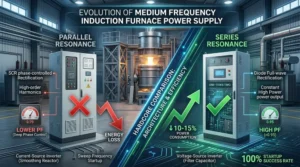
মাঝারি-ফ্রিকোয়েন্সি ইন্ডাকশন ফার্নেস ফ্রিকোয়েন্সি রূপান্তর প্রযুক্তি ব্যবহার করে, যেমন SCR (থাইরিস্টর) বা আইজিবিটি, পাওয়ার-ফ্রিকোয়েন্সি এসিকে মাঝারি ফ্রিকোয়েন্সি এসিতে রূপান্তর করতে. এটি বর্তমানে শিল্প ঢালাই এবং ধাতুবিদ্যা সেক্টরে সর্বাধিক ব্যবহৃত সরঞ্জাম.
- মূল সুবিধা: নিখুঁতভাবে গরম করার দক্ষতা এবং আলোড়নকারী প্রভাবগুলির ভারসাম্য বজায় রাখে. সক্ষম 100% সরাসরি ঠান্ডা চুল্লি শুরু, চুল্লির চুলা খালি করা বা ইস্পাত গ্রেড পরিবর্তন করা অত্যন্ত সুবিধাজনক করে তোলে; উচ্চ শক্তি ঘনত্ব, দ্রুত গরম করার গতি, এবং উচ্চ তাপ দক্ষতা; নমনীয় অপারেশন.
- প্রধান সীমাবদ্ধতা: একটি মাঝারি-ফ্রিকোয়েন্সি পাওয়ার সাপ্লাই ক্যাবিনেটের অতিরিক্ত কনফিগারেশন প্রয়োজন, প্রথাগত সেটআপের তুলনায় প্রাথমিক সরঞ্জাম বিনিয়োগ কিছুটা বেশি করা.
- অ্যাপ্লিকেশন পরিস্থিতি: প্রায় সব প্রচলিত ঢালাই প্রয়োজনীয়তা কভার. কার্বন ইস্পাত গলানো এবং ধরে রাখার জন্য ব্যাপকভাবে ব্যবহৃত হয়, খাদ ইস্পাত, বিশেষ ইস্পাত, এবং বিভিন্ন অ লৌহঘটিত ধাতু (তামা, অ্যালুমিনিয়াম, দস্তা).
3. উচ্চ-ফ্রিকোয়েন্সি আনয়ন চুল্লি: দ্য “স্কাল্পেল” নির্ভুলতা এবং পৃষ্ঠতলের জন্য
উচ্চ-ফ্রিকোয়েন্সি ইন্ডাকশন ফার্নেসগুলির অত্যন্ত উচ্চ ফ্রিকোয়েন্সি কারেন্টকে প্রায় সম্পূর্ণরূপে ধাতুর বাইরের স্তরে কেন্দ্রীভূত করে। (তীব্র ত্বকের প্রভাব).
- মূল সুবিধা: অত্যন্ত দ্রুত গরম করার গতি (সেকেন্ডের মধ্যে পৃষ্ঠ গরম করতে পারেন); ওয়ার্কপিসের অভ্যন্তরীণ কাঠামোর উপর ন্যূনতম প্রভাব, অত্যন্ত সীমিত জারণ এবং decarburization ফলে.
- প্রধান সীমাবদ্ধতা: বর্তমান অনুপ্রবেশ গভীরতা খুব অগভীর, এবং ইলেক্ট্রোম্যাগনেটিক আলোড়নকারী বল অত্যন্ত দুর্বল, ধাতুর বড় ভলিউমের জন্য এটি সামগ্রিক গলতে অক্ষম করে তোলে.
- অ্যাপ্লিকেশন পরিস্থিতি: প্রধানত ধাতু অংশ পৃষ্ঠ quenching প্রয়োগ, স্থানীয় তাপ চিকিত্সা, এবং উচ্চ-ফ্রিকোয়েন্সি ঢালাই (যেমন, উচ্চ-ফ্রিকোয়েন্সি ঢালাই পাইপ). গলানোর উদ্দেশ্যে, এটা কঠোরভাবে পরীক্ষাগারে ছোট নমুনা পরিমাণ প্রস্তুতির মধ্যে সীমাবদ্ধ, অথবা সোনার মতো মূল্যবান ধাতুর মাইক্রো-রিফাইনিং, রূপা, এবং প্ল্যাটিনাম.
সারাংশ সুপারিশ
- যদি আপনার প্রয়োজন হয় ক্রমাগত বড় ব্যাচে একই ধরনের ধাতু গলে, অথবা যদি আপনার বৃহৎ ধারণক্ষমতার সরঞ্জামের প্রয়োজন হয়, দ্য পাওয়ার-ফ্রিকোয়েন্সি আনয়ন চুল্লি ঐতিহ্যগত এবং অর্থনৈতিক পছন্দ অবশেষ.
- যদি আপনি একটি পরিচালনা করেন আধুনিক ফাউন্ড্রি ব্যবস্থাপনা বহু-বৈচিত্র্য, ছোট থেকে মাঝারি ব্যাচ, ঘন ঘন খাদ ধরনের সুইচ, এবং অত্যন্ত দক্ষ এবং নমনীয় ঠান্ডা শুরুর চাহিদা, দ্য মাঝারি ফ্রিকোয়েন্সি আনয়ন চুল্লি অবিসংবাদিত সর্বোত্তম পছন্দ.
- যদি আপনার ফোকাস হয় ধাতু পৃষ্ঠ তাপ চিকিত্সা, অথবা মূল্যবান ধাতুর মাইক্রো-রিফাইনিং এবং ল্যাবরেটরি টেস্টিং, আপনি একটি ব্যবহার করতে হবে উচ্চ-ফ্রিকোয়েন্সি আনয়ন চুল্লি.