Musim hujan, ditandai dengan kelembapan ekstrem dan potensi banjir, merupakan masa kritis bagi operasional tungku induksi. Sistem kelistrikan bertegangan tinggi sangat sensitif terhadap kelembapan. Jika salah penanganan, kelembaban dapat menyebabkan kerusakan isolasi, pencetusan, atau bahkan kegagalan koil total.
Di bawah ini adalah panduan darurat untuk mendeteksi dan mengeringkan kumparan induksi lembab, kabel lubang, dan busbar.
SAYA. Pengujian Presisi Tingkat Isolasi
Saat cuaca ekstrem, inspeksi visual tidak cukup; data harus mendorong penilaian.
- Megger Testing (Resistensi Isolasi):
- Isolasi Kumparan ke Tanah: Gunakan a 2500V Megohmmeter untuk mengukur isolasi antara kumparan induksi dan rangka/tanah tungku. Pembacaannya idealnya berada di atas 10MΩ. Jika jatuh ke bawah 0.5MΩ, menyalakan peralatan sangat dilarang.
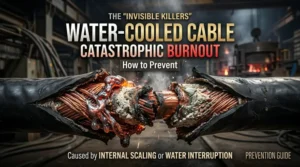
- Pemeriksaan Kabel Berpendingin Air: Periksa selongsong karet kabel apakah ada rembesan atau kondensasi air. Karena kabel ini sering kali terletak di dasar lubang, kepala kabel yang terendam adalah penyebab utama kerusakan listrik.
- Pemantauan Kebocoran Saat Ini:
- Pantau dengan cermat pengukur arus bocor pada kabinet catu daya. Kenaikan yang tidak normal (lebih dari 20% di atas garis dasar) selama keadaan tungku kosong menunjukkan bahwa lapisan isolasi lembab atau konduktivitas air pendingin terlalu tinggi.
Ii. Protokol Pengeringan Darurat untuk Komponen Lembab
Jika resistansi isolasi ternyata rendah, pengeringan paksa harus segera dilaksanakan.
Itu “Panas Dalam & Panggang Eksternal” Metode Kumparan
- Lampu Inframerah & Dehumidifier Industri: Tempatkan lampu pemanas inframerah berdaya tinggi di dalam dan di sekitar cangkang tungku, memanggang terus menerus untuk 12–24 jam. Serentak, gunakan alat penurun kelembapan tingkat industri di bengkel untuk menghilangkan kelembapan dari udara.
- Pemanasan Sendiri Arus Tegangan Rendah:
- Asalkan sirkulasi air pendingin normal, mengeluarkan tegangan yang sangat rendah dari kabinet daya (khas 10%–20% tegangan operasi). Ini menggunakan panas Joule yang dihasilkan oleh koil itu sendiri untuk mengusir kelembapan dari dalam.
- Catatan: Pengoperasian ini memerlukan pengawasan terus-menerus terhadap arus bocor untuk mencegah korsleting yang disebabkan oleh akumulasi air setempat.
Drainase Lubang dan Kabel & Pengeringan
- Ventilasi Paksa: Lubang adalah perangkap alami kelembapan. Gunakan blower berkekuatan tinggi untuk mengeluarkan udara secara paksa dari lubang, memecah kantong-kantong stagnasi, udara lembab.
- Penerapan Pengering: Sebarkan kapur tohor (kapur tohor) atau gel silika industri di area non-kontak pada lubang kabel untuk menyerap kelembapan secara fisik.
- Penguatan Pernis Isolasi: Setelah mengeringkan sambungan kabel atau pilar isolasi, oleskan selapis pernis isolasi anti busur untuk meningkatkan ketahanan kelembaban permukaan.
AKU AKU AKU. Daftar Periksa Pencegahan Darurat Musim Hujan
Untuk memitigasi risiko, lokakarya harus menerapkan protokol manajemen berikut:
| Dimensi | Tindakan Kunci |
| Manajemen Lubang | Pastikan pompa drainase berfungsi; membersihkan lumpur dari selokan untuk mencegah aliran balik. |
| Penyegelan Kabinet | Periksa segel pintu pada lemari listrik; tempatkan pengering silika gel di dalam papan kontrol. |
| Mulai ulang Protokol | Untuk peralatan yang menganggur >24 jam, harus menguji ulang isolasi sebelum memulai. TIDAK “dimulai dengan satu tombol.” |
| Pengelolaan Air | Kontrol suhu air pendingin untuk menghindari “efek titik embun” pada permukaan kumparan. |
Iv. Prosedur Setelah Busur Mendadak
Jika “bermunculan” terjadi suara pelepasan atau lonjakan arus bocor selama produksi:
- Berhenti Darurat Segera: Putuskan aliran listrik bertegangan tinggi tetapi jaga sirkulasi air pendingin.
- Temukan Titik Pembuangan: Periksa koil refraktori terhadap bintik-bintik hitam berkarbonisasi atau tanda flashover pada permukaan isolator.
- Pembersihan Menyeluruh: Gunakan alkohol anhidrat untuk menyeka area berkarbonasi, kemudian lakukan pengeringan lokal dan perbaikan pernis hingga resistansi isolasi kembali normal.
Dalam cuaca ekstrim, biaya pengujian pencegahan jauh lebih rendah dibandingkan biayanya rekonstruksi pascabencana. Menjaga peralatan tetap kering bukan hanya persyaratan teknis—ini adalah dasar keselamatan produksi.