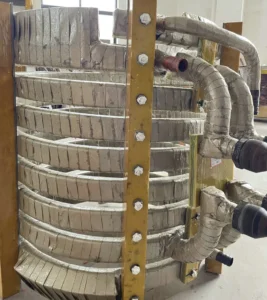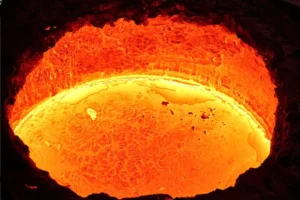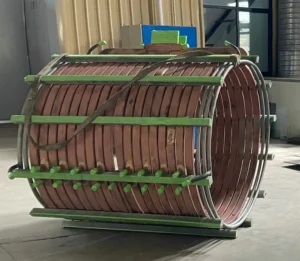
Dibandingkan dengan Tungku Busur Listrik (EAF), Pemulihan Panas Limbah (WHR) profil seorang Tungku Induksi (JIKA) unik: -nya “gas buang” suhunya relatif rendah, tapi itu air pendingin membawa sejumlah besar panas (sekitar 20-30% dari total energi masukan). Karena itu, Strategi WHR untuk tungku induksi terutama berfokus pada pemanfaatan energi panas air pendingin, diikuti dengan pemanfaatan gas buang.
Skema I: Air Pendingin untuk Pemanas Kantor/Rumah Tangga
Saat ini, ini merupakan aplikasi paling matang untuk tungku induksi dengan periode pengembalian terpendek.
- Prinsip Teknis:
- Sumber panas: Kumparan dan Kabinet Daya tungku induksi memerlukan pendinginan air. Untuk mencegah kerak dan oksidasi kumparan tembaga, suhu air keluar biasanya dikontrol pada 40° C. – 55° C..
- Metode Pemanfaatan:
- Langsung Pertukaran Panas (Pemanasan Suhu Rendah): Menggunakan a Piring Penukar panas (PHE) untuk mentransfer air panas 45°C-50°C langsung ke pemanas lantai yang bersinar sistem (yang memiliki persyaratan suhu rendah, biasanya 35-45°C).
- Pompa Panas Ketinggian (Pemanasan Suhu Tinggi): Jika kantor menggunakan radiator tradisional (membutuhkan air 70-80°C), A Pompa Panas Sumber Air ditambahkan. Pompa kalor menggunakan air pendingin sebagai sumber panas bersuhu rendah dan mengkonsumsi sedikit listrik untuk menghasilkan air bersuhu tinggi. (75°C+).
- Kegunaan Tambahan: Dapat digunakan untuk pancuran staf (permintaan sepanjang tahun) atau pendingin serapan di musim panas (meskipun efisiensinya rendah pada 50°C, jadi biasanya tidak direkomendasikan).
- Analisis Ekonomi:
- Investasi Awal (Belanja modal): Rendah. Peralatan utama meliputi penukar panas pelat, kelompok pompa, dan tangki penyimpanan air. (Biayanya sedang jika pompa panas ditambahkan).
- Manfaat Operasional (OPEX): Sangat Tinggi. Menggantikan biaya boiler gas alam atau pemanas listrik di musim dingin.
- Pengembalian Investasi (ROI):1.5 – 2.5 Bertahun-tahun.
- Kasus Referensi: Sebuah pabrik pengecoran menggunakan air pendingin dari dua tungku induksi seberat 5 ton melalui penukar panas air-air untuk memanaskan a 3,000 gedung perkantoran dan asrama berukuran persegi, menghemat sekitar 400,000 RMB dalam biaya gas alam setiap tahunnya.
Skema II: Limbah Panas untuk Pemanasan Awal Scrap
Catatan: Umum “pemanasan awal memo” di industri biasanya mengacu pada sistem pemanasan awal gas independen, bukan WHR dari tungku itu sendiri. Menggunakan limbah panas tungku induksi untuk pemanasan awal dianggap sebagai “teknologi canggih.”
- Prinsip Teknis:
- Tantangan: JIKA air pendingin (<60° C.) terlalu dingin untuk memanaskan skrap secara efektif. Suhu asap IF juga jauh lebih rendah dibandingkan EAF, seringkali hanya 100-150°C setelah bercampur dengan udara sekitar di tudung pengumpul debu, kurang tingkat termal yang memadai.
- Solusi yang Layak (Gas Buang WHR): Sistem penangkapan asap harus dilengkapi dengan a Tutup Tungku Tersegel atau Tutup Kap Pengambilan untuk meminimalkan asupan udara dingin, mempertahankan suhu asap yang diekstraksi di atas 300° C. – 400° C.. Asap bersuhu tinggi ini kemudian diarahkan ke ember atau konveyor yang dipanaskan terlebih dahulu.
- Keamanan Bahaya: Jika potongan mengandung cat atau minyak, pemanasan awal suhu rendah (<500° C.) dapat menghasilkan Dioksin atau VOC yang tidak terbakar, memerlukan pengolahan pembakaran selanjutnya.
- Analisis Ekonomi:
- Investasi Awal (Belanja modal): Tinggi. Melibatkan modifikasi saluran yang rumit, kipas tahan suhu tinggi, tutup tertutup, dan sistem pengolahan gas buang.
- Manfaat Operasional (OPEX): Bagus. Untuk setiap kenaikan suhu sisa sebesar 100°C, konsumsi listrik yang mencair turun sekitar 20-25 kWh/ton.
- Pengembalian Investasi (ROI): 3 – 4 Bertahun-tahun.
- Rekomendasi: Jika tujuannya adalah keselamatan (menghilangkan kelembapan untuk mencegah ledakan), gunakan pemanasan awal gas independen yang matang. Pertimbangkan skema WHR ini hanya untuk penghematan energi yang ekstrim jika pembangkit listrik telah memiliki fasilitas lingkungan yang kuat.
Skema III: Mengemudi Pembangkit Listrik ORC
Untuk tungku induksi standar, hal ini biasanya tidak layak secara ekonomi kecuali dilakukan modifikasi khusus.
- Prinsip Teknis:
- Kemacetan Sumber Panas: Siklus Rankine Organik (ORC) pembangkitan biasanya memerlukan sumber panas >90°C untuk efisiensi ekonomi yang layak (efisiensi pembangkitan ~8-10%). Namun, jika air pendingin standar IF melebihi 60°C, umur kumparan tembaga turun drastis, dan penskalaan risiko meningkat.
- Larutan (Pendinginan Suhu Tinggi Bertekanan): Sistem pendingin tungku harus ditingkatkan ke a Sistem Air Suhu Tinggi Bertekanan (suhu saluran keluar dinaikkan menjadi 95-120°C). Hal ini memerlukan desain kumparan khusus bersuhu tinggi dan pengelolaan kualitas air yang ketat (air deionisasi).
- Ganda SumberKopel: Pendekatan lain digabungkan “panas buangan gas buang” dengan “air pendingin membuang panas”—menggunakan asap untuk memanaskan fluida kerja ke suhu yang lebih tinggi dan mendinginkan air untuk pemanasan awal—tetapi sistem ini sangat kompleks.
- Analisis Ekonomi:
- Investasi Awal (Belanja modal): Sangat Tinggi. Genset ORC mahal (kira-kira. 8,000-12,000 RMB/kW), ditambah biaya perkuatan sistem pendingin tungku.
- Manfaat Operasional (OPEX): Rata-rata. Efisiensi pembangkitan bersih hanya untuk ORC suhu rendah 5%-7%.
- Pengembalian Investasi (ROI): > 6 – 8 Bertahun-tahun.
- Kesimpulan: Kecuali jika itu adalah bengkel peleburan berkelanjutan berskala besar (MISALNYA., single furnace capacity >20 tons, beberapa tungku berjalan), ORC pada tungku induksi seringkali tidak hemat biaya.
Perbandingan Komprehensif & Matriks Keputusan
| Dimensi | Skema I: Pemanas/Pancuran Kantor | Skema II: Memo Pemanasan Awal (WHR Ver.) | Skema III: Pembangkit Listrik ORC |
| Sumber panas | Air Pendingin (45-55° C.) | Gas Buang Suhu Tinggi (>300° C.) | Air Bertekanan (>95° C.) |
| Kematangan Teknologi | ★★★★★ (Sangat Dewasa) | ★★★ (Kompleks) | ★★ (Membutuhkan Kustomisasi) |
| Investasi Awal | Rendah | Tinggi | Sangat Tinggi |
| Periode ROI | 1.5 – 2.5 Bertahun-tahun | 3 – 4 Bertahun-tahun | > 6 Bertahun-tahun |
| Keuntungan Utama | Menggantikan biaya-biaya penting; efek langsung; perawatan sederhana | Mengurangi konsumsi daya leleh; meningkatkan hasil | Menghasilkan listrik bernilai tinggi; meningkatkan citra perusahaan |
| Skenario Terbaik | Daerah dingin; Pabrik dengan asrama/kamar mandi | Pengecoran berkelanjutan berskala besar | Mega-smelter; Daerah dengan tarif listrik yang sangat tinggi |
Langkah Berikutnya yang Direkomendasikan
Jika Anda mempertimbangkan WHR Tungku Induksi untuk pertama kalinya, A pendekatan langkah demi langkah direkomendasikan:
Melangkah 1 (Penting): Melaksanakan Air Pendingin Pertukaran Panas Retrofit. Pasang penukar panas pelat secara paralel dengan menara pendingin yang ada.
Tindakan: Selesaikan kebutuhan air panas pancuran staf terlebih dahulu (menghemat listrik/gas sepanjang tahun). Jika terletak di daerah dingin, diintegrasikan ke dalam jaringan pemanas di musim dingin.
Melangkah 2 (Opsional): Evaluasi Pemanasan Awal Scrap.
Kriteria: Apakah tungku Anda memiliki tudung asap yang tertutup rapat? Apakah suhu keluar asap secara konsisten di atas 200°C? Jika ya, pertimbangkan pemanasan awal gas buang. Jika tidak, lebih baik membeli ember pemanas awal gas alam independen untuk meningkatkan keselamatan dan efisiensi daripada memaksakan solusi WHR.