Di industri pengecoran, Listrik seringkali menjadi biaya produksi terbesar setelah bahan baku. Untuk pengecoran menggunakan tungku induksi frekuensi menengah, secara efektif mengurangi “konsumsi daya per ton” (kWh dikonsumsi per ton besi atau baja cair) berdampak langsung pada margin keuntungan dan daya saing pasar.
Ini dia 3 strategi praktis untuk mengurangi konsumsi daya per ton di tungku induksi, yang dapat langsung diterapkan pada produksi lantai pabrik dan optimalisasi manajemen:
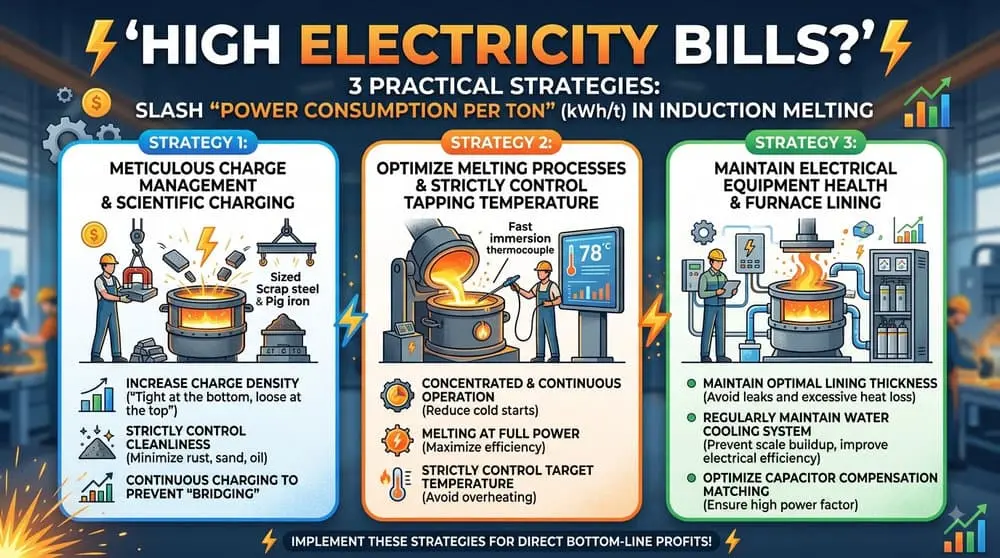
Strategi 1: Manajemen Biaya yang Teliti & Pengisian Ilmiah
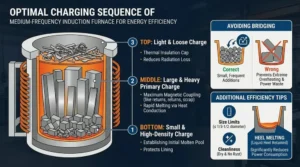
Kualitas bahan pengisi daya dan praktik pengisian secara langsung menentukan efisiensi penyerapan energi listrik selama fase peleburan awal. Kebiasaan pengisian daya yang buruk menyebabkan pemborosan daya dan pembuangan panas.
- Tingkatkan Kepadatan Muatan (“Ketat di Bagian Bawah, Longgar di Atas”): Pastikan muatan di bagian bawah dan tengah sekompak mungkin. Ukuran besi tua/besi kasar harus sesuai dengan dimensi tungku (panjang maksimum satu potong tidak boleh melebihi 1/3 dari diameter dalam wadah itu). Muatan padat menghasilkan arus induksi yang lebih kuat, mempercepat kecepatan leleh.
- Mengontrol Kebersihan Biaya Secara Ketat: Sangat berkarat, berlumpur, atau muatan berminyak menyerap panas dalam jumlah besar dan menghasilkan terak yang berlebihan. Setiap 1% peningkatan produksi terak menghasilkan konsumsi daya sekitar 1,5%–2% lebih tinggi.
- Pengisian Terus Menerus untuk Mencegah “Menjembatani“: Mempertahankan a “sering, batch kecil” pengisian rutin selama peleburan. Jika jembatan terjadi (muatan atas tersangkut sementara muatan bawah meleleh), itu tidak hanya menimbulkan bahaya keselamatan, namun logam cair yang terlalu panas di bagian bawah juga membuang banyak energi listrik.
Strategi 2: Optimalkan Proses Peleburan & Kontrol Suhu Penyadapan Secara Ketat
Ritme produksi dan kontrol suhu adalah dua variabel dinamis inti yang memengaruhi konsumsi daya per ton.
- Pekat & Operasi Berkelanjutan: Saat memulai dari tungku dingin, lapisannya menyerap banyak panas, menyebabkan konsumsi daya pada lelehan pertama menjadi 15% (atau lebih tinggi) daripada selama operasi terus menerus. Karena itu, jadwal bergeser secara wajar untuk memaksimalkan konsentrasi, pencairan terus menerus, mengurangi waktu start dingin dan waktu tunggu idle.
- Meleleh dengan Kekuatan Penuh: Dalam batas peralatan yang aman, mempertahankan daya maksimum selama fase peleburan. Kekuatan yang lebih tinggi berarti waktu leleh yang lebih singkat, pembuangan panas lingkungan yang lebih sedikit, dan efisiensi termal keseluruhan yang lebih tinggi.
- Kontrol Suhu Target Secara Ketat: Operator sering kali terbiasa memanaskan besi cair secara berlebihan “hanya untuk aman.” Pada kenyataannya, setelah suhu melebihi target, radiasi termal berakselerasi secara drastis, menyebabkan konsumsi energi per kenaikan 10°C melonjak. Gunakan termokopel perendaman cepat dan segera matikan listrik untuk penyadapan setelah suhu target dan komposisi kimia tercapai.
Strategi 3: Menjaga Kesehatan Peralatan Listrik & Lapisan tungku
Kondisi fisik dari tungku induksi menentukan batas atas efisiensi konversi energi listrik ke panas.
- Pertahankan Ketebalan Lapisan Optimal: Lapisan yang terlalu tebal akan menambah jarak antara kumparan induksi dan muatan, menyebabkan kebocoran fluks magnet dan menurunkan efisiensi listrik; lapisan yang terlalu tipis akan menghemat daya tetapi berisiko bocor (terobosan logam). Ketebalan lapisan harus dijaga dalam kisaran ekonomis yang wajar berdasarkan protokol pemeliharaan tahan api.
- Rawat Sistem Pendingin Air Secara Teratur: Penumpukan kerak pada pipa air pendingin adalah penyebab umum lonjakan listrik yang tersembunyi. Skala memiliki konduktivitas termal yang buruk, menyebabkan suhu kumparan naik dan meningkatkan rugi-rugi tembaga kumparan (kerugian I²R). Membilas saluran air secara berkala dan menggunakan air lunak secara efektif meningkatkan efisiensi listrik.
- Optimalkan Pencocokan Kompensasi Kapasitor: Pantau dengan cermat parameter kelistrikan pada kabinet kontrol untuk memastikan pengoperasian pada faktor daya tinggi. Bank kapasitor yang menua atau tidak diganti dengan benar menyebabkan faktor daya rendah (daya reaktif yang tinggi), memperpanjang waktu leleh dan meningkatkan kerugian pada transformator dan saluran listrik.
Mengurangi konsumsi listrik per ton tidak dapat dicapai dalam semalam. Tidak memerlukan perbaikan peralatan yang mahal, melainkan mengandalkan disiplin proses yang ketat Dan manajemen lantai toko yang disempurnakan. Menerapkan ketiga strategi ini ke dalam standar operasional harian akan mengubah penghematan listrik bulanan menjadi keuntungan langsung.