В выборе электропитания для промышленного нагревательного и плавильного оборудования (особенно среднечастотные индукционные печи, vacuum induction melting systems, и т. д.), Silicon Controlled Rectifiers (Скрипт) and Insulated Gate Bipolar Transistors (БТИЗ) are the two core power semiconductor technologies. They differ significantly in control principles, operating frequencies, and suitable working conditions.
Основные различия с первого взгляда
| Размер сравнения | Источник питания SCR | БТИЗ источник питания |
| Control Method | Semi-controlled (only controls turn-on; requires external commutation circuits to turn off) | Fully controlled (turned on and off independently via gate signals) |
| Рабочая частота | Ниже (обычно 1 kHz – 8 кГц) | Чрезвычайно высокий (reaches 10 kHz – 100 kHz or higher) |
| Эффективность преобразования | Высокий (~90% – 93%) | Very high (~95% – 97%) |
| System Footprint | Больше (requires bulky commutation inductors and capacitor cabinets) | Smaller (highly integrated with smaller transformers and filters) |
| Типичные приложения | Large-tonnage melting, conventional through-heating, heavy industry with modest frequency demands | Precious metal melting, high-frequency quenching, small precision furnaces, specialty alloy melting |
1. SCR Technology
With decades of commercial development, SCR technology remains the most mature solution in the high-power industrial furnace market.
Key Advantages:
- Ultra-High Current Capacity: Exceptional single-device voltage withstand and current capability, making it ideal for medium-frequency induction melting furnaces ranging from hundreds of kilowatts to multi-megawatt levels.
- Robustness & Ударопрочность: Exhibits strong overload and fault resistance against grid fluctuations or severe operating conditions (например, frequent short circuits or charge collapse).
- Низкий Обслуживание Costs: Highly mature technology with relatively simple circuit structures. Standard maintenance personnel can perform routine troubleshooting, and replacement components are cost-effective.
Key Disadvantages:
- Frequency Limitations: Due to its semi-controlled nature and long turn-off time, high-frequency output cannot be achieved, making it unsuitable for precision heating or surface quenching that requires high-frequency skin depth control.
- Запускать Success Rate Under Load: The frequency-sweeping startup mechanism can occasionally encounter difficulties under cold furnace or heavy load conditions.
- Выше Сетка Вмешательство: When operating at reduced voltage (partial load), the power factor drops, generating higher-order harmonics that typically require dedicated reactive power compensation and harmonic suppression.
2. IGBT Technology
Combining the high input impedance of a MOSFET with the low saturation voltage drop of a bipolar junction transistor, IGBT represents the modern direction in power electronics.
Key Advantages:
- High Power Factor Across All Operating Ranges: In IGBT power supplies utilizing series resonance, the rectifier section remains fully turned on regardless of furnace charge or melting phase, maintaining a power factor above 0.95 without needing external capacitor compensation cabinets.
- Exceptional Energy Savings: Compared to traditional SCR power supplies, series-connected IGBT power supplies consume very little power during partial load and holding phases, yielding overall energy savings of 10%–20%.
- 100% Запускать Надежность: Outstanding adaptability—achieves reliable one-touch startup under cold charge or liquid metal conditions.
- Высокая частота & Точность Контроль: Rapid switching speed makes it ideal for copper-zinc separation furnaces requiring precise temperature control, vacuum induction gas atomization (ОШИБКА) powder production systems, and small laboratory induction units.
Key Disadvantages:
- Higher Initial Cost: The module itself and its associated driving/protection circuitry are more expensive than traditional SCR devices.
- Sensitivity to Overcurrent/Overvoltage: Short-circuit withstand times for IGBTs are in the microsecond range. If cooling water fails or a severe short circuit occurs, the module can suffer catastrophic damage if the protection circuit fails to respond instantly.
3. Matching the Optimal Power Supply to Your Furnace
When planning induction furnace production lines or drafting technical equipment specifications, consider three main criteria:
3.1 Selection by Furnace Capacity and Power
- Выше 5 тонны / Over 3000 кВт for large foundries:Скрипт parallel power supplies are the primary choice. Their stability and high current capability are essential for continuous heavy-duty production.
- Under 2 тонны / Специальные сплавы / Precious Metal Melting:БТИЗ series power supplies are strongly recommended. They offer rapid high-frequency melting and significant energy efficiency, improving per-furnace turnaround rates.
3.2 Selection by Process Requirements
- Для conventional scrap steel or cast iron melting without strict grid power quality requirements, SCR solutions offer the highest performance-to-cost ratio.
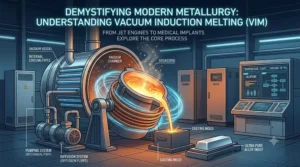
- Для Вакуумная индукция таяния (Вим), metal powder gas atomization, or surface heat treatments requiring precise heating depth control, IGBT’s precise temperature regulation and high-frequency capability are essential.
3.3 Selection for Dual-Output (“One-Power-Two-Furnaces”) Конфигурация
- Foundries frequently employ dual-output configurations (one power source driving two furnace shells: один тающий, один холдинг). Under these conditions, БТИЗ series resonant power supplies outperform traditional SCR systems because they allow stepless power sharing between furnace bodies while maintaining a high grid power factor during holding mode.