В современных процессах литья, особенно при использовании среднечастотная индукционная печь для плавления, Точный контроль температуры и состава серого чугуна и ковкого чугуна является основным ключом к определению механических свойств отливок и снижению процента брака.. Потому что среднечастотные индукционные печи отличаются быстрым нагревом и сильным электромагнитным перемешиванием., их методы управления отличаются от традиционных башен.
Вот точные контрольные точки температуры и состава во время процесса плавки этих двух материалов в индукционной печи.:
я. Методы точного контроля серого чугуна
Рабочие характеристики серого чугуна сильно зависят от морфологии графита и структуры матрицы., с ядром, находящимся под контролем углеродного эквивалента (CE) и прививочное лечение.
1. Контрольные точки композиции
- Углеродный эквивалент (CE) и соотношение углерода и кремния: Строго контролировать содержание C и Si.. Обычно, тот “с высоким содержанием углерода, низкий кремний” или “низкоуглеродистый, высокий кремний” принцип принят. Однако, в индукционных печах, уменьшить тенденцию графитизации к расширению и усадке, рекомендуется стратегия соответствующего снижения углеродного эквивалента и увеличения коэффициента примеси ферросилиция..
- Баланс марганца и серы: Определенное количество серы (обычно между 0.06% – 0.12%) необходимо выдерживать в сером чугуне для образования MnS, который служит ядром для выделения графита. Обычно плавка в среднечастотной печи “обессеривает” расплавленное железо. Поэтому, если используется стальной лом плюс процесс науглероживания, искусственная добавка серы (например, добавление сульфида железа) часто требуется.
- Точная настройка элемента сплава: Используйте быстрый спектрометр перед печью, чтобы взять образцы для анализа. 10 минут до нажатия, и точная настройка элементов сплава, таких как Cu, Герметичный, и Мо для укрепления перлитной матрицы.
2. Точки контроля температуры
- Температура перегрева: При плавке серого чугуна в индукционной печи, правильный перегрев может очистить графит. Рекомендуется перегреть расплавленный чугун до 1500°С. – 1520°С и выдерживают в течение 5 – 10 минуты. Это помогает устранить наследственность графита из сырья..
- Температура выпуска и заливки: Температура выпуска должна контролироваться в пределах 1450°C. – 1480° C.. Температура заливки обычно составляет 1380°C. – 1420° C.. Если температура слишком высокая, это вызовет пригорание песка и пористость; если слишком низко, это легко приводит к холодным закрытиям и охлаждению краев (белое железо).
II. Методы точного контроля ковкого чугуна
К ковкому чугуну предъявляются чрезвычайно высокие требования к чистоте расплавленного чугуна и температуре выпуска чугуна., как последующая нодуляризация (сфероидизация) реакция вызывает значительную потерю тепла и состава.
1. Контрольные точки композиции
- Строго контролируйте S и P в базовом железе: Это железное правило плавки ковкого чугуна.. Содержание серы должно быть чрезвычайно низким. (< 0.03%); в противном случае, потребуется большое количество нодуляризатора (магний) и производят чрезмерное количество сульфида магния. Чугун малосернистый, высококачественный стальной лом, и необходимо выбирать рекарбюризаторы с низким содержанием серы..
- Выбор углеродного эквивалента: Углеродный эквивалент ковкого чугуна обычно выше, чем у серого чугуна. (CE выбирается между 4.3% – 4.7%) использовать расширение графитации для самоподачи и уменьшить дефекты усадки.
- Скорость поглощения нодуляризации и прививки: Магний имеет низкую температуру кипения. (1107° C.) и легко испаряется в высокотемпературном расплавленном железе. Необходимо точно рассчитать вес основного железа., использовать метод сэндвича (метод покрытия) или нодуляризация в форме, и выполнить многоэтапную прививку (постукивание прививки, переносная инокуляция в ковше, потоковая инокуляция) для предотвращения выцветания прививки.
2. Точки контроля температуры
- Увеличение температуры нарезания резьбы: Потому что лечение нодуляризации (добавление магниево-кремниевого сплава) а множественные прививки вызовут внезапное падение температуры расплавленного железа. (обычно на 50°C – 80° C.), температура выпуска среднечастотной печи должна быть выше, чем у серого чугуна, обычно устанавливается между 1480°C – 1530° C..
- Время удержания контроля: Высокотемпературный расплав ковкого чугуна не следует долго держать в печи.; в противном случае, это вызовет окисление углерода и восстановление кремния, приводящее к смещению состава. А “быстрое плавление и быстрое постукивание” подход должен быть достигнут.
Iii. Основные эксплуатационные характеристики для плавки в среднечастотной индукционной печи
Воплотить вышеизложенные теории в точный контроль в реальном производстве., следующие операции должны быть стандартизированы:
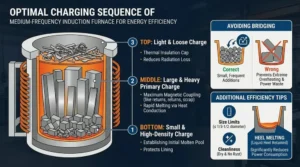
- Управление зарядами (Предварительное условие): Внедрить строгую классификацию и взвешивание шихты перед загрузкой.. Стальной лом должен быть очищен от ржавчины и обезжирен, чтобы предотвратить попадание избыточного водорода и кислорода..
- Умелое использование электромагнитного перемешивания: Рекарбюризаторы следует добавлять на ранних этапах процесса плавки вместе с нижней загрузкой, чтобы использовать вихревые токи электромагнитного перемешивания на средней и поздней стадиях индукционной печи., улучшение поглощения углерода и предотвращение плохого поглощения, вызванного поздним добавлением углерода.
- Совместное применение термоанализаторов: Установка спектрометра прямого считывания перед печью (измерение абсолютного состава) и чашка для образца термического анализа (измерение кривой охлаждения, степень переохлаждения, и тенденция к охлаждению расплавленного железа) может наиболее интуитивно предсказать эффект прививки и обеспечить быстрое вмешательство перед вскрытием.