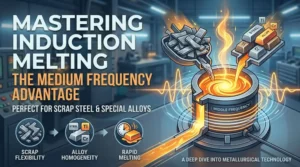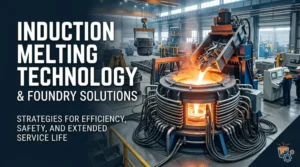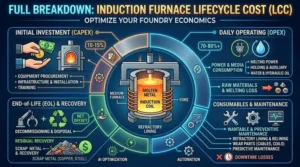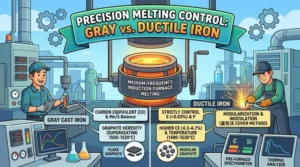
Индукционные печи позволяют плавить практически все электропроводящие металлы и сплавы.. Они работают за счет использования электромагнитной индукции для создания вихревых токов внутри металла., полагаясь на собственное электрическое сопротивление металла нагреву и быстро достигая, равномерное плавление.
На основе физических свойств и промышленного применения, индукционные печи в основном используются для плавки следующих основных категорий металлов.
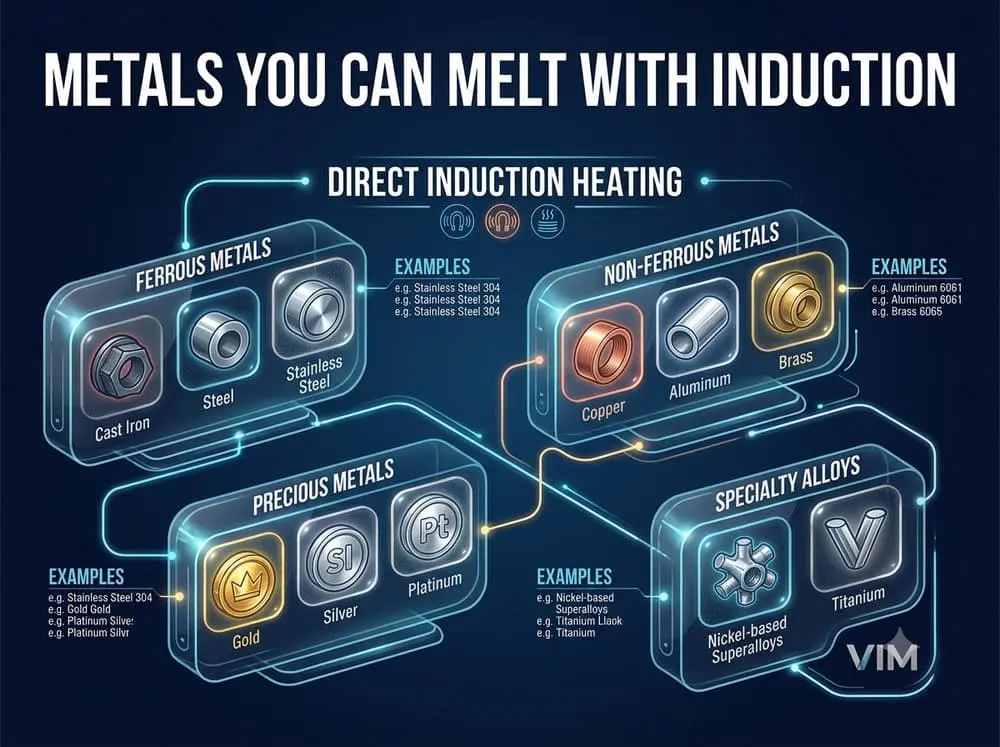
1. Черные металлы
Чугун: Широко используется для плавки и выдержки серого и ковкого чугуна — одно из наиболее распространенных применений в литейном производстве..
Углеродистая сталь & Легированная сталь: Индукционные печи обеспечивают точный контроль температуры и однородный состав сплава., что делает их идеальными для плавки высококачественных специальных сталей..
Нержавеющая сталь: Поскольку при индукционной плавке не используется электрическая дуга., это предотвращает поглощение углерода, что делает его пригодным для нержавеющих сталей со строгими требованиями к низкоуглеродистому содержанию.
2. Цветные металлы
Медь & Медные сплавы: Включает чистую медь, латунь, бронза, и т. д.. Электромагнитное перемешивание внутри печи обеспечивает однородный химический состав..
Алюминий & Алюминиевые сплавы: Несмотря на высокую теплопроводность алюминия и более низкую температуру плавления, индукционные печи (обычно среднечастотная или сетевая частота) широко используются для быстрой плавки и переработки металлолома..
Цинк, Вести, & Олово: Эти легкоплавкие металлы можно плавить с исключительно высокой эффективностью..
3. Драгоценные металлы
Золото, Серебро, Платина, & Палладий: Компактные высокочастотные или среднечастотные индукционные печи являются стандартом в ювелирном производстве., лаборатория Р&Дюймовый, и переработка. Они обеспечивают точный контроль температуры., минимизация окисления и летучих потерь дорогих металлов.
4. Специальные металлы & Суперсплавы
на основе никеля & Суперсплавы на основе кобальта: Обычно используется для компонентов авиационных двигателей и точного промышленного оборудования..
Титан & Титановые сплавы: Высокая реакционная способность по отношению к кислороду и азоту при высоких температурах., Плавка титана должна осуществляться в Вакуумная индукция таяния (Вим) печь.
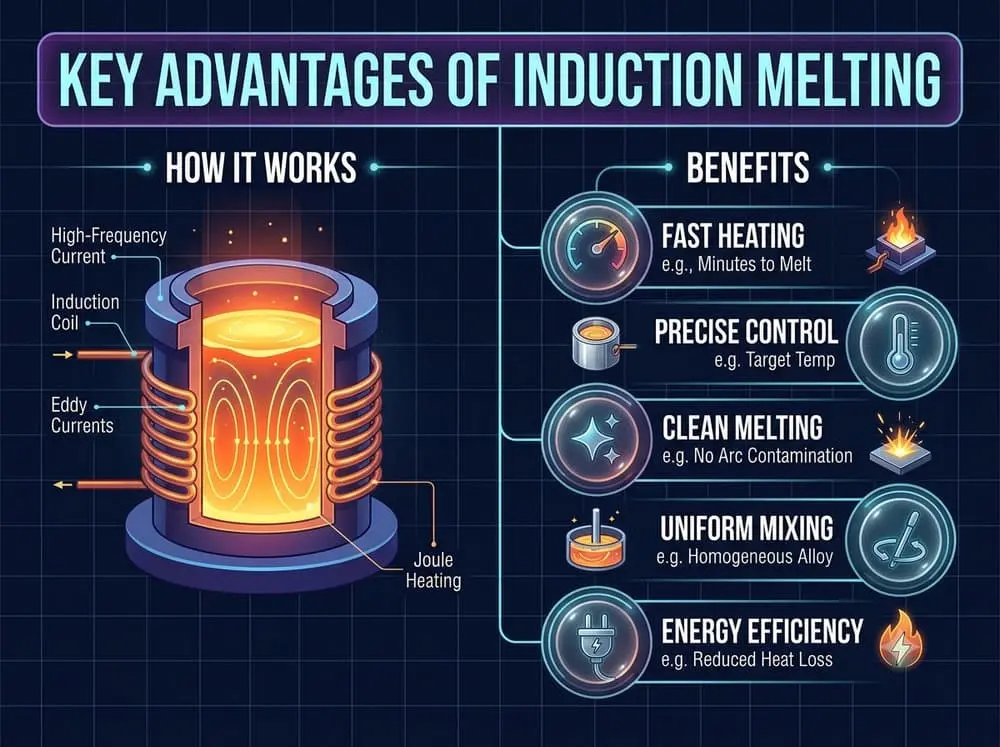
Примечание: Прямой индукционный нагрев требует, чтобы материал был электропроводным.. Для плавления непроводящих материалов (например, специальное стекло, керамика, или полимеры), а непрямой нагрев используется подход: проводящий тигель (например, графитовый тигель) нагревается индукционной катушкой, который затем передает тепло непроводящему заряду внутри.