ที่สำคัญ 3 นาทีของก “การหมดเตา”, SOP การบรรเทาเหตุฉุกเฉินและการอพยพบุคลากรในร้านหลอมละลาย
ในร้านหลอมหล่อ, ก “การหมดเตา” (โดยที่เหล็กหลอมเหลวเผาไหม้ผ่านเยื่อบุเตาและเข้าใกล้ขดลวดเหนี่ยวนำ) เป็นหนึ่งในอุบัติเหตุที่ร้ายแรงและทำลายล้างมากที่สุดเท่าที่จะเป็นไปได้. เมื่อเหล็กหลอมเหลวที่มีอุณหภูมิ 1600°C ทะลุชั้นบุและมุ่งตรงไปยังขดลวดเหนี่ยวนำ, ผู้ปฏิบัติงานมักจะเหลือหน้าต่างปฏิกิริยาเป็น ประมาณเท่านั้น 3 นาที.
ภายในวิพากษ์วิจารณ์เหล่านี้ 3 นาที, ทุกการกระทำจะกำหนดเส้นแบ่งระหว่างชีวิตและความตายสำหรับทุกคนในร้าน.
ฉัน. การทำลายตำนานอันเข้มงวด: คุณสามารถปิดน้ำหล่อเย็นในระหว่างที่น้ำหมดได้หรือไม่?
ท่ามกลางการประชุมเชิงปฏิบัติการเก่าๆ หรือคนงานที่ไม่ผ่านการฝึกอบรมมากมาย, ตำนานที่ร้ายแรงยังคงมีอยู่: “หากพบเห็นการไหลเวียนของน้ำหรือเหล็กหลอมเหลวรั่ว, ปิดคอยล์เย็นน้ำหล่อเย็นทันทีเพื่อป้องกันน้ำ ท่อ จากการเผาไหม้ผ่าน”
นี่เป็นภารกิจฆ่าตัวตายโดยสมบูรณ์!
ทำไมคุณต้องไม่ปิดน้ำ?
ขดลวดเหนี่ยวนำของเตาความถี่ปานกลางประกอบด้วยท่อทองแดงกลวง. น้ำหล่อเย็นที่ไหลอยู่ข้างในคือ เท่านั้น มีเกราะป้องกันคอยล์ไม่ให้หลอมละลายทันที.
- หากรักษาการไหลของน้ำไว้: แม้ว่าเหล็กหลอมเหลวจะเข้าใกล้หรือสัมผัสขดลวดเพียงเล็กน้อยก็ตาม, น้ำที่ไหลจะพาความร้อนส่วนใหญ่ออกไป. ซึ่งจะทำให้ขดลวดหลอมละลายช้าลง, การซื้อวินาทีอันมีค่าสำหรับการอพยพบุคลากรและการจัดการเหตุฉุกเฉิน.
- หากปิดน้ำทันที: โดยไม่ต้องมีน้ำไหลเพื่อระบายความร้อนให้กับท่อทองแดง, เหล็กหลอมเหลว 1600 ℃จะ ละลายขดลวดทองแดงอย่างสมบูรณ์ภายในไม่กี่วินาที.
- ทำให้เกิดการระเบิดของไอน้ำขนาดใหญ่: เมื่อท่อทองแดงละลาย, น้ำที่ตกค้างอยู่ภายในจะสัมผัสโดยตรงกับเหล็กหลอมเหลว 1600°C. น้ำหนึ่งกรัมกลายเป็นไอน้ำและขยายตัวได้มากกว่าหนึ่งพันเท่า. สิ่งนี้ทำให้เกิดเรื่องน่าสยดสยอง การระเบิดของไอน้ำเหล็กหลอมเหลว, ซึ่งจะทำลายแท่นเตาหลอมทันที, ระเบิดหลังคาออกจากเวิร์กช็อป, และไม่เหลือโอกาสรอดชีวิตให้ใครก็ตามที่อยู่ใกล้เคียง.
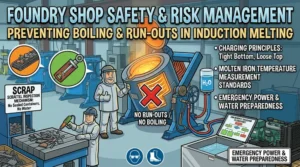
กฎเหล็กหุ้มเกราะหลัก: เว้นแต่ทั้งตัวเตาจะเย็นลงสนิทแล้ว, หรือยืนยันว่าคอยล์ขาดมากจนไม่สามารถเติมน้ำได้, คุณต้องต่อสู้เพื่อให้ระบบน้ำหล่อเย็นทำงานได้ต่อเนื่อง (หรือเปลี่ยนไปใช้แหล่งน้ำฉุกเฉิน/อ่างเก็บน้ำที่ป้อนด้วยแรงโน้มถ่วง) ในช่วงแรกของการตอบสนองฉุกเฉิน!
ครั้งที่สอง. ที่ “วิกฤต 3 นาที” SOP การบรรเทาเหตุฉุกเฉิน
เมื่อมอนิเตอร์แพลตฟอร์มเตาเผาส่งสัญญาณเตือนการรั่วไหล, หรือหากก้นเตา/ผนังเตามีแสงสีแดงอย่างเห็นได้ชัด, หรือเห็นเหล็กหลอมไหลออกมา, เปิดใช้งานขั้นตอนการปฏิบัติงานมาตรฐานต่อไปนี้ทันที (สบส):
[นาที 1: การตัดขาดอย่างเด็ดขาด & การแยกอันตราย]
- กดปุ่มหยุดฉุกเฉินไฟฟ้าแรงสูง/ความถี่ปานกลาง:
- ผู้ค้นพบหรือผู้ดำเนินการหลักจะต้องกดปุ่มทันที ปุ่ม E-stop สีแดง บนคอนโซลควบคุมเพื่อตัดพลังงานความถี่กลาง.
- วัตถุประสงค์: หยุดการกวนแม่เหล็กไฟฟ้าและให้ความร้อนอย่างต่อเนื่อง, ป้องกันไม่ให้เหล็กหลอมกัดกร่อนเยื่อบุที่เสียหายเนื่องจากความปั่นป่วน, พร้อมทั้งขจัดอันตรายจากไฟฟ้าแรงสูง.
- ตัดระบบไฮดรอลิก (หากมีผลบังคับใช้):
- ปิดสถานีปั๊มไฮดรอลิกแบบเอียงเพื่อป้องกันไม่ให้ท่อน้ำมันไฮดรอลิกแตกด้วยเหล็กหลอมอุณหภูมิสูง, ซึ่งสามารถจุดไฟรองได้.
- เพิ่มการปลุก: กดสัญญาณเตือนภัยภาพและเสียงของเวิร์กช็อปแล้วตะโกน: “ความ Runout บนเตา X!” เพื่อแจ้งบุคลากรชานชาลาและหลุมทั้งหมดเพื่อเตรียมพร้อมอพยพ.
[นาที 2: ปกป้องน้ำหล่อเย็น & เตรียมการระบายน้ำ]
- ตรวจสอบ/เปลี่ยนระบบน้ำหล่อเย็น:
- ตรวจสอบเกจวัดแรงดันน้ำหล่อเย็นคอยล์. หากไฟฟ้าดับหลักทำให้ปั๊มน้ำหลักหยุดทำงาน, สลับไปที่ปั๊มน้ำฉุกเฉินดีเซลแบบแมนนวลหรืออัตโนมัติทันที, หรือเปิดวาล์วป้อนแรงโน้มถ่วงฉุกเฉินจากอ่างเก็บน้ำระดับสูง.
- ให้น้ำไหลไม่สะดุด! ในขั้นตอนนี้, ตรวจสอบอุณหภูมิทางออกของน้ำและอัตราการไหลของน้ำเพื่อประเมินขอบเขตความเสียหายของคอยล์.
- เตรียมหลุมจับเหล็กฉุกเฉิน (ถ้าเหล็กหลอมยังไม่พุ่งออกมาอย่างกว้างขวาง):
- ตรวจสอบด่วน หลุมจับฉุกเฉิน (หรืออ่างทรายฉุกเฉิน) หน้าเตาหรือใต้เตา.
- ชีวิตหรือความตาย ด่าน: หลุมฉุกเฉิน ต้องไม่มีน้ำนิ่งโดยสมบูรณ์, วัสดุชื้น, หรือวัตถุไวไฟ/วัตถุระเบิด! หากมีน้ำอยู่ในบ่อ, เหล็กหลอมเหลวที่เข้ามาจะทำให้เกิดการระเบิดเฉพาะจุดทันที. เมื่อได้รับการยืนยันว่าแห้งแล้ว, เตรียมนำเหล็กหลอมเหลวไปสู่หลุมดักจับอย่างปลอดภัย.
[นาที 3: การเอียงอย่างปลอดภัย & การบรรเทาผลกระทบขั้นสูงสุด]
- ควบคุมการเอียงเตา (ขึ้นอยู่กับสถานการณ์):
- หากเยื่อบุเตาไม่ยุบสนิทและกลไกการเอียงแบบไฮดรอลิกหรือแบบกลไกยังคงทำงานอยู่, เอียงเตาอย่างรวดเร็วเพื่อเทเหล็กหลอมที่เหลือลงในตู้นิรภัย, ทัพพีแห้งหรือหลุมจับฉุกเฉิน, เพื่อไม่ให้ใครอยู่หน้าเตา.
- หลักการ: ลดแรงดันคงที่ของเหล็กหลอมเหลวภายในเตา, ป้องกันไม่ให้เจาะทะลุด้านข้างไปยังขดลวดและเปลือกเตาต่อไป.
- ละทิ้งการกอบกู้ที่ไร้ประโยชน์ & เปลี่ยนไปใช้การป้องกันทั้งหมด:
- ถ้าเหล็กหลอมได้ทะลุขดลวดขนาดใหญ่แล้ว, หล่นลงพื้นทำให้เกิดไฟไหม้ครั้งใหญ่, หรือมีเสียงดังลั่นตามมาด้วย (ปฏิกิริยาความชื้น), ผู้ปฏิบัติงานจะต้องละทิ้งแท่นเตาทันที. ห้ามพยายามก้าวไปข้างหน้าและฝังทรายโดยเด็ดขาด.
III. ระเบียบการอพยพบุคลากรในโรงงานและการกำหนดเส้นทาง
ในอุบัติเหตุเตาหลอมหมด, พื้นที่ที่มีแนวโน้มที่จะทำให้เกิดการบาดเจ็บล้มตายจำนวนมากที่สุดคือ หลุมใต้แท่นเตาหลอม, ห้องใต้ดิน, และบริเวณหน้าเตาโดยตรง.
[ปลุกความรันเอาท์ถูกทริกเกอร์]
│
├─ Platform Operators -> Execute Power Cut/Water Maintenance SOP -> Evacuate to [ทางเดินนิรภัยด้านข้าง]
│
└─ Pit/Slagging/Auxiliary Workers -> Hear Alarm -> DO NOT Retrieve Belongings -> Move [ขึ้นไป & ภายนอก] ต่อต้านการไหลของเหล็ก
1. หลักการเลือกเส้นทางอพยพ
- บุคลากรในพิทมีความสำคัญอย่างยิ่ง: เมื่อได้ยินเสียงสัญญาณเตือนภัย, ใครก็ตามที่ทำงานอยู่ในหลุมใต้เตาหลอมเพื่อหาตะกรัน, การซ่อมบำรุง, หรืองานเสริมต้อง วางเครื่องมือทั้งหมดลงทันทีแล้วปีนออกจากหลุมโดยใช้บันไดนิรภัยที่อยู่ด้านใน 10 วินาที. หากเหล็กหลอมเหลวไหม้ทะลุก้นเตา, หลุมนั้นจะกลายเป็นนรกทันที, และความร้อนจากการแผ่รังสีและควันพิษก็จะสะสมอย่างรวดเร็ว.
- อย่าวิ่งลงด้านล่าง; อพยพขึ้นและออกไปด้านนอกเสมอ: ทุกคนต้องหนีไปยังทางออกที่ปลอดภัยซึ่งทอดออกจากเตาหลอม, สู่พื้นดินที่สูงขึ้น, และบริเวณที่มีการระบายอากาศที่ดี.
- หลีกเลี่ยงด้านหน้าและด้านล่างโดยตรง: ห้ามมิให้ผ่านช่องทางโดยตรงใต้เตาหลอมที่รั่วหรือด้านหน้าพวยกาเทโดยตรง.
2. องค์กรการประชุมเชิงปฏิบัติการและการโทรเรียก
- ไม่มีรายการย้อนกลับ: ห้ามมิให้ผู้ใดกลับเข้าเวิร์คช็อปไม่ว่าในกรณีใดๆ ด้วยเหตุผลดังกล่าว “รับโทรศัพท์, กำลังดึงแจ็คเก็ต, หรือตรวจสอบอุปกรณ์” จนกว่าทีมนักผจญเพลิงและความปลอดภัยมืออาชีพจะประกาศว่าปลอดภัยแล้ว.
- สภาที่ได้รับมอบหมาย & ม้วนสาย: บุคลากรในโรงงานทุกคนจะต้องรวมตัวกันที่จุดรวมตัวที่ปลอดภัยที่กำหนดไว้ด้านนอกอาคารโรงงาน (เช่น, ลานโล่ง). ผู้บังคับบัญชากะจะต้อง กรอกจำนวนพนักงานภายใน 3 นาที และรายงานให้ผู้บัญชาการทหารสูงสุดทราบทันที: “รายงาน Shift X: เอ็กซ์คาดหวัง, X ปัจจุบัน, 0 ติดกับดัก (หรือ X หายไป).”
IV. สรุปยุทธวิธี: สิ่งสำคัญด้านความปลอดภัยของโรงหลอม
วิวัฒนาการของอุบัติเหตุการส่ายของเตาหลอมจะวัดเป็นวินาที. ร้านหลอมต้องปฏิบัติตามอย่างเคร่งครัดดังต่อไปนี้ “กฎเหล็กสามข้อ” รายวัน:
- การฝึกซ้อมประจำ: ผู้ดำเนินการหลอมทุกคนจะต้องสามารถค้นหาได้ “ปุ่มหยุดฉุกเฉิน” และ “วาล์วน้ำฉุกเฉิน” โดยที่ดวงตาของพวกเขาปิดลง.
- การตรวจสอบอุปกรณ์อย่างเข้มงวด: ห้ามใช้บ่อดักจับเหล็กฉุกเฉินเพื่อเก็บเศษขยะ และต้องเก็บไว้ในที่แห้งตลอดเวลา. ปั๊มน้ำดีเซลฉุกเฉินจะต้องได้รับการทดสอบทุกสัปดาห์เพื่อให้แน่ใจว่าสตาร์ทเครื่องได้อย่างราบรื่นในระหว่างที่ไฟฟ้าดับ.
- สำนักพิมพ์ความคิด: จดจำกฎ 7 คำอย่างแน่นหนา: “ตัดกำลัง, เก็บน้ำ, อพยพ!” ห้ามปิดวาล์วน้ำหล่อเย็นในระหว่างที่หมดน้ำ!