If the recycling of brass scrap (copper-zinc alloy) is limited to traditional open-air melting, it not only causes massive oxidation loss of zinc (forming polluting white smoke) but also results in substandard purity of the recovered copper liquid. By adopting a dedicated Vacuum Distillation Furnace (or Vacuum Copper-Zinc Separation Furnace), which utilizes medium-frequency induction heating and vacuum sealing technology, low-value brass scrap can be directly converted into high-purity copper and zinc, thereby multiplying economic benefits.
ฉัน. Core Principles: Boiling Point Differential and Vacuum Distillation
The core of copper-zinc separation lies in exploiting the difference in the physical boiling points of the two metals: under normal atmospheric pressure, the boiling point of zinc is approximately 907℃, while the boiling point of copper is as high as 2562℃.
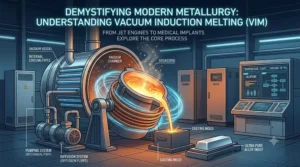
- Medium-Frequency Induction Melting: The brass scrap inside the crucible is efficiently heated by a medium-frequency induction coil. The electromagnetic stirring effect generated by the induction current ensures a uniform temperature in the molten pool, accelerating alloy melting.
- Vacuum Evaporation (Gasification): When a vacuum is drawn inside the furnace body (โดยทั่วไปด้านล่าง 100 Pa), the boiling point of zinc drops significantly. As the system temperature is maintained around 800℃ to 1100℃, the zinc in the melt rapidly separates from the molten pool and gasifies into zinc vapor, while the copper remains in a liquid state at the bottom of the crucible.
- Condensation Recovery: The zinc vapor follows a vacuum guide path into a water-cooled condenser, where it rapidly cools and crystallizes on the cold walls, ultimately being collected as high-purity liquid zinc or solid zinc ingots.
ครั้งที่สอง. Four Key Dimensions of Maximizing Economic Returns
Adopting a dedicated separation furnace is not merely an environmental upgrade; it represents a fundamental shift in the core profit logic:
| Benefit Dimension | Traditional Open-Air / Conventional Induction Melting | Vacuum Distillation Furnace | Economic Value Enhancement |
| Zinc Recovery | Burns off at high temperatures into zinc oxide (ZnO) ฝุ่น, requiring dust collectors; low purity and extremely low value. | Collected as high-purity metallic zinc (ขึ้นไป 99.9% ความบริสุทธิ์), which can be directly cast into ingots for sale. | Transforms former “polluting exhaust” into a high-value metallic by-product. |
| Copper Liquid Purity | Difficult to completely remove zinc; recovered copper contains many impurities and can only be downgraded as scrap copper. | Copper-rich melt remains at the bottom of the crucible (ความบริสุทธิ์ >98%). | High-purity copper liquid can directly enter the next refining stage or gas atomization powder manufacturing line, significantly boosting its selling price. |
| ด้านสิ่งแวดล้อม & ต้นทุนการปฏิบัติตามข้อกำหนด | Generates large amounts of toxic white smoke; high operating costs for dust removal systems and hazardous waste treatment. | Closed-loop vacuum system with zero zinc vapor leakage and no exhaust emissions. | Completely eliminates exorbitant environmental equipment maintenance fees and the risk of emission penalties. |
| การใช้พลังงาน & Consumable Lifespan | Long melting times, massive heat loss, and rapid erosion of refractory lining materials. | Fast medium-frequency heating and excellent heat preservation in a vacuum environment reduce thermal fatigue of the furnace lining. | Significantly lowers power consumption per ton and extends refractory lining life, driving down overall operating costs. |
III. Recommendations for Production Equipment Selection
In actual production, the reliability of the vacuum induction separation system directly determines the return on investment (ผลตอบแทนการลงทุน) cycle:
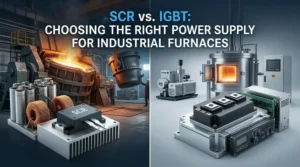
- Power Supply Matching: The system must be equipped with a highly stable SCR (rectifier ควบคุมซิลิกอน) or IGBT medium-frequency power supply to ensure stepless, precise regulation of heating power. This avoids local overheating that could cause unintended copper volatilization.
- Vacuum System Selection: A combination of a mechanical pump and a Roots pump is standard. It is essential to ensure that the vacuum pumping speed remains up to standard under harsh operating conditions containing large amounts of metal vapor, preventing pipeline blockages.
- Condenser Design: The scientific design of the condensation area and water-cooling structure is the core factor determining the zinc vapor recovery rate. Insufficient condensation efficiency will cause metal vapor to be drawn into the vacuum pump, resulting in damage to core components.
Investing in dedicated vacuum copper-zinc separation equipment essentially establishes an “arbitrage model of buying low-priced brass scrap + selling high-priced pure copper and pure zinc.” When the equipment is running at full capacity, relying on the highly efficient price differential of recovering dual metals, the initial equipment investment can typically be recovered within just a few months.