1. Green Casting
How Induction Furnaces Help Metal Processing Enterprises Cross the “Carbon Tariff” Threshold
Core Thought Leadership: Environmental compliance (ESG) is no longer a “cost center” for enterprises, but an “entry ticket” to the global high-end supply chain.
- Saying Goodbye to Fossil Fuels, Embracing Deep Electrification:
Traditional cupola furnaces rely heavily on coke, which not only generates high carbon emissions but also causes severe dust and sulfide pollution. Medium-frequency induction furnaces heat metal directly through electromagnetic induction, eliminating direct combustion emissions from fossil fuels at the physical source. As environmental policies like the EU’s Carbon Border Adjustment Mechanism (CBAM) tighten, the transition to electrification is the only viable path forward for metal processing enterprises.
- Ultimate Energy Conversion and Efficiency Metrics:
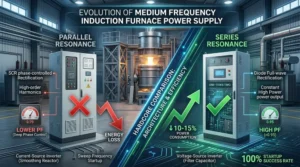
Modern induction furnaces (such as those equipped with advanced thyristor or IGBT inverters) feature exceptionally high electrical energy conversion efficiency. Every kilowatt-hour of electricity is precisely converted into heat energy within the metal, dramatically reducing the comprehensive energy consumption “per ton of steel/iron.” This data-driven efficiency improvement provides the strongest supporting evidence when enterprises publish ESG (ด้านสิ่งแวดล้อม, Social, and Governance) reports.
- Empowering the “Infinite Loop” of Scrap Metal:
Induction furnaces have an extremely high tolerance for various furnace charges, capable of efficiently melting cutting scraps and recycled steel. This closed-loop remelting capability of “turning waste into treasure” not only slashes raw material costs but also aligns perfectly with the global manufacturing industry’s pursuit of a Circular Economy.
2. Intelligent Reshaping
“Transparent” Metal Melting Driven by the Internet of Things (IoT)
Core Thought Leadership: Bid farewell to “steelmaking based on gut feeling,” use data to define safety, and let algorithms lock in the perfect quality of every single batch.
- จาก “ปฏิกิริยา ซ่อมแซม” ถึง “เกี่ยวกับการทำนาย การซ่อมบำรุง“:
Traditional equipment maintenance is largely reactive. By integrating IoT technology, sensors deployed across induction coils, cooling waterways, and power systems can monitor water temperature, ความดัน, voltage fluctuations, and refractory lining wear in real-time. The system issues preemptive warnings before lining fatigue or cooling abnormalities occur, completely eliminating disastrous safety hazards like “การหมดของเตา” and minimizing unplanned downtime.
- Dynamic Adaptation of Energy Consumption Curves:
Intelligent monitoring systems record the melting data of every batch to analyze the “golden power curve” for specific materials and furnace capacities. Instead of operating on a crude “full power” baseline, the equipment’s output is precisely regulated by microcomputers according to the distinct needs of the melting, เครื่องทำความร้อน, and holding stages, thoroughly eradicating energy waste.
- Full-Process Data Traceability:
High-end buyers in industries like aerospace and new energy vehicles have stringent requirements for casting quality. IoT-enabled induction furnaces can archive temperature curves, feeding times, and melting durations of each batch to the cloud. This provides customers with tamper-proof quality traceability credentials, significantly enhancing a manufacturer’s market credibility.
3. Flexible Response
“Off-Peak” Melting and Cost Moats in the Era of High Electricity Prices
Core Thought Leadership: In the face of global energy market price fluctuations, highly flexible electric furnace equipment is a manufacturer’s ultimate weapon to hedge against cost risks.
- ที่ “Plug-and-Play” Advantage of Cold Furnace Starts:
Once large blast furnaces or reverberatory furnaces are ignited, they must consume massive amounts of energy to maintain temperatures even during idle production periods, resulting in exorbitant start-stop costs. ในทางตรงกันข้าม, medium-frequency induction furnaces feature direct cold-furnace starting and rapid heating. This extreme operational flexibility gives factories the confidence to freely dictate their production rhythms.
- แม่นยำ “Peak-Holding, Valley-Melting” การจัดตารางการผลิต:
Capitalizing on the peak-valley electricity price differences in industrial power grids, enterprises can redesign their production logic: deploying maximum power for high-intensity melting during late-night “valley” ชั่วโมง, while utilizing the low-power holding feature of induction furnaces during daytime “peak” hours for refining, conditioning, or casting. Merely adjusting production schedules can slash electricity expenses by over 20% without compromising output.
- Capital and ความจุ Multiplexing with “Dual-Output” Power Systems:
ที่ “หนึ่งต่อสอง” architecture (one power supply driving two furnace bodies—one melting, one holding) widely adopted in modern melting workshops pushes transformer utilization to its absolute limit. This design empowers factories to flexibly respond to fluctuating order volumes: running both furnaces simultaneously to handle a surge in orders, or operating a single furnace to minimize overhead, achieving true flexible manufacturing.