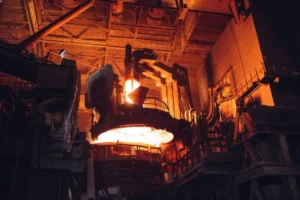
As the “หัวใจ” of an induction furnace, the induction coil’s operational status directly dictates the equipment’s electro-thermal conversion efficiency and production safety. When faced with declining insulation performance or copper tube wear, foundries must navigate the critical decision: ถึง “ซ่อมแซม” or to “replace.”
1. The Core Function: ที่ “หัวใจ” of the Furnace
An induction coil is far more than a simple electrical conductor; it must withstand extreme thermal stress, electromagnetic forces, and mechanical vibrations.
- Energy Hub: Converts electrical energy from the MF (ความถี่ปานกลาง) power supply into thermal energy within the metal melt via magnetic field coupling.
- การสนับสนุนโครงสร้าง: Works in tandem with the refractory lining to contain the high-temperature molten pool.
- ระบายความร้อน ความปลอดภัย: The internal high-speed cooling water circulation is vital to prevent the coil from melting due to high-current heat generation.
2. Symptom Diagnosis: Aging and Thinning Solutions
During a coil’s lifecycle, two primary degradation issues typically emerge:
ก. Insulation Aging
- ปรากฏการณ์: การปอกเปลือก, carbonization of the insulation varnish, or loss of mechanical strength due to prolonged heat exposure.
- Consequences: Inter-turn short circuits or arcing, which trigger frequent over-current protection in the power supply and may lead to lining breakthrough or leakage accidents.
- คำแนะนำ: If the copper tube wall thickness is still within safe limits, local sanding or a total re-insulation is viable. This involves coil disassembly, sandblasting, re-wrapping with mica tape, and applying high-temperature insulation varnish.
บี. Copper Tube Wall Thinning
- ปรากฏการณ์: Structural wear caused by internal cooling water erosion and external electromagnetic vibration.
- Consequences: Reduced pressure-bearing capacity, leading to pitting or pinhole leaks.
- คำแนะนำ: This is structural damage. While localized welding can be a temporary “patch,” total replacement is usually the safer choice, as welding alters the local electromagnetic characteristics and flow resistance of the coil.
3. Health Assessment Indicators: Deciding the Path
Before finalizing a strategy, the coil’s health must be quantified using the following benchmarks:
| Assessment Item | วิธี | Warning/Critical Threshold | Decision Lean |
| Insulation Resistance | 1000V or 2500V Megohmmeter | Below 10MΩ (excluding humidity factors) | Repair: การทำความสะอาด, การอบแห้ง, re-coating |
| Wall Thickness | Ultrasonic Thickness Gauge | Wear exceeding 20%-30% of original thickness | Replace: Structural integrity is compromised |
| DC Resistance | Bridge Tester | ส่วนเบี่ยงเบน >5% from original specifications | Replace: Likely internal corrosion or overheating deformation |
| Visual Inspection | Endoscope / Manual | Significant deformation, discoloration, หรือหลุม | Case-by-case |
4. Cost-Benefit Comparison
ตัวเลือก 1: Re-insulation (Partial Refurbishment)
- ข้อดี: Very low cost (โดยทั่วไป 15%-25% of a new coil); shorter downtime.
- ข้อเสีย: Does not address metal fatigue or thinning; expected lifespan is only 30%-50% of a new unit.
- ดีที่สุดสำหรับ: Coils with healthy copper tubes where only the surface insulation has failed due to heat or environment.
ตัวเลือก 2: Full Replacement
- ข้อดี: Eliminates leakage risks; restores peak electrical efficiency; significantly improves อีอี (ประสิทธิผลของอุปกรณ์โดยรวม).
- ข้อเสีย: Higher initial capital expenditure; requires lead time for manufacturing.
- ดีที่สุดสำหรับ: Coils in service for 5-8+ ปี, or those showing measurable wall thinning.
5. The Advanced Perspective: Shifting to Predictive Maintenance
Rather than debating repair vs. replacement after a breakdown, leverage digital tools to mitigate risks:
- Characteristic Power Curve Analysis: Monitor impedance changes to capture anomalies before an insulation breakdown occurs.
- Digital Twins: Track every heating cycle to precisely calculate the point of metal fatigue.
- Hybrid Spare Strategy: For high-pressure production environments, adopt a “Rotation” model—disassemble the old coil for professional factory refurbishment as a backup while installing a new coil to ensure maximum uptime.