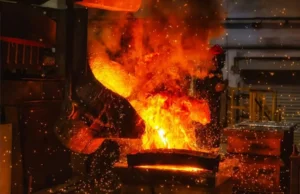
1. Đúc khối động cơ ô tô: Kiểm soát độ ổn định trong sản xuất hàng loạt gang xám
Trong ngành công nghiệp ô tô, các yêu cầu cốt lõi là “giờ chiến thuật” Và “tính nhất quán.” Từng là dây chuyền đúc tự động (chẳng hạn như đường DISA) bắt đầu, nguồn cung cấp sắt phải liên tục và ổn định như nước máy.
Những thách thức cốt lõi:
- Khuếch đại các dao động vi mô: Khối động cơ có độ dày thành không đồng đều (tường xi lanh mỏng vs. mũ chịu lực dày). Biến động nhỏ về lượng Carbon tương đương (CN) (ví dụ., $\chiều 0.05\%$) có thể dẫn đến “sự ớn lạnh” (Sắt trắng, khó gia công) ở những phần mỏng hoặc có độ xốp co ngót (rò rỉ) ở những phần dày.
- Trường nhiệt độ khi đổ liên tục: Dây chuyền đúc tiêu hao sắt cực nhanh. Một lò duy nhất không thể đủ; sự cân bằng động của “tan chảy, sưởi ấm, và đổ” đồng thời là cần thiết.
Giải pháp: Cấu hình song công/đa hệ thống & Kiểm soát quá trình
- “Trak kép” hoặc Hệ thống chia sẻ quyền lực:
- Đây là tiêu chuẩn hiện hành. Một nguồn điện duy nhất cung cấp đồng thời cho hai thân lò.
- Cách thức: Lò A chạy ở 100% sức mạnh cho sự tan chảy tốc độ tối đa, trong khi lò B chạy ở tốc độ 10%-20% sức mạnh để giữ/hợp kim/đổ. Điều này cho phép chuyển đổi liền mạch, loại bỏ thời gian ngừng hoạt động và đảm bảo dòng sắt liên tục 24 giờ.
- Quá trình in hai mặt:
- Trong khi mái vòm đang trở nên ít phổ biến hơn, các xưởng đúc rất lớn vẫn sử dụng “Cupola (cơ sở nóng chảy) + Lò nung cảm ứng (Quá nhiệt/Giữ)” phương pháp song công. Lò cảm ứng hoạt động như một khối lượng lớn “đệm” Và “người lọc dầu,” làm dịu đi những biến động về thành phần của mái vòm và kiểm soát chính xác nhiệt độ khai thác (thường được kiểm soát ở 1450oC ± 5oC).
- Trộn thông minh & Phân tích nhiệt:
- Tích hợp hệ thống sạc tự động dựa trên dữ liệu thời gian thực từ máy quang phổ và Cốc phân tích nhiệt để tự động tính toán và bổ sung bộ chế hòa khí lại, ferrosilicon, hoặc thép phế liệu.
- Kiểm soát tiêm chủng: Sắt xám được nấu chảy bằng cảm ứng dễ bị “than chì chưa được làm nguội,” vì vậy độ ổn định của dòng cấy sau lò cũng quan trọng như việc kiểm soát nhiệt độ trong lò.
2. Trung tâm năng lượng gió & căn cứ: Những thách thức nóng chảy đối với vật đúc sắt dẻo lớn
Đúc năng lượng gió được đặc trưng bởi “Lớn” (cân từng mảnh 20-50 tấn) Và “Dày” (độ dày tường vượt quá 300mm).
Những thách thức cốt lõi:
- Độ trễ thời gian lớn Dung tích tan chảy: tan chảy 30-50 tấn sắt mất hàng giờ. Sắt nóng chảy sớm ở nhiệt độ cao trong thời gian dài, dẫn đến “Mất cacbon” Và “Suy thoái hạt nhân” (mất khả năng tạo mầm), làm tăng nguy cơ co rút.
- nốt sần mờ dần & than chìBiến dạng: Khối lượng sắt lớn có nghĩa là thời gian đổ lâu. Nếu nhiệt độ khai thác quá cao, Magiê (Mg) cháy hết nhanh chóng, dẫn đến sự hình thành nốt kém; nếu quá thấp, khả năng chảy bị ảnh hưởng, Và “Than chì Chunky” có xu hướng hình thành thành từng phần dày, làm giảm nghiêm trọng tính chất cơ học.
Giải pháp: Quy trình đặc biệt cho lò có trọng tải lớn
- Kết hợp mật độ năng lượng với tốc độ tan chảy:
- Sử dụng lò trung tần lớn (20T+) yêu cầu nguồn điện cực cao (ví dụ., 10MW+) để rút ngắn thời gian nóng chảy và giảm sự tiếp xúc của sắt nóng chảy với quá trình oxy hóa và hấp thụ khí ở vùng nhiệt độ cao.
- Nhiệt độ thấp nóng chảy nhanh:
- Kiểm soát chặt chẽ nhiệt độ nóng chảy tối đa. Không giống như các bộ phận ô tô có thể yêu cầu nhiệt độ cao để loại bỏ ảnh hưởng di truyền, sắt dẻo sử dụng năng lượng gió thường giảm thiểu quá nhiệt để bảo toàn hạt than chì.
- Tinh chỉnh bố cục & Chiến lược nắm giữ:
- Công nghệ gang tổng hợp: Tận dụng lực khuấy điện từ của lò cảm ứng để sử dụng tỷ lệ thép phế liệu cao + Bộ chế hòa khí lại, giảm tỷ lệ gang. Điều này tạo ra một ma trận tinh khiết hơn và ngăn chặn các nguyên tố vi lượng (thích Ti, Pb) khỏi cản trở sự tạo nốt.
- Quản lý cuộc sống lót: Phục hồi các lò lớn là tốn kém. Phải sử dụng vật liệu chịu lửa được tối ưu hóa cho xỉ bazơ hoặc trung tính, và độ dày lớp lót phải được theo dõi để ngăn ngừa hiện tượng chảy lò trong thời gian giữ nhiệt lâu.
3. Không gian vũ trụ & Cấy ghép y tế: Ứng dụng nóng chảy cảm ứng chân không (Vim) trong hợp kim titan có độ tinh khiết cao
Điều này đi vào lĩnh vực của “Luyện kim đặc biệt.” Cho dù dành cho hợp kim Titan (Ti-6Al-4V) lưỡi dao hoặc Cobalt-Chrome-Molypden (CoCrMo) khớp nhân tạo, oxy và nitơ trong khí quyển là kẻ thù tuyệt đối.
Những thách thức cốt lõi:
- Độc tính của các yếu tố kẽ: Titan là một “dung môi phổ quát” ở nhiệt độ cao, tích cực hấp thụ oxy (ồ), Nitơ (N), và Hydro (H). Sự gia tăng dấu vết của $O$ làm giảm đáng kể độ dẻo và tuổi thọ mỏi (gây giòn).
- phản ứng chịu lửa: Titan nóng chảy phản ứng với hầu hết các chén nung gốm truyền thống (nhôm, Magiê), dẫn đến ô nhiễm tan chảy và xói mòn nồi nấu kim loại.
Giải pháp: Chân khôngMôi trường & Công nghệ nồi nấu nguội
- Chân không Cảm ứng tan chảy (Vim):
- Toàn bộ quá trình xảy ra trong buồng chân không (mức chân không thường là $10^{-3}$ mbar hoặc tốt hơn).
- Sử dụng “Khử cacbon” (trong siêu hợp kim) hoặc cách ly vật lý (bằng titan) để loại bỏ tạp chất khí. Môi trường áp suất thấp còn tạo điều kiện cho sự bay hơi của các nguyên tố vi lượng có hại như chì và bismuth.
- Làm tan chảy hộp sọ cảm ứng (ISM):
- Công nghệ then chốt để giải quyết phản ứng nồi nấu kim loại. Nó sử dụng một phân đoạn, nồi nấu đồng làm mát bằng nước.
- Nguyên tắc: Dòng điện cảm ứng mạnh tạo ra từ trường bên trong nồi nấu đồng, xuyên qua các khe phân đoạn để làm nóng phần kim loại bên trong. Kim loại tiếp xúc với thành đồng được làm mát bằng nước ngay lập tức đóng băng để tạo thành “Hộp sọ.”
- Kết quả: Kim loại nóng chảy thực chất là tan chảy bên trong “vỏ riêng của nó,” không bao giờ chạm vào bất kỳ vật liệu chịu lửa nào, bảo đảm “Không ô nhiễm.” Đây là tiêu chuẩn bắt buộc đối với titan cấp độ hàng không vũ trụ và cấy ghép y tế.