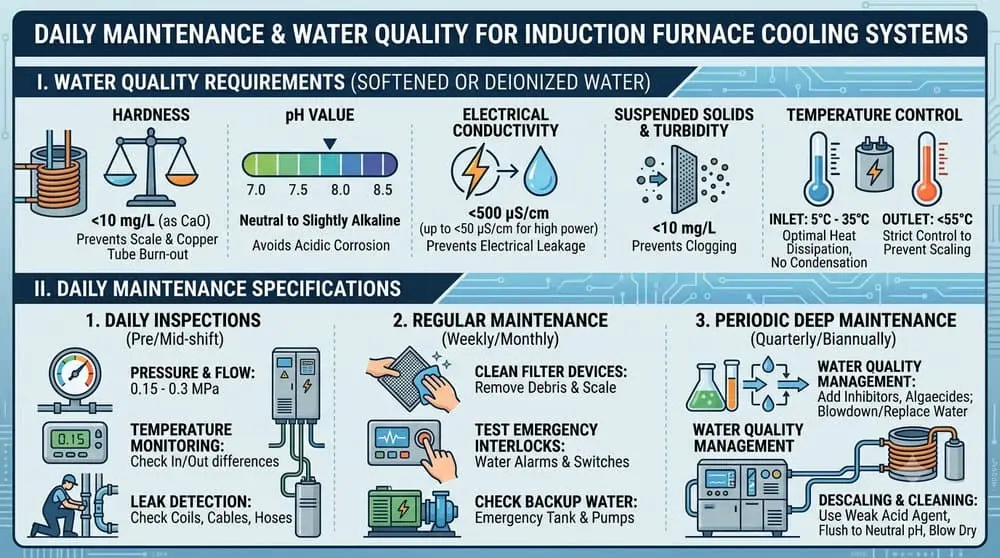
متطلبات الصيانة اليومية ونوعية المياه لنظام مياه التبريد في الفرن التعريفي
نظام مياه التبريد لفرن الحث متوسط التردد هو “شريان الحياة” مما يضمن التشغيل الآمن والمستقر للمعدات. المكونات الأساسية مثل الملف التعريفي, خزانة الطاقة, والمكثفات تولد كمية كبيرة من الحرارة أثناء التشغيل. إذا فشل التبريد أو كانت جودة المياه دون المستوى المطلوب, يمكن أن يؤدي بسهولة إلى التحجيم, حرق أنبوب النحاس, أو حتى حوادث الإنتاج الخطيرة مثل الدوائر الكهربائية القصيرة.
فيما يلي تفصيل لمتطلبات جودة المياه والمواصفات الفنية للصيانة اليومية لنظام مياه التبريد, والتي يمكن استخدامها مباشرة كأساس لمعايير إدارة ورشة العمل أو التدريب الفني:
متطلبات جودة المياه لنظام مياه التبريد
لمنع تحجيم دائرة المياه والتآكل الكهروكيميائي, تتمتع أفران الحث بمعايير صناعية صارمة لجودة المياه. نظرا لخصائص الأفران متوسطة التردد, يوصى عمومًا باستخدام الماء المخفف أو الماء منزوع الأيونات كوسيلة للدوران الداخلي:
- صلابة (الوقاية من النطاق): يجب أن تكون الصلابة الكلية أقل من 10 ملغم/لتر (تحسب كـ CaO). الموصلية الحرارية للمقياس منخفضة للغاية. بمجرد أن تلتصق بالجدار الداخلي للأنبوب النحاسي, سوف يسبب ارتفاع درجة الحرارة المحلية للملف التعريفي, تكربن الطبقة العازلة, وحتى ذوبان أنبوب النحاس.
- الرقم الهيدروجينيقيمة: الحفاظ بين 7.0 و 8.5. يجب أن يكون الماء محايدًا أو قلويًا قليلاً لمنع التآكل الحمضي للتركيبات النحاسية, مشعات الألومنيوم, ودفاعات مضخة المياه.
- الموصلية الكهربائية (كهربائي أمان): تحتوي خزانة الطاقة والكابلات المبردة بالماء على متطلبات عزل محددة للمياه. عادة ما تكون الموصلية الكهربائية للمياه الداخلية المتداولة أقل من 500 ميكرو سيمنز/سم (الجهد العالي, المعدات عالية الطاقة لديها متطلبات أكثر صرامة, عادة أقل من 50 ميكرو سيمنز/سم) لمنع التسرب الكهربائي.
- المواد الصلبة العالقة والعكارة: يجب أن يكون محتوى المواد الصلبة العالقة أقل من 10 ملغم/لتر, مع عدم وجود شوائب مرئية, رمل, أو الطحالب, لمنع انسداد قنوات تبريد المياه الدقيقة للغاية داخل خزانة الطاقة.
- التحكم في درجة حرارة المدخل والمخرج:
- درجة حرارة المدخل: يتم التحكم فيه عادةً عند 5 درجات مئوية – 35درجه مئوية. يمكن أن تؤدي درجات الحرارة المنخفضة جدًا إلى حدوث تكثيف على سطح الجهاز بسهولة (وخاصة على الثايرستور والمكثفات في البيئات الرطبة), في حين أن درجات الحرارة المرتفعة جدًا تؤدي إلى عدم كفاية كفاءة تبديد الحرارة.
- درجة حرارة المخرج: يتم التحكم فيها بدقة أقل من 55 درجة مئوية. بمجرد تجاوز درجة الحرارة الحرجة هذه, سيزداد معدل التفاعل الكيميائي لتحجيم أيونات الكالسيوم والمغنيسيوم بشكل كبير.
مواصفات الصيانة اليومية لنظام مياه التبريد
في الإدارة اليومية لورشة المسبك, يجب وضع إجراءات فحص وصيانة موحدة لضمان أن نظام التبريد دائمًا في حالة عمل مثالية:
عمليات التفتيش قبل التحول / منتصف التحول (يوميًا)
- تأكيد الضغط والتدفق: تحقق من حالة تشغيل مضخة المياه الرئيسية لضمان الحفاظ على ضغط الماء الداخل فيما بينها 0.15 – 0.3 MPa. لاحظ ما إذا كانت مسارات المياه العائدة أو مؤشرات تدفق المياه لكل فرع غير مسدودة لضمان عدم وجود مناطق ميتة بدون ماء.
- مراقبة درجة الحرارة: مقارنة في الوقت الحقيقي لمقاييس الحرارة مدخل ومخرج. إذا كانت درجة حرارة مخرج فرع معين (مثل مجموعة معينة من الثايرستور أو دورة محددة لملف الحث) مرتفع بشكل غير طبيعي أو يصبح تدفق المياه مقيدًا بشكل ملحوظ, يجب إيقاف الفرن على الفور للتحقق مما إذا كانت دائرة المياه مسدودة.
- كشف التسرب واستكشاف الأخطاء وإصلاحها: فحص الملف التعريفي, واجهات الكابلات المبردة بالماء, شيخوخة خراطيم العزل, ومفاصل موزع المياه لخزانة الطاقة لمعرفة ما إذا كان هناك أي تسرب أو تسرب للمياه. ويجب معالجة أي تسرب على الفور.
الصيانة والاختبارات الدورية (أسبوعي / شهري)
- أجهزة تصفية التنظيف: فحص وتنظيف المصافي من النوع Y على خط الأنابيب الرئيسي وكل فرع أسبوعيًا لإزالة الشوائب المعترضة, حجم الحطام, صدأ الأنابيب, أو الحطام المتطاير الخارجي الذي جلبه برج التبريد.
- اختبار أنظمة التعشيق في حالات الطوارئ: قم بتشغيل إنذار درجة حرارة الماء الزائدة يدويًا, إنذار انخفاض ضغط المياه, ويتم تبديل التدفق بانتظام كل شهر للتحقق من حساسية نظام الحماية التعشيقي. تأكد من أن الجهاز يمكنه قطع مصدر الطاقة ذو التردد المتوسط بشكل فوري وتلقائي في حالة حدوث انقطاع مفاجئ في إمداد المياه.
- التحقق من مصادر المياه الاحتياطية: تحقق من مستوى السائل في خزان مياه الطوارئ عالي المستوى, أو قم باختبار تشغيل مضخة مياه الديزل الاحتياطية بانتظام. وهذا يضمن ذلك في حالة انقطاع التيار الكهربائي المفاجئ على مستوى المصنع, يمكن توفير مياه التبريد في حالات الطوارئ بشكل مستمر لمنع الماء غير المبرد داخل الفرن من الغليان والتسبب في تلف المعدات.
الصيانة الدورية العميقة (ربع سنوي / نصف سنوي)
- إدارة جودة المياه: لفتح أنظمة برج التبريد, يجب إضافة مبيدات الطحالب ومثبطات التآكل/القياس بانتظام, وينبغي إجراء عملية النفخ واستبدال المياه على أساس تعكر الماء. لأبراج التبريد المغلقة, يجب فحص استهلاك المياه الداخلية المتداولة بشكل منتظم وتجديدها على الفور.
- إزالة الترسبات والتنظيف: إذا لوحظ انخفاض تدفق المياه في النظام العام أو ارتفعت درجة حرارة الجهاز بشكل أسرع من المعتاد, ينبغي جدولة إيقاف التشغيل للصيانة. استخدم عاملًا متخصصًا لإزالة الترسبات البيئية الحمضية الضعيفة مع مضخة دوارة لإجراء تنظيف مغلق لدائرة المياه. بعد التنظيف, يجب شطف النظام وتحييده بشكل متكرر بالماء النظيف حتى تعود قيمة الرقم الهيدروجيني إلى الحياد, ويجب استخدام الهواء المضغوط لطرد أي رطوبة متبقية.