في صناعة المسبك, الكهرباء غالبا ما تكون أكبر تكلفة الإنتاج بعد المواد الخام. للمسابك التي تستخدم أفران الحث متوسطة التردد, الحد بشكل فعال “استهلاك الطاقة لكل طن” (كيلوواط ساعة المستهلكة لكل طن من الحديد المنصهر أو الفولاذ) يؤثر بشكل مباشر على هوامش الربح والقدرة التنافسية في السوق.
هنا 3 استراتيجيات عملية لتقليل استهلاك الطاقة لكل طن في أفران الحث, والتي يمكن تطبيقها مباشرة على إنتاج أرضية المتجر وتحسين الإدارة:
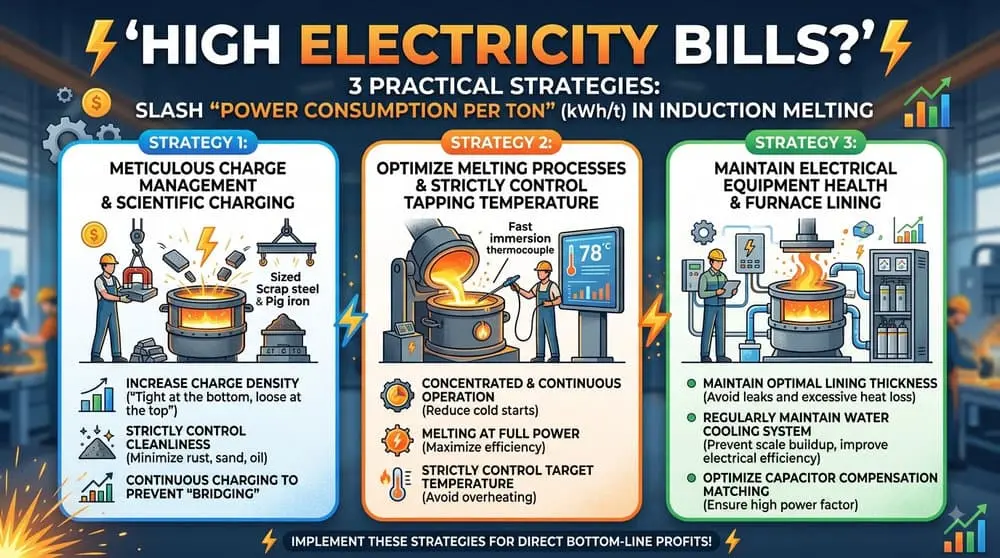
الإستراتيجية 1: إدارة الشحن الدقيقة & الشحن العلمي
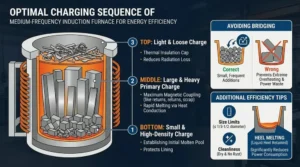
تحدد جودة مواد الشحن وممارسات الشحن بشكل مباشر كفاءة امتصاص الطاقة الكهربائية أثناء مرحلة الذوبان الأولية. تؤدي عادات الشحن السيئة إلى إهدار الطاقة بشكل كبير وتبديد الحرارة.
- زيادة كثافة الشحن (“ضيق في القاع, فضفاضة في الأعلى”): تأكد من أن الشحن في الأقسام السفلية والمتوسطة مضغوط قدر الإمكان. يجب أن يتناسب حجم خردة الفولاذ/الحديد الخام مع أبعاد الفرن (يجب ألا يتجاوز الحد الأقصى لطول قطعة واحدة 1/3 من القطر الداخلي للبوتقة). تولد الشحنة الكثيفة تيارات مستحثة أقوى, تسريع سرعة الذوبان.
- التحكم الدقيق في نظافة الشحن: شديدة الصدأ, موحلة, أو تمتص الشحنات الزيتية كميات هائلة من الحرارة وتنتج خبثًا زائدًا. كل 1% تؤدي الزيادة في توليد الخبث إلى زيادة استهلاك الطاقة بنسبة 1.5% إلى 2% تقريبًا.
- الشحن المستمر لمنع “التجسير“: الحفاظ على أ “متكرر, دفعة صغيرة” روتين الشحن أثناء الذوبان. إذا حدث التجسير (تتعطل الشحنة العلوية بينما تذوب الشحنة السفلية), فهو لا يشكل خطراً على السلامة فحسب, لكن المعدن المنصهر المحموم في الأسفل يهدر أيضًا طاقة كهربائية كبيرة.
الإستراتيجية 2: تحسين عمليات الذوبان & التحكم الدقيق في درجة حرارة التنصت
يعد إيقاع الإنتاج والتحكم في درجة الحرارة من المتغيرات الديناميكية الأساسية التي تؤثر على استهلاك الطاقة لكل طن.
- مركزة & التشغيل المستمر: عند البدء من فرن بارد, تمتص البطانة كمية كبيرة من الحرارة, مما تسبب في استهلاك الطاقة من الذوبان الأول 15% (أو أعلى) مما كانت عليه أثناء التشغيل المستمر. لذلك, يتغير الجدول الزمني بشكل معقول لتحقيق أقصى قدر من التركيز, ذوبان مستمر, تقليل بدايات التشغيل الباردة وأوقات الانتظار في وضع الخمول.
- ذوبان بكامل طاقته: ضمن حدود المعدات الآمنة, الحفاظ على أقصى قدر من الطاقة خلال مرحلة الذوبان. القوة الأعلى تعني أوقات ذوبان أقصر, أقل تبديد الحرارة المحيطة, وكفاءة حرارية أعلى بشكل عام.
- التحكم بدقة في درجة الحرارة المستهدفة: غالبًا ما يقوم المشغلون بتسخين الحديد المنصهر بشكل متكرر “فقط لتكون آمنا.” في الواقع, بمجرد تجاوز درجة الحرارة الهدف, يتسارع الإشعاع الحراري بشكل كبير, مما تسبب في زيادة استهلاك الطاقة لكل 10 درجات مئوية. استخدم المزدوجات الحرارية سريعة الغمر واقطع الطاقة على الفور للتنصت بمجرد الوصول إلى درجة الحرارة المستهدفة والتركيب الكيميائي.
الإستراتيجية 3: الحفاظ على صحة المعدات الكهربائية & بطانة الفرن
الحالة المادية لل فرن الحث يحدد الحد الأعلى لكفاءة تحويل الطاقة الكهربائية إلى الحرارية.
- الحفاظ على سمك البطانة الأمثل: تعمل البطانة السميكة جدًا على زيادة المسافة بين ملف الحث والشحنة, مما يسبب تسرب التدفق المغناطيسي وخفض الكفاءة الكهربائية; البطانة الرقيقة جدًا توفر الطاقة ولكنها تخاطر بالتشغيل (اختراق المعادن). يجب الحفاظ على سمك البطانة ضمن نطاق اقتصادي معقول بناءً على بروتوكولات صيانة الحراريات.
- صيانة نظام تبريد المياه بانتظام: يعد تراكم القشور في أنابيب مياه التبريد سببًا شائعًا لارتفاع الطاقة الخفية. المقياس لديه الموصلية الحرارية السيئة, مما يتسبب في ارتفاع درجات حرارة الملف وزيادة خسائر النحاس في الملف (خسائر I²R). يؤدي تنظيف خطوط المياه بشكل دوري واستخدام المياه الغازية إلى تحسين الكفاءة الكهربائية بشكل فعال.
- تحسين مطابقة تعويض المكثف: قم بمراقبة المعلمات الكهربائية في خزانة التحكم عن كثب لضمان التشغيل عند عامل طاقة مرتفع. تؤدي بنوك المكثفات القديمة أو التي تم تبديلها بشكل غير صحيح إلى انخفاض عوامل الطاقة (قوة رد الفعل عالية), إطالة زمن الذوبان وزيادة الفاقد في المحولات وخطوط الكهرباء.
لا يمكن تحقيق خفض استهلاك الطاقة لكل طن بين عشية وضحاها. أنها لا تتطلب إصلاحات المعدات باهظة الثمن, بل يعتمد على الانضباط الصارم للعملية و إدارة أرضية المتجر المضبوطة. سيؤدي تنفيذ هذه الاستراتيجيات الثلاث إلى معايير تشغيلية يومية إلى تحويل التوفير الشهري في الكهرباء إلى أرباح مباشرة.