Frekuensi Tinggi vs. Frekuensi Sedang vs. Tungku Induksi Frekuensi Daya: Perbedaan Inti dan Skenario Aplikasi
Perbedaan inti antara ketiga jenis tungku induksi ini terletak pada keduanya frekuensi operasi. Perbedaan frekuensi secara langsung menentukan kedalaman “Efek Kulit” arus di dalam logam dan besarnya gaya pengadukan elektromagnetik, menyebabkan perbedaan yang sangat signifikan dalam karakteristik peleburan dan skenario penerapannya.
Berikut adalah analisis mendetail tentang perbedaan inti dan skenario penerapannya:
Matriks Perbandingan Perbedaan Inti
| Fitur | Frekuensi Daya | Frekuensi Sedang | Frekuensi Tinggi |
| Frekuensi operasi | 50Hz atau 60Hz (Frekuensi listrik) | 150Hz – 10KHZ | 10KHZ – 300kHz dan lebih tinggi |
| Kedalaman Penetrasi Saat Ini | Dalam | Sedang | Sangat dangkal (permukaan saja) |
| Gaya Pengadukan Elektromagnetik | Sangat kuat | Sedang | Lemah |
| Metode awal | Membutuhkan sisa logam cair atau balok awal (Tidak dapat memulai dengan dingin) | Penyalaan tungku dingin langsung dapat dilakukan | Penyalaan tungku dingin langsung dapat dilakukan |
| Ukuran Peralatan | Tebal | Kompak | Kecil |
1. Tungku Induksi Frekuensi Daya: Tonase Besar “Memegang Raksasa”
Tungku induksi frekuensi daya secara langsung memanfaatkan arus bolak-balik 50Hz atau 60Hz dari jaringan listrik industri tanpa memerlukan perangkat konversi frekuensi.
- Keuntungan Inti: Efek pengadukan elektromagnetik yang intens memastikan komposisi dan suhu logam yang sangat seragam; karena tidak adanya kerugian konversi frekuensi, strukturnya relatif sederhana dan tahan lama.
- Utama Batasan: Tidak dapat dinyalakan langsung dari tungku dingin. Setelah setiap penutupan, sebagian dari besi cair harus tertahan di dalam tungku, atau blok awal khusus harus ditambahkan untuk permulaan berikutnya; laju pemanasan lebih lambat; faktor daya yang lebih rendah.
- Skenario Aplikasi: Cocok untuk pengecoran besar yang terlibat dalam produksi berkelanjutan. Terutama digunakan untuk peleburan besi cor dan logam non-besi bertonase besar, serta berperan sebagai a “memegang tungku” atau “tungku pengkondisian” dalam proses peleburan dupleks (MISALNYA., dupleks tungku induksi kubah).
2. Tungku Induksi Frekuensi Menengah: Itu “Pekerja Keras yang serba bisa” Pengecoran Modern
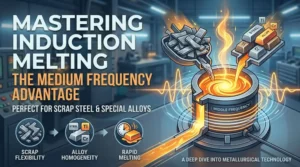
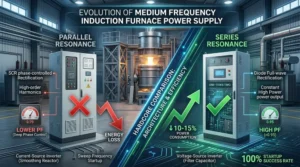
Tungku induksi frekuensi menengah menggunakan teknologi konversi frekuensi, seperti SCR (thyristor) atau IGBT, untuk mengubah AC frekuensi daya menjadi AC frekuensi menengah. Saat ini peralatan yang paling banyak digunakan di sektor industri pengecoran dan metalurgi.
- Keuntungan Inti: Menyeimbangkan efisiensi pemanasan dan efek pengadukan dengan sempurna. Mampu 100% penyalaan tungku dingin langsung, membuatnya sangat nyaman untuk mengosongkan tungku perapian atau mengganti grade baja; kepadatan daya tinggi, kecepatan pemanasan cepat, dan efisiensi termal yang tinggi; operasi yang fleksibel.
- Utama Batasan: Memerlukan konfigurasi tambahan kabinet catu daya frekuensi menengah, membuat investasi peralatan awal sedikit lebih tinggi dibandingkan pengaturan tradisional.
- Skenario Aplikasi: Mencakup hampir semua persyaratan pengecoran konvensional. Banyak digunakan untuk peleburan dan penahanan baja karbon, baja paduan, baja khusus, dan berbagai logam non-ferrous (tembaga, aluminium, seng).
3. Tungku Induksi Frekuensi Tinggi: Itu “Pisau bedah” untuk Presisi dan Permukaan
Frekuensi tungku induksi frekuensi tinggi yang sangat tinggi menyebabkan arus terkonsentrasi hampir seluruhnya pada lapisan terluar logam (Efek Kulit yang intens).
- Keuntungan Inti: Kecepatan pemanasan yang sangat cepat (dapat menyelesaikan pemanasan permukaan dalam hitungan detik); dampak minimal pada struktur internal benda kerja, menghasilkan oksidasi dan dekarburisasi yang sangat terbatas.
- Utama Batasan: Kedalaman penetrasi saat ini terlalu dangkal, dan gaya pengadukan elektromagnetik sangat lemah, membuatnya tidak mampu melelehkan logam dalam jumlah besar secara keseluruhan.
- Skenario Aplikasi: Terutama diterapkan pada pendinginan permukaan bagian logam, perlakuan panas lokal, dan pengelasan frekuensi tinggi (MISALNYA., pipa las frekuensi tinggi). Untuk tujuan peleburan, ini sangat terbatas pada penyiapan sampel dalam jumlah kecil di laboratorium, atau pemurnian mikro logam mulia seperti emas, perak, dan platina.
Ringkasan Rekomendasi
- Jika perlu terus menerus melelehkan jenis logam yang sama dalam jumlah besar, atau jika Anda memerlukan peralatan penyimpanan berkapasitas besar, itu tungku induksi frekuensi daya tetap menjadi pilihan tradisional dan ekonomis.
- Jika Anda mengoperasikan a pengecoran modern mengelola multi-variasi, batch kecil hingga menengah, sering mengganti jenis paduan, dan menuntut start dingin yang sangat efisien dan fleksibel, itu tungku induksi frekuensi menengah adalah pilihan optimal yang tak terbantahkan.
- Jika fokus Anda adalah pada perlakuan panas permukaan logam, atau itu pemurnian mikro logam mulia dan pengujian laboratorium, Anda harus memanfaatkan a tungku induksi frekuensi tinggi.