Dari Peleburan hingga Atomisasi, Bagaimana Kontrol Daya Induksi yang Tepat Menentukan Spheroidisasi Serbuk Logam dan Distribusi Ukuran Partikel
Dalam Atomisasi Gas Induksi Vakum (KESALAHAN) atau proses atomisasi gas bertekanan sangat tinggi, tungku peleburan memastikan kualifikasi komposisi, sementara itu tundish dan tabung pengiriman mewakili yang kritis “mil terakhir” yang menentukan kualitas akhir bubuk. Di sinilah aliran logam cair bertemu dengan ledakan gas inert bertekanan tinggi yang bergerak dengan kecepatan ratusan meter per detik..
Bagaimana kita memastikan aliran cairan memiliki kondisi fisik yang sempurna di persimpangan sepersekian detik ini? Jawabannya terletak pada regulasi yang tepat memanasi secara keterlaluan oleh catu daya pemanas induksi.
1. Mekanisme Fisik Inti: Bagaimana Superheat Mengontrol Tetesan Cairan “Momen Hidup dan Mati”
Setelah aliran logam cair meninggalkan nosel tabung pengantar dan terganggu oleh aliran gas bertekanan tinggi, itu mengalami a perlombaan antara tegangan permukaan dan laju pendinginan.
1.1 Fase Atomisasi: Keseimbangan Viskositas dan Ketegangan Permukaan
Ketika aliran gas menggeser aliran logam cair, ukuran partikel rata-rata dari tetesan awal (d_m) dapat dijelaskan dengan rumus klasik Lubanska atau model atomisasi yang dimodifikasi. Kekuatan pendorong inti sangat dipengaruhi oleh viskositas dinamis (atau) Dan tegangan permukaan (C) dari logam cair.
- Panas Super Tidak Cukup (Suhu Terlalu Rendah): Viskositas (atau) dan tegangan permukaan (C) meningkat tajam, sehingga sulit untuk mencapai Angka Weber kritis (Kami). Aliran gas tidak dapat secara efektif menggeser aliran logam, menghasilkan peningkatan tajam pada bubuk kasar dan bersisik, atau bahkan menyebabkan selang bersalin membeku dan tersumbat.
- Panas Berlebihan (Suhu Terlalu Tinggi): Aliran logam menjadi terlalu cair. Meskipun hal ini mendukung pembentukan bubuk ultra-halus, tekanan uap yang tinggi menyebabkan kerugian penguapan dan parah partikel satelit fenomena.
1.2 Fase Spheroidisasi: Waktu Spheroidisasi vs. Waktu Solidifikasi
Untuk tetesan tidak beraturan yang terganggu oleh aliran gas untuk berkontraksi menjadi bola sempurna sebelum pemadatan yang cepat, kondisi berikut harus dipenuhi: Waktu Karakteristik Spheroidisasi (τsph) < Waktu Tunda Solidifikasi (τsol).
Waktu spheroidisasi umumnya diperkirakan sebagai:
τsph ≈ (π^2 * d^3 * atau) / (4 * C)
Dengan memanfaatkan catu daya induksi untuk secara tepat menstabilkan logam cair di tundish dalam jendela superheat tertentu, cairan logam mempertahankan viskositas rendah (atau), sehingga memperpendek τsph. Secara bersamaan, ini menunda permulaan solidifikasi (τsol) , mengamankan jendela spheroidisasi yang memadai untuk tetesan dan meningkatkan secara drastis tingkat spheroidisasi.
2. Strategi Perangkat Keras dan Regulasi Utama untuk Pemanasan Induksi Tundish/Delivery Tube
Untuk menjaga akurasi kontrol suhu ±2℃ dalam aliran cairan yang mengalir secara dinamis, sistem pemanas induksi harus memiliki efisiensi kopling elektromagnetik yang luar biasa dan waktu respons yang cepat.
[Catu Daya Digital Presisi Tinggi (IGBT)] —> [Kumparan Induksi Tersegmentasi yang Disesuaikan] —> [Pirometer Inframerah + PID Loop Tertutup] —> Tabung Pengiriman Stabil Meleleh Super Panas
2.1 Pemilihan Frekuensi dan Kedalaman Kulit Elektromagnetik
Tabung pengantar biasanya dibungkus dengan inti grafit atau bahan komposit keramik. Pemilihan frekuensi catu daya induksi harus menyeimbangkan efisiensi pemanasan selongsong grafit konduktif termal dengan dampak magnetohidrodinamik (MHD) pengadukan elektromagnetik pada stabilitas aliran leleh:
- Sedang hingga Frekuensi tinggi (MISALNYA., 10–30 kHz): Memastikan penetrasi energi yang efisien ke dalam lapisan grafit atau sambungan langsung ke permukaan aliran cairan sempit, membentuk kurva suhu yang curam dan sangat responsif.
2.2 Kompensasi Real-Time untuk Kehilangan Panas Dinamis
Saat logam cair terus mengalir dari tungku peleburan ke dalam tundish, tingkat cairan dan kecepatan aliran di dalam tundish berubah secara dinamis.
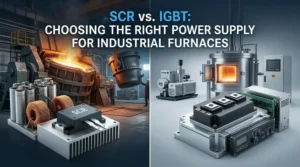
- Masalah dengan Peraturan Adat: Penyearah Terkendali Silikon Konvensional (SCR) pasokan listrik memiliki waktu respons yang lambat (biasanya dalam rentang ratusan milidetik). Saat dihadapkan pada gangguan suhu akibat dampak aliran cairan, mereka dengan mudah bertemu “melampaui” atau “meremehkan,” menyebabkan distribusi ukuran partikel yang tidak konsisten di berbagai batch.
- Keunggulan Catu Daya Digital Modern (IGBT): Memanfaatkan PID digital + kontrol umpan depan berdasarkan regulasi loop tertutup tingkat mikrodetik, dikombinasikan dengan pirometer inframerah dua warna, sistem dapat secara instan menyesuaikan frekuensi inverter dan keluaran daya dalam milidetik(5 < 5MS) mendeteksi fluktuasi suhu kecil. Hal ini menjaga superheat pada pintu keluar tabung pengantaran tetap konstan.
3. Dampak Kuantitatif Pengendalian Superheat terhadap Karakteristik Kualitas Serbuk
| Metrik Kontrol | Panas Super Rendah (<50℃) | Kontrol Superheat yang Tepat (T=100–150℃) | Panas Berlebihan (>200℃) |
| Tingkat Spheroidisasi | Sangat Rendah. Tetesan mengeras sebelum berkontraksi, sebagian besar tampak berbentuk air mata atau memanjang. | Sangat Tinggi (>95%). Permukaan akhir halus dengan partikel satelit minimal. | Sedang. Spheroidisasi terjadi, namun rasio bubuk satelit dan bubuk berongga meningkat. |
| Distribusi Ukuran Partikel (PSD) | Distribusi bimodal yang parah; konsentrasi tinggi serbuk kasar dan aglomerat. | Ideal, distribusi normal rentang sempit yang cocok dengan D_ yang ditargetkan{50} nilai. | Distribusi sangat bergeser ke arah ujung yang sangat halus, tapi disertai dengan ukuran besar, partikel berongga. |
| Tingkat Hasil | Hasil dari ukuran bubuk nominal target sangat rendah, menyebabkan tingkat scrap yang tinggi. | Memaksimalkan hasil bubuk dalam jendela spesifikasi yang ditargetkan. | Hasil bubuk halus yang tinggi, tetapi memiliki porositas gas internal, mengorbankan pemrosesan sekunder. |
| Stabilitas Proses | Rawan beku atau tengkorak di dalam tabung bersalin, mengakibatkan downtime yang tidak terjadwal. | Memungkinkan terus menerus, atomisasi yang stabil, memperpanjang umur layanan tabung pengiriman. | Erosi yang dipercepat pada refraktori tabung pengantar, berisiko masuknya inklusi non-logam. |
4. Mengatasi Kemacetan Teknis Inti: Kopling Sempurna Medan Elektromagnetik dan Termal
Untuk mencapai kesempurnaan, regulasi yang tepat dalam produksi industri yang sebenarnya, tantangan metalurgi berikut harus diselesaikan:
- Mencegah Solidifikasi Lokal di Zona Lembek: Untuk paduan dengan interval solidus-likuid yang lebar (seperti paduan super tertentu atau paduan magnet permanen tanah jarang), kumparan induksi harus mengadopsi a desain daya gradien tersegmentasi. Kepadatan daya ditingkatkan di ujung terminal dekat nosel untuk memastikan bahwa cairan logam tidak mengalami pemisahan struktural sebelum keluar dari nosel.
- Menekan “Gangguan Aliran” Disebabkan oleh Turbulensi Elektromagnetik: Arus induksi yang kuat mengerahkan gaya penjepit elektromagnetik ke dalam (Efek Jepit) pada aliran logam cair. Catu daya induksi harus memanfaatkan teknologi pelacakan frekuensi dinamis untuk menjaga suhu sekaligus mencegah gaya elektromagnetik menyebabkan pecahnya kolom cairan secara tidak terduga, sehingga menjamin keseragaman selama pemotongan aliran gas.
Kesimpulan & Tren Teknis
Dalam lanskap manufaktur saat ini, di mana manufaktur aditif (3pencetakan D) dan metalurgi serbuk densitas tinggi menuntut kinerja yang semakin ketat dari serbuk logam, fokus pengendalian kualitas bubuk telah bergeser dari “tahap peleburan” ke “malam atomisasi.” Frekuensi tinggi, catu daya induksi respons tinggi bukan lagi sekadar peralatan penyedia energi—tetapi merupakan katup kontrol presisi yang menentukan kualitas fisik (tingkat spheroidisasi, interval ukuran partikel) dari bedak. Menghilangkan fluktuasi suhu di tundish melalui digital, teknologi penahan induksi loop tertutup yang cerdas adalah jalur maju yang pasti untuk peningkatan skala industri bubuk logam bermutu tinggi.