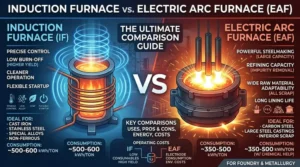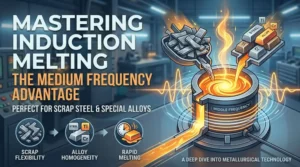
Tungku induksi dapat melelehkan hampir semua logam dan paduan yang bersifat konduktif listrik. Mereka bekerja dengan menggunakan induksi elektromagnetik untuk menghasilkan arus eddy di dalam logam, mengandalkan hambatan listrik logam itu sendiri terhadap panas dan mencapainya dengan cepat, pencairan seragam.
Berdasarkan sifat fisik dan aplikasi industri, tungku induksi terutama digunakan untuk melelehkan kategori utama logam berikut.
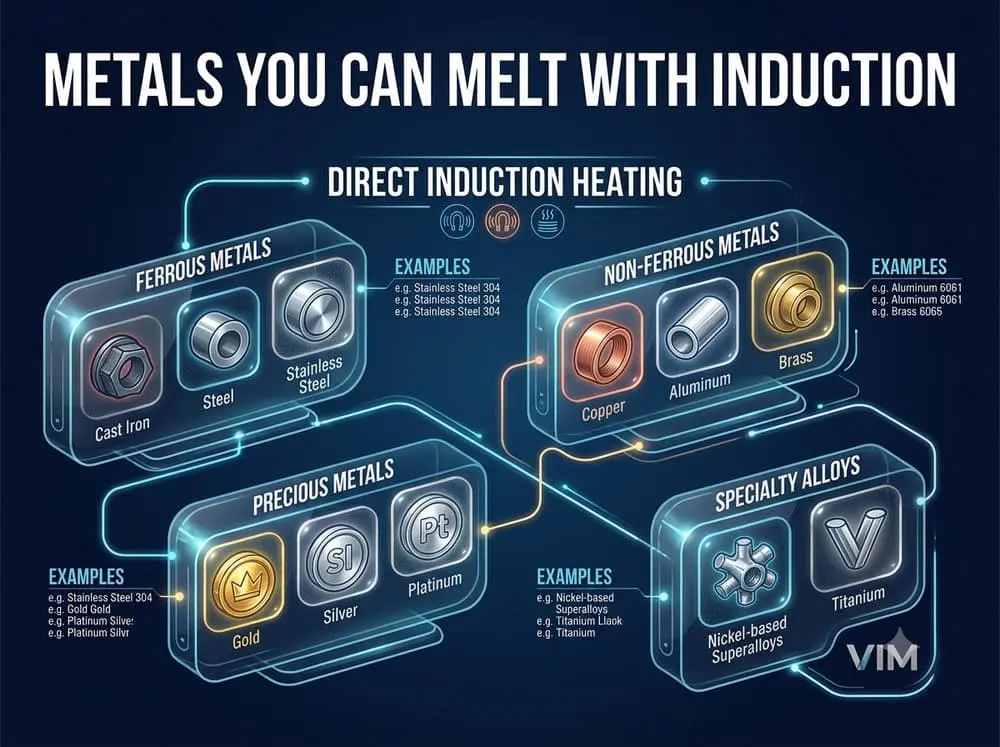
1. Logam Besi
Besi cor: Banyak digunakan untuk melebur dan menahan besi abu-abu dan besi ulet—salah satu aplikasi paling umum di pengecoran logam.
Baja Karbon & Baja Paduan: Tungku induksi memberikan kontrol suhu yang tepat dan komposisi paduan yang seragam, menjadikannya ideal untuk melebur baja khusus berkualitas tinggi.
Besi tahan karat: Karena peleburan induksi tidak menggunakan busur listrik, ini mencegah pengambilan karbon, sehingga cocok untuk baja tahan karat dengan persyaratan rendah karbon yang ketat.
2. Logam Non-Ferrous
Tembaga & Paduan Tembaga: Termasuk tembaga murni, kuningan, perunggu, dll.. Pengadukan elektromagnetik di dalam tungku memastikan komposisi kimia yang seragam.
Aluminium & Paduan Aluminium: Meskipun aluminium memiliki konduktivitas termal yang tinggi dan titik leleh yang lebih rendah, tungku induksi (biasanya frekuensi menengah atau frekuensi listrik) banyak digunakan untuk peleburan cepat dan daur ulang skrap.
Seng, Memimpin, & Timah: Logam dengan titik leleh rendah ini dapat dicairkan dengan efisiensi yang sangat tinggi.
3. Logam Mulia
Emas, Perak, Platinum, & Paladium: Tungku induksi frekuensi tinggi atau frekuensi menengah yang ringkas merupakan standar dalam pembuatan perhiasan, laboratorium R&D, dan pemurnian. Mereka menawarkan kontrol suhu yang tepat, meminimalkan oksidasi dan kehilangan logam mahal yang mudah menguap.
4. Logam Khusus & paduan super
Berbasis Nikel & Superalloy Berbasis Kobalt: Biasa digunakan untuk komponen mesin dirgantara dan peralatan industri presisi.
titanium & Paduan Titanium: Sangat reaktif dengan oksigen dan nitrogen pada suhu tinggi, peleburan titanium harus dilakukan di a Melting induksi vakum (VIM) perapian.
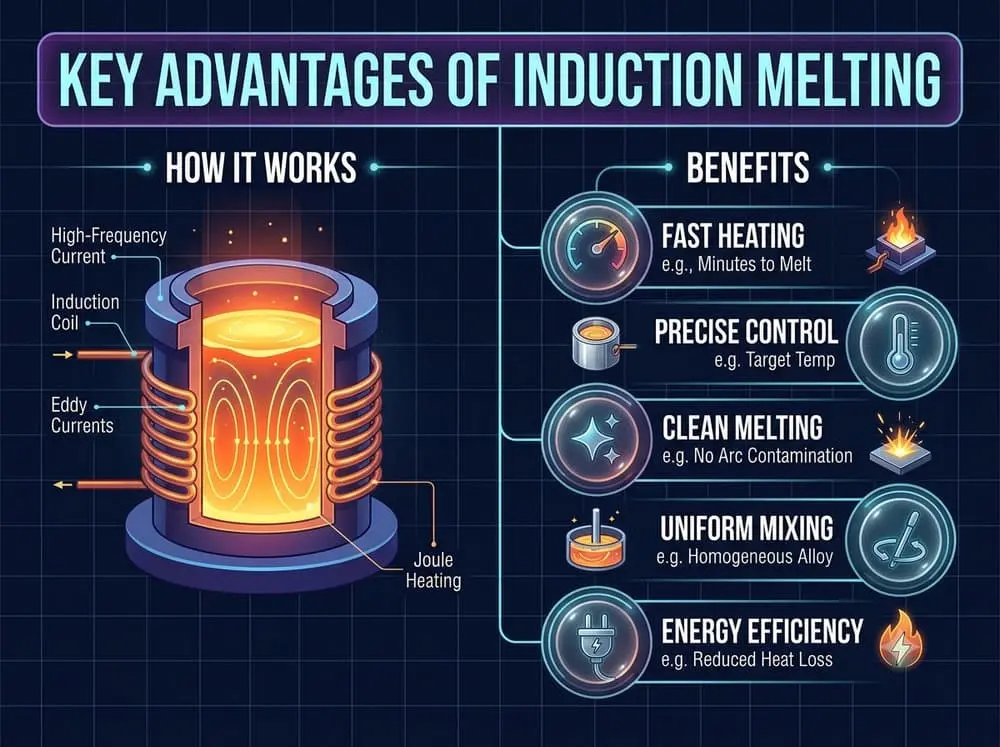
Catatan: Langsung pemanasan induksi membutuhkan bahan yang konduktif secara listrik. Untuk melelehkan bahan non-konduktif (seperti kaca khusus, keramik, atau polimer), sebuah pemanasan tidak langsung pendekatan digunakan: wadah konduktif (seperti wadah grafit) dipanaskan oleh kumparan induksi, yang kemudian mentransfer panas ke muatan non-konduktif di dalamnya.