Penurunan kecepatan leleh frekuensi menengah tungku induksi biasanya disebabkan oleh tiga alasan utama: penurunan efisiensi kopling elektromagnetik, daya keluaran aktual tidak mencukupi, atau kehilangan panas yang berlebihan. Untuk pemecahan masalah yang tepat, analisis sistematis dapat dilakukan dari empat dimensi teknis berikut.
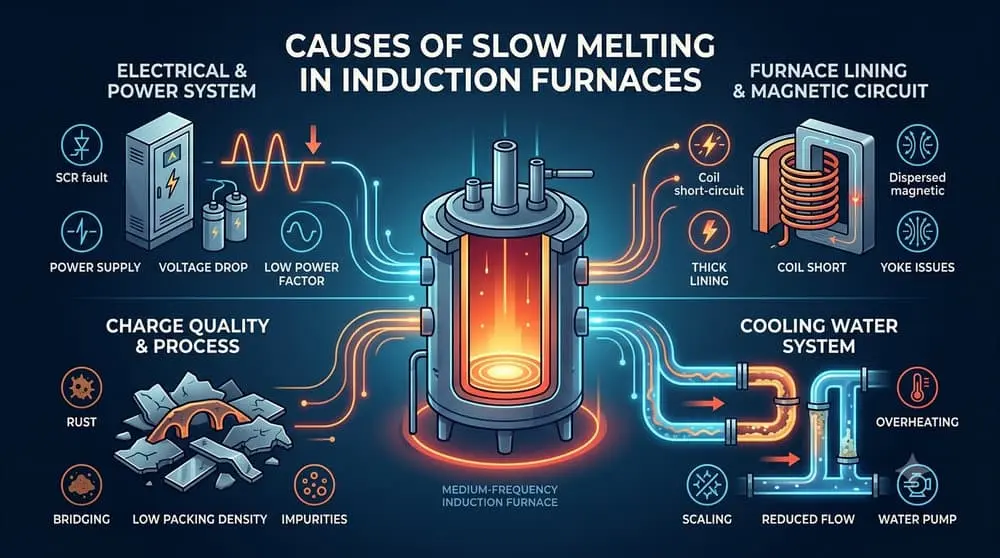
1. Kelainan Sistem Kelistrikan dan Catu Daya
Ini adalah penyebab paling langsung dari penurunan daya leleh. Meskipun nilai daya peralatan tetap tidak berubah, daya efektif sebenarnya yang diterapkan pada tungku perapian dapat berkurang secara signifikan.
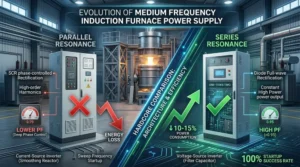
- Inverter atau Penyearah Kesalahan: Thyristor (SCR) tidak sepenuhnya berjalan, atau parameter rangkaian inverter telah menyimpang, mencegah tegangan DC atau tegangan frekuensi menengah mencapai nilai pengenal.
- Faktor Daya Rendah: Bank kapasitor kompensasi rusak atau tidak terpasang sepenuhnya, menyebabkan peningkatan daya reaktif secara signifikan dan penurunan daya aktif.
- Kekuatan Eksternal jaringan Fluktuasi: Tegangan saluran masuk yang rendah atau kapasitas trafo yang tidak mencukupi menghalangi peralatan mencapai daya desainnya pada beban penuh.
2. Status Lapisan Tungku dan Sirkuit Magnetik
Tungku induksi mengandalkan garis gaya magnet yang memotong logam untuk menghasilkan arus eddy untuk pemanasan; kondisi fisik lapisan tungku secara langsung menentukan efisiensi termal.
- Lapisan Terlalu Tebal: Jika lapisan yang baru dibuat terlalu tebal, itu meningkatkan jarak antara muatan dan kumparan induksi, menyebabkan peningkatan kebocoran magnetik dan penurunan efisiensi kopling elektromagnetik secara signifikan. Khas, karena lapisannya semakin tipis, kecepatan leleh akan meningkat secara bertahap.
- Antar belokan Sirkuit Pendek dari Kumparan Induksi: Isolasi koil rusak, tiang-tiang Bakelite yang terbakar, atau akumulasi debu logam yang berlebihan dapat menyebabkan arus induksi mengalami hubungan pendek antar putaran. Hal ini tidak hanya sangat memperlambat kecepatan peleburan besi atau baja tetapi juga dengan mudah menyebabkan peralatan terbakar.
- Kesalahan Yoke: Fungsi kuk adalah untuk memusatkan garis gaya magnet ke arah perapian tungku. Jika sekrup atas kuk kendor dan tidak dikencangkan sepenuhnya, atau jika lembaran baja silikon bagian dalam menua dan menghasilkan panas, itu akan menyebabkan dispersi medan magnet yang parah dan penurunan efisiensi pemanasan secara tiba-tiba.
3. Kualitas Pengisian dan Proses Pengisian
Prosedur pengoperasian dan karakteristik fisik material itu sendiri mempunyai pengaruh yang menentukan terhadap efisiensi perpindahan panas.
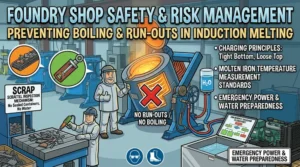
- Mengenakan biaya “Menjembatani“: Pengisian daya yang tidak tepat (potongan besar tersangkut di bagian atas tungku, potongan kecil di bagian bawah) dapat mengakibatkan logam bagian bawah sudah meleleh atau bahkan mendidih, sedangkan muatan atas tidak dapat turun ke bawah untuk menghubungi besi cair. Hal ini tidak hanya menghambat proses peleburan tetapi juga dengan mudah merusak bagian bawah tungku.
- Bahan Muatan Buruk: Permukaan besi tua atau besi kasar ditutupi dengan karat yang parah, pasir, atau minyak. Pengotor ini tidak hanya mengkonsumsi sejumlah besar energi panas ekstra selama peleburan tetapi juga menghasilkan terak tebal yang menghalangi perpindahan panas.
- Kepadatan Pengepakan Rendah: Ukuran potongan muatan sangat tidak merata, mengakibatkan ruang kosong yang berlebihan. Selama tahap awal pemanasan induksi, ia bergantung pada cincin hubung singkat antara potongan muatan untuk menghantarkan listrik dan menghasilkan panas. Kekosongan yang berlebihan sering kali menyebabkan loop induksi yang buruk dan pencairan awal yang sangat lambat.
4. Sistem Air Pendingin Terhalang
Mekanisme perlindungan diri pada peralatan akan secara otomatis membatasi daya ketika pendinginan buruk.
- Memperbesar Kabel atau Kumparan Berpendingin Air: Air sadah menyebabkan kerak di dalam kabel berpendingin air atau dinding bagian dalam tabung tembaga, mengurangi aliran air secara signifikan. Begitu suhu air naik, sensor suhu sistem akan memicu pengoperasian dengan daya rendah atau langsung membunyikan alarm dan mematikan mesin.
Rekomendasi Pemecahan Masalah
Disarankan untuk mengamati terlebih dahulu apakah DC voltase, tegangan frekuensi menengah, dan arus saluran masuk pada kabinet meteran dapat mencapai standar beban penuh. Jika parameter kelistrikan normal, fokus pada pemeriksaan kepadatan pengepakan muatan dan ketebalan lapisan; jika parameter tidak dapat dicapai, tungku perlu dimatikan untuk memeriksa kabinet kapasitor dan status thyristor.