Высокочастотные против. Среднечастотный против. Сильночастотные индукционные печи: Основные различия и сценарии применения
Основное различие между этими тремя типами индукционных печей заключается в их рабочая частота. Разница в частоте напрямую определяет глубину “Скин-эффект” тока внутри металла и величины электромагнитной перемешивающей силы, что приводит к весьма значительным различиям в их характеристиках плавления и сценариях применения..
Вот подробный анализ их основных различий и сценариев применения.:
Матрица сравнения основных различий
| Особенность | Мощность-Частота | Среднечастотный | Высокочастотный |
| Рабочая частота | 50Гц или 60 Гц (Частота сети) | 150Гц – 10кГц | 10кГц – 300кГц и выше |
| Текущая глубина проникновения | Глубокий | Середина | Чрезвычайно мелкий (только поверхность) |
| Электромагнитная перемешивающая сила | Чрезвычайно сильный | Умеренный | Слабый |
| Начальный метод | Требуется остаточный расплавленный металл или стартовые блоки. (Не могу холодный запуск) | Возможен прямой холодный запуск печи | Возможен прямой холодный запуск печи |
| Размер оборудования | Громоздкий | Компактный | Маленький |
1. Сильночастотная индукционная печь: Крупнотоннажный “Холдинг Бегемота”
Индукционные печи промышленной частоты напрямую используют переменный ток частотой 50 или 60 Гц из промышленной электросети без необходимости использования устройств преобразования частоты..
- Основные преимущества: Интенсивный эффект электромагнитного перемешивания обеспечивает чрезвычайно однородный состав металла и температуру.; за счет отсутствия потерь преобразования частоты, конструкция относительно проста и прочна.
- Основной Ограничения: Невозможно запустить непосредственно из холодной печи.. После каждого выключения, часть расплавленного железа должна оставаться в печи, или для следующего запуска необходимо добавить специальные стартовые блоки; более медленная скорость нагрева; более низкий коэффициент мощности.
- Сценарии приложения: Подходит для крупных литейных производств, занимающихся непрерывным производством.. В основном используется для крупнотоннажной плавки чугуна и цветных металлов., а также служить в качестве “раздаточная печь” или “печь для кондиционирования” в процессах дуплексной плавки (например, дуплексная вагранка-индукционная печь).
2. Среднечастотная индукционная печь: The “Универсальная рабочая лошадка” современных литейных заводов
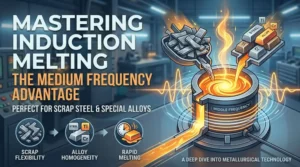
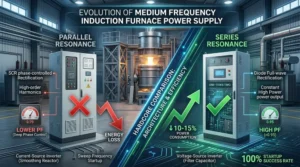
Среднечастотные индукционные печи используют технологии преобразования частоты., такие как СКР (Тиристоры) или IGBT, для преобразования переменного тока промышленной частоты в переменный ток средней частоты. В настоящее время это наиболее широко используемое оборудование в секторах промышленного литья и металлургии..
- Основные преимущества: Идеально балансирует эффективность нагрева и эффект перемешивания.. Способен 100% прямой холодный запуск печи, что позволяет очень удобно опорожнять подину печи или менять марку стали; высокая плотность мощности, быстрая скорость нагрева, и высокий тепловой КПД; гибкая работа.
- Основной Ограничения: Требуется дополнительная настройка шкафа среднечастотного питания., делая первоначальные инвестиции в оборудование немного выше, чем в традиционные установки.
- Сценарии приложения: Охватывает почти все традиционные требования к литью.. Широко используется для плавки и выдержки углеродистой стали., Сплава Сталь, специальные стали, и различные цветные металлы (медь, алюминий, цинк).
3. Высокочастотная индукционная печь: The “Скальпель” для точности и поверхностей
Чрезвычайно высокая частота высокочастотных индукционных печей приводит к тому, что ток почти полностью концентрируется на самом внешнем слое металла. (интенсивный эффект кожи).
- Основные преимущества: Чрезвычайно высокая скорость нагрева (может завершить нагрев поверхности за считанные секунды); минимальное воздействие на внутреннюю структуру заготовки, что приводит к сильно ограниченному окислению и обезуглероживанию.
- Основной Ограничения: Текущая глубина проникновения слишком мала, и электромагнитная перемешивающая сила чрезвычайно слаба, что делает его неспособным к плавлению больших объемов металла..
- Сценарии приложения: В основном применяется при поверхностной закалке металлических деталей., локальная термическая обработка, и высокочастотная сварка (например, трубы высокочастотной сварки). Для плавления, оно строго ограничено подготовкой небольших количеств проб в лабораториях., или микроаффинаж драгоценных металлов, таких как золото, серебро, и платина.
Краткие рекомендации
- Если вам нужно непрерывно плавить один и тот же тип металла большими партиями, или если вам требуется оборудование для хранения большой емкости, тот индукционная печь промышленной частоты остается традиционным и экономичным выбором.
- Если вы управляете современное литейное производство, управляющее многовариантным, мелкие и средние партии, часто меняйте типы сплавов, и требуют высокоэффективного и гибкого холодного запуска, тот среднечастотная индукционная печь это бесспорно оптимальный выбор.
- Если ваше внимание сосредоточено на термическая обработка поверхности металла, или микроаффинаж драгоценных металлов и лабораторные исследования, вы должны использовать высокочастотная индукционная печь.