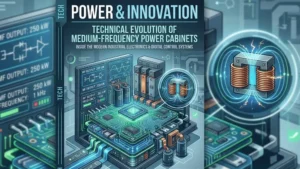
Основная архитектура и техническая эволюция
Технология среднечастотных источников питания совершила скачок от раннего аналогового управления и параллельного резонанса к современному полностью цифровому управлению и последовательному резонансу. (такие как “один-буксир-два” двойная система питания). Его основная суть заключается в изменении топологии инвертора., который напрямую определяет коэффициент мощности и общую производительность энергопотребления оборудования на стороне сети..
Независимо от топологии, базовая физическая модель резонансной частоты следует f = 1 / (2 π √LC), но две схемы имеют принципиальные различия в способах энергетического взаимодействия, механизмы регулирования мощности, и их влияние на электросеть литейного завода.
Хардкорное сравнение: Серия против. Параллельный резонанс
Визуально представить различия между двумя техническими архитектурами., ниже приведено сравнение их основных электрических характеристик.:
| Характеристика | Параллельный резонанс (Традиционная топология) | Сериал резонанс (Современная топология) |
| Тип инвертора | Инвертор источника тока (требуется сглаживающий реактор большой мощности) | Инвертор источника напряжения (требуется конденсатор фильтра постоянного тока большой емкости) |
| Исправление & Управление мощностью | Фазорегулируемое SCR-выпрямление (мощность регулируется изменением угла обстрела) | Диодное двухполупериодное выпрямление или полууправляемый мост. (мощность регулируется через прерыватель или на стороне инвертора) |
| Коэффициент мощности | Зависит от регулирования мощности; часто ниже 0.8 на малой мощности | Остается высоким во всем диапазоне мощности ($\созфи>0.95$) |
| Гармоническое загрязнение | Высокий (генерирует значительные гармоники высокого порядка во время глубокого фазового контроля) | Минимальный (сторона выпрямителя полностью открыта, низкий коэффициент искажения формы сигнала) |
| Производительность при запуске | Запуск с частотой развертки; склонен к сбоям во время холодного или полного запуска печи | Высокая адаптируемость; около 100% процент успешных запусков в различных условиях печи |
Анализ энергоэффективности и преимущества семинара
В реальном плавильно-литейном производстве, Энергоэффективность – это ключевой фактор конкурентоспособности, определяющий стоимость тонны стали.:
- Преимущество постоянной мощности Выход: Последовательные резонансные схемы могут поддерживать постоянную, высокая выходная мощность на протяжении всего цикла плавки (будь то в холодной печи или полной расплавленного железа). Эта характеристика значительно сокращает время плавки одной партии и напрямую снижает потери тепла на излучение при высоких температурах..
- Потери в линии и использование трансформатора: Параллельный резонанс вызывает большой реактивный ток на этапах малой мощности. (например, сохранение тепла или выпечка в печи), что приводит к ненужному увеличению потерь в линии. В отличие, постоянный высокий коэффициент мощности последовательной топологии максимизирует коэффициент использования мощности трансформатора, эффективно избегая электрических отходов “большая лошадь, тянущая маленькую тележку.”
- Комплексные преимущества энергосбережения: По сравнению с традиционным параллельным оборудованием, Серийные резонансные силовые шкафы с одинаковой производительностью печи обычно могут снизить совокупное энергопотребление на тонну стали на 10% к 15% за счет повышения эффективности инвертора и снижения потерь реактивной мощности.