Từ nóng chảy đến nguyên tử hóa, Cách điều khiển công suất cảm ứng chính xác xác định sự hình cầu hóa và phân bố kích thước hạt của bột kim loại
Trong quá trình nguyên tử hóa khí cảm ứng chân không (LỖI) hoặc quá trình nguyên tử hóa khí áp suất cực cao, lò nấu chảy đảm bảo chất lượng thành phần, trong khi dư thừa và ống phân phối đại diện cho sự quan trọng “dặm cuối cùng” quyết định chất lượng cuối cùng của bột. Chính tại đây, dòng kim loại nóng chảy gặp phải một vụ nổ khí trơ áp suất cao di chuyển với tốc độ hàng trăm mét/giây..
Làm cách nào để đảm bảo dòng chất lỏng sở hữu trạng thái vật lý hoàn hảo tại điểm giao nhau trong tích tắc này? Câu trả lời nằm ở quy định chính xác của quá nóng bằng nguồn điện sưởi ấm cảm ứng.
1. Cơ chế vật lý cốt lõi: Cách quá nhiệt kiểm soát giọt chất lỏng “Khoảnh khắc của sự sống và cái chết”
Khi dòng kim loại nóng chảy rời khỏi vòi của ống phân phối và bị gián đoạn bởi dòng khí áp suất cao, nó trải qua một cuộc đua giữa sức căng bề mặt và tốc độ làm mát.
1.1 Giai đoạn nguyên tử hóa: Sự cân bằng của độ nhớt và sức căng bề mặt
Khi dòng khí cắt dòng kim loại nóng chảy, kích thước hạt trung bình của các giọt ban đầu (d_m) có thể được mô tả bằng công thức Lubanska cổ điển hoặc các mô hình nguyên tử hóa được sửa đổi. Động lực cốt lõi bị ảnh hưởng đáng kể bởi độ nhớt động (hoặc) Và sức căng bề mặt (c) của kim loại lỏng.
- Không đủ nhiệt độ (Nhiệt độ quá thấp): Độ nhớt (hoặc) và sức căng bề mặt (c) tăng mạnh, gây khó khăn cho việc đạt được Số Weber quan trọng (Chúng tôi). Dòng khí không thể cắt dòng kim loại một cách hiệu quả, dẫn đến sự gia tăng mạnh về lượng bột thô và dễ bong tróc, hoặc thậm chí khiến ống phân phối bị đóng băng và tắc nghẽn.
- Quá nhiệt (Nhiệt độ quá cao): Dòng kim loại trở nên quá lỏng. Trong khi điều này tạo thuận lợi cho việc hình thành các loại bột siêu mịn, áp suất hơi cao dẫn đến tổn thất bay hơi và nghiêm trọng hạt vệ tinh hiện tượng.
1.2 Giai đoạn hình cầu hóa: Thời gian hình cầu vs. Thời gian đông đặc
Để các giọt không đều bị gián đoạn bởi dòng khí co lại thành những quả cầu hoàn hảo trước khi đông đặc nhanh chóng, điều kiện sau đây phải được đáp ứng: Thời gian đặc trưng hình cầu (τsph) < Thời gian trễ hóa rắn (τsol).
Thời gian hình cầu hóa thường được ước tính là:
τsph ≈ (π^2 * d^3 * hoặc) / (4 * c)
Bằng cách sử dụng nguồn điện cảm ứng để ổn định chính xác kim loại nóng chảy ở mức dư thừa trong một khoảng thời gian quá nhiệt cụ thể, chất lỏng kim loại duy trì độ nhớt thấp (hoặc), từ đó rút ngắn τsph. Đồng thời, điều này làm trì hoãn sự khởi đầu của quá trình đông đặc (τsol) , đảm bảo một cửa sổ hình cầu thích hợp cho các giọt nước và cải thiện đáng kể tỷ lệ hình cầu hóa.
2. Các chiến lược điều chỉnh và phần cứng quan trọng cho hệ thống sưởi cảm ứng ống phân phối/dung cấp
Để duy trì độ chính xác kiểm soát nhiệt độ ± 2oC trong dòng chất lỏng chảy động, hệ thống sưởi ấm cảm ứng phải có hiệu suất ghép điện từ đặc biệt và thời gian đáp ứng nhanh.
[Bộ nguồn kỹ thuật số có độ chính xác cao (IGBT)] —> [Cuộn cảm ứng phân đoạn tùy chỉnh] —> [Nhiệt kế hồng ngoại + PID vòng kín] —> Ống phân phối ổn định Làm tan chảy quá nhiệt
2.1 Lựa chọn tần số và độ sâu da điện từ
Ống phân phối thường được bọc trong lõi than chì hoặc vật liệu composite gốm. Việc lựa chọn tần số của nguồn điện cảm ứng phải cân bằng hiệu suất làm nóng của ống bọc than chì dẫn nhiệt với tác động của từ thủy động lực học (MHD) khuấy điện từ về sự ổn định của dòng tan chảy:
- Trung bình đến Tần số cao (ví dụ., 10–30 kHz): Đảm bảo sự thâm nhập năng lượng hiệu quả vào lớp than chì hoặc kết nối trực tiếp với bề mặt của dòng chất lỏng hẹp, thiết lập đường cong nhiệt độ dốc và có độ phản hồi cao.
2.2 Bù nhiệt theo thời gian thực cho tổn thất nhiệt động
Khi kim loại nóng chảy liên tục đổ từ lò nấu chảy vào nguồn dư thừa, mức chất lỏng và tốc độ dòng chảy bên trong thùng thay đổi linh hoạt.
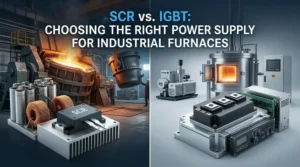
- Vấn đề với quy định truyền thống: Bộ chỉnh lưu điều khiển bằng silicon thông thường (Scr) bộ nguồn có thời gian đáp ứng chậm (thường trong phạm vi hàng trăm mili giây). Khi gặp phải sự xáo trộn nhiệt độ do tác động của dòng chất lỏng, họ dễ dàng gặp phải “vượt quá” hoặc “bắn hạ,” dẫn đến sự phân bố kích thước hạt không nhất quán giữa các lô khác nhau.
- Lợi thế của nguồn điện kỹ thuật số hiện đại (IGBT): Sử dụng PID kỹ thuật số + điều khiển tiếp liệu dựa trên quy định vòng kín cấp độ micro giây, kết hợp với hỏa kế hồng ngoại hai màu, hệ thống có thể điều chỉnh ngay lập tức tần số biến tần và công suất đầu ra trong vòng một phần nghìn giây(5 < 5bệnh đa xơ cứng) phát hiện sự dao động nhiệt độ nhỏ. Điều này giữ cho nhiệt độ quá nhiệt ở lối ra ống phân phối không đổi..
3. Tác động định lượng của việc kiểm soát quá nhiệt đến đặc tính chất lượng bột
| Số liệu kiểm soát | Quá nhiệt thấp (<50oC) | Kiểm soát quá nhiệt chính xác (ΔT=100–150oC) | Quá nhiệt (>200℃) |
| Tỷ lệ hình cầu | Cực thấp. Những giọt nước đông lại trước khi co lại, chủ yếu xuất hiện hình giọt nước hoặc thon dài. | Cực kỳ cao (>95%). Bề mặt mịn màng với lượng hạt vệ tinh tối thiểu. | Vừa phải. Sự hình cầu hóa xảy ra, nhưng tỷ lệ vệ tinh và bột rỗng tăng đột biến. |
| Phân bố kích thước hạt (PSD) | Phân phối lưỡng kim nghiêm trọng; nồng độ cao của bột thô và chất kết tụ. | Lý tưởng, phân phối chuẩn trong phạm vi hẹp phù hợp với D_ được nhắm mục tiêu{50} giá trị. | Phân phối chuyển dịch mạnh về phía siêu mịn, nhưng đi kèm với đó là một lượng lớn, hạt rỗng. |
| Tỷ lệ lợi nhuận | Hiệu suất của kích thước bột danh nghĩa mục tiêu là cực kỳ thấp, dẫn đến tỷ lệ phế liệu cao. | Tối đa hóa năng suất bột trong cửa sổ thông số kỹ thuật được nhắm mục tiêu. | Năng suất bột mịn cao, nhưng có tính chất xốp bên trong khí, ảnh hưởng đến quá trình xử lý thứ cấp. |
| Độ ổn định của quy trình | Dễ bị đóng băng hoặc đóng hộp trong ống phân phối, dẫn đến thời gian ngừng hoạt động đột xuất. | Cho phép liên tục, nguyên tử hóa ổn định, kéo dài tuổi thọ của ống phân phối. | Sự xói mòn nhanh chóng của vật liệu chịu lửa dạng ống phân phối, mạo hiểm tạo ra các tạp chất phi kim loại. |
4. Vượt qua nút thắt kỹ thuật cốt lõi: Sự kết hợp hoàn hảo của trường điện từ và nhiệt
Để đạt được sự hoàn hảo, quy định chính xác trong sản xuất công nghiệp thực tế, những thách thức luyện kim sau đây phải được giải quyết:
- Ngăn chặn sự đông đặc cục bộ ở vùng Mushy: Đối với hợp kim có khoảng rắn-lỏng rộng (chẳng hạn như một số siêu hợp kim hoặc hợp kim nam châm vĩnh cửu đất hiếm), cuộn dây cảm ứng phải sử dụng một thiết kế năng lượng gradient phân đoạn. Mật độ năng lượng được tăng lên ở đầu cuối gần vòi phun để đảm bảo chất lỏng kim loại không trải qua quá trình phân tách cấu trúc ngay trước khi thoát ra khỏi vòi phun.
- đàn áp “Gián đoạn luồng” Gây ra bởi nhiễu loạn điện từ: Dòng điện cảm ứng mạnh tạo ra lực ép điện từ hướng vào trong (Hiệu ứng chụm) trên dòng kim loại lỏng. Nguồn điện cảm ứng phải sử dụng công nghệ theo dõi tần số động để duy trì nhiệt độ đồng thời ngăn chặn lực điện từ gây ra sự vỡ bất ngờ của cột chất lỏng, do đó đảm bảo tính đồng nhất trong quá trình cắt dòng khí.
Phần kết luận & Xu hướng kỹ thuật
Trong bối cảnh sản xuất ngày nay, nơi sản xuất phụ gia (3in D) và luyện kim bột mật độ cao đòi hỏi hiệu suất ngày càng nghiêm ngặt từ bột kim loại, trọng tâm của việc kiểm soát chất lượng bột đã chuyển từ “giai đoạn tan chảy” đến “đêm trước của quá trình nguyên tử hóa.” Tần số cao, Bộ nguồn cảm ứng phản hồi cao không còn chỉ là thiết bị cung cấp năng lượng nữa—chúng là các van điều khiển chính xác quyết định chất lượng vật lý (tỷ lệ hình cầu hóa, khoảng kích thước hạt) của bột. Loại bỏ sự dao động nhiệt độ ở mức dư thừa thông qua kỹ thuật số, Công nghệ giữ cảm ứng vòng kín thông minh là con đường dứt khoát phía trước cho việc mở rộng quy mô công nghiệp của bột kim loại cao cấp.