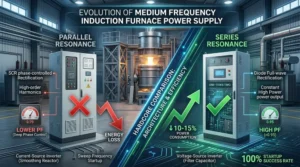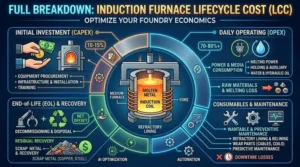
Lò nung cảm ứng có thể nấu chảy hầu như tất cả các kim loại và hợp kim dẫn điện. Chúng hoạt động bằng cách sử dụng cảm ứng điện từ để tạo ra dòng điện xoáy bên trong kim loại, dựa vào điện trở nhiệt của kim loại và đạt được tốc độ nhanh, tan chảy đồng đều.
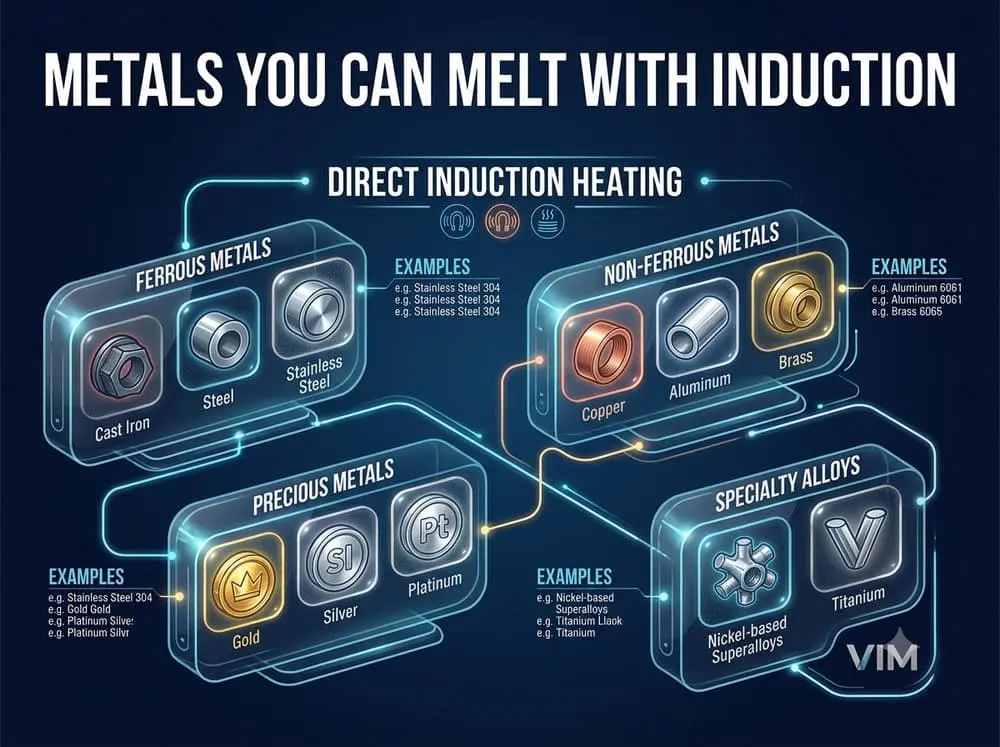
Dựa trên tính chất vật lý và ứng dụng công nghiệp, Lò nung cảm ứng chủ yếu được sử dụng để nấu chảy các loại kim loại chính sau đây.
1. kim loại đen
Gang thép: Được sử dụng rộng rãi để nấu chảy và giữ sắt xám và sắt dẻo—một trong những ứng dụng phổ biến nhất trong các xưởng đúc.
Thép cacbon & Thép hợp kim: Lò nung cảm ứng cung cấp khả năng kiểm soát nhiệt độ chính xác và thành phần hợp kim đồng nhất, khiến chúng trở nên lý tưởng để nấu chảy các loại thép đặc biệt chất lượng cao.
Thép không gỉ: Vì nấu chảy cảm ứng không sử dụng hồ quang điện, nó ngăn chặn việc hấp thụ carbon, làm cho nó phù hợp với thép không gỉ có yêu cầu nghiêm ngặt về hàm lượng carbon thấp.
2. Kim loại màu
Đồng & Hợp kim đồng: Bao gồm đồng nguyên chất, thau, đồng, vân vân. Khuấy điện từ bên trong lò đảm bảo thành phần hóa học đồng đều.
Nhôm & Hợp kim nhôm: Mặc dù nhôm có tính dẫn nhiệt cao và điểm nóng chảy thấp hơn, Lò nung cảm ứng (thường là tần số trung bình hoặc tần số chính) được sử dụng rộng rãi để nấu chảy nhanh và tái chế phế liệu.
kẽm, Chỉ huy, & Thiếc: Những kim loại có điểm nóng chảy thấp này có thể được nấu chảy với hiệu suất cực cao.
3. Kim loại quý
Vàng, Bạc, Bạch kim, & Palladium: Lò nung cảm ứng tần số cao hoặc trung tần nhỏ gọn là tiêu chuẩn trong sản xuất đồ trang sức, phòng thí nghiệm R&D, và tinh chế. Họ cung cấp kiểm soát nhiệt độ chính xác, giảm thiểu quá trình oxy hóa và tổn thất dễ bay hơi của kim loại đắt tiền.
4. Kim loại đặc biệt & Siêu hợp kim
Dựa trên niken & Siêu hợp kim dựa trên coban: Thường được sử dụng cho các bộ phận động cơ hàng không vũ trụ và thiết bị công nghiệp chính xác.
Titan & Hợp kim titan: Phản ứng mạnh với oxy và nitơ ở nhiệt độ cao, nấu chảy titan phải được thực hiện trong một Cảm ứng chân không tan chảy (Vim) lò nung.
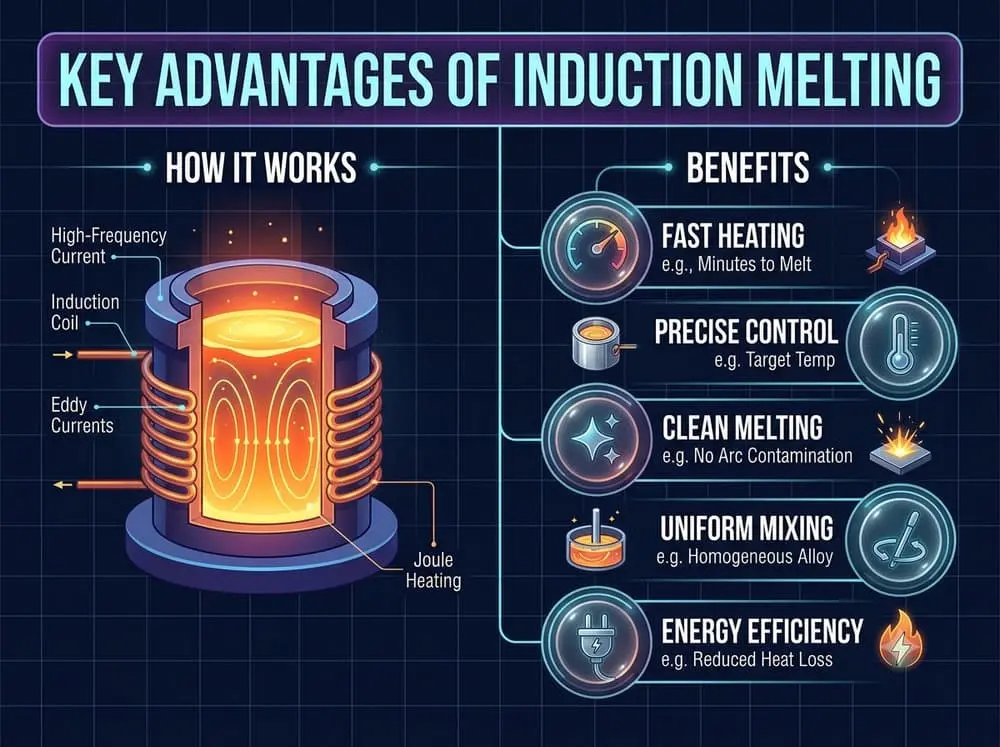
Ghi chú: Trực tiếp Gia nhiệt cảm ứng đòi hỏi vật liệu phải dẫn điện. Làm tan chảy các vật liệu không dẫn điện (chẳng hạn như kính đặc biệt, Gốm sứ, hoặc polyme), MỘT sưởi ấm gián tiếp cách tiếp cận được sử dụng: một nồi nấu kim loại dẫn điện (chẳng hạn như nồi nấu bằng than chì) được làm nóng bởi cuộn dây cảm ứng, sau đó truyền nhiệt cho điện tích không dẫn điện bên trong.