অ্যাটোমাইজেশন প্রক্রিয়া চলাকালীন শারীরিক অসুবিধাগুলির একটি গভীর বিশ্লেষণ.
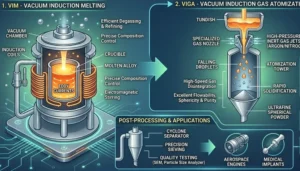
সুনির্দিষ্ট ইন্ডাকশন হিটিং এবং থার্মোকল ফিডব্যাকের মাধ্যমে ঢালা অগ্রভাগের নীচে একটি ধ্রুবক মেটালোস্ট্যাটিক চাপ এবং তাপমাত্রা কীভাবে বজায় রাখা যায় তা অন্বেষণ করা, অগ্রভাগ দ্বারা সৃষ্ট পাউডার মানের অস্থিরতা প্রতিরোধ “জমে যাওয়া” (আটকানো) বা প্রবাহ হারের ওঠানামা.
আমি. নীচে-ঢালা অ্যাটোমাইজেশন প্রক্রিয়ার শারীরিক অসুবিধাগুলির বিশ্লেষণ
ঢালা অগ্রভাগের নীচে তরল গতিশীল এবং থার্মোডাইনামিক পরিবেশ অত্যন্ত কঠোর, প্রাথমিকভাবে দুটি বড় শারীরিক চ্যালেঞ্জের মুখোমুখি:
1. “জমে-বন্ধ” (ক্লগিং) এবং থার্মাল গ্রেডিয়েন্ট ক্লিফ: যেহেতু গলিত ধাতু হোল্ডিং ক্রুসিবল ছেড়ে গাইড টিউবে প্রবেশ করে (অগ্রভাগ), এর পৃষ্ঠ-ক্ষেত্রফল থেকে আয়তনের অনুপাত তীব্রভাবে বৃদ্ধি পায়, দ্রুত তাপ হ্রাস নেতৃস্থানীয়. একই সাথে, সরাসরি অগ্রভাগের নীচে একটি উচ্চ-গতি, উচ্চ চাপ, এবং অত্যন্ত নিম্ন-তাপমাত্রা পারমাণবিক গ্যাস প্রবাহ (সাধারণত উচ্চ-বিশুদ্ধতা আর্গন বা নাইট্রোজেন). এই চরম তাপমাত্রা গ্রেডিয়েন্ট সহজেই অগ্রভাগের ডগায় গলিত ধাতুকে স্থানীয়ভাবে তরল রেখার নীচে নামিয়ে দেয়।, অবিলম্বে সান্দ্রতা বৃদ্ধি বা এমনকি দৃঢ়ীকরণ. এটি একটি ট্রিগার করে “জমে যাওয়া” (আটকানো) ঘটনা, সরাসরি প্রক্রিয়ার একটি বাধ্যতামূলক বাধার দিকে পরিচালিত করে.
2. স্ট্যাটিক চাপ ক্ষয় এবং প্রবাহ হার ওঠানামা: Torricelli এর আইন অনুযায়ী, গলিত ধাতুর ভর প্রবাহ হার ṁ ক্রুসিবলের তরল স্তরের উচ্চতার সাথে ঘনিষ্ঠভাবে সম্পর্কিত:
ṁ = C_d · A · ρ · √2gh
(যেখানে C_d হল ডিসচার্জ সহগ, A হল অগ্রভাগের ক্রস-বিভাগীয় এলাকা, ρ হল গলিত ধাতুর ঘনত্ব, এবং g হল অভিকর্ষের কারণে ত্বরণ)
পরমাণুকরণ অগ্রগতি হিসাবে, ক্রুসিবলের তরল স্তর h ক্রমাগত হ্রাস পায়, এবং নীচের স্থির চাপ ক্রমাগতভাবে ক্ষয়প্রাপ্ত হয়. একটি ক্ষতিপূরণ প্রক্রিয়া ছাড়া, গলিত ধাতুর বহিঃপ্রবাহের বেগ ক্রমান্বয়ে কমবে. এই কারণ গ্যাস থেকে ধাতু অনুপাত (জিএমআর) পরমাণুকরণ চক্র জুড়ে প্রবাহিত হতে - এর ফলে প্রাথমিক পর্যায়ে মোটা পাউডার এবং পরবর্তী পর্যায়ে সূক্ষ্ম পাউডার, ব্যাচ-টু-ব্যাচ পাউডার সামঞ্জস্যপূর্ণভাবে আপস করে.
Ii. বিরোধী-“জমে-বন্ধ” কৌশল: সুনির্দিষ্ট ইন্ডাকশন হিটিং এবং ক্লোজড-লুপ তাপমাত্রা প্রতিক্রিয়া
গাইড টিউব দৃঢ়করণের সমস্যা সম্পূর্ণরূপে সমাধান করতে, শুধুমাত্র প্রধান গলিত ক্রুসিবল থেকে পরিবাহী অবশিষ্ট তাপের উপর নির্ভর করা যথেষ্ট নয়. আধুনিক হাই-এন্ড পাউডার উত্পাদন সিস্টেমগুলিকে অবশ্যই ঢালা গাইড সিস্টেমে প্রচুর বিনিয়োগ করতে হবে.
- স্বাধীন উচ্চ-ফ্রিকোয়েন্সি ইন্ডাকশন হিটিং জোন: একটি স্বাধীন ইনস্টল করুন, অগ্রভাগ এলাকার চারপাশে ছোট আকারের আনয়ন কয়েল. অগ্রভাগের ছোট আয়তনের কারণে, এটি একটি উচ্চ ফ্রিকোয়েন্সি ব্যবহার করার জন্য আরো উপযুক্ত, স্বাধীন পাওয়ার ডেলিভারির জন্য উচ্চ-নির্ভুলতা IGBT বৈদ্যুতিন সংকেতের মেরু বদল পাওয়ার সাপ্লাই. এই কনফিগারেশন দ্রুত প্রতিক্রিয়া এবং সুনির্দিষ্ট শক্তি ইনজেকশন সক্ষম করে, বিশেষত বিকিরণ এবং উচ্চ-গতির গ্যাস প্রবাহের স্তন্যপান দ্বারা সৃষ্ট তাপের ক্ষতির জন্য ক্ষতিপূরণের জন্য ডিজাইন করা হয়েছে.
- “বেশি কাছাকাছি থাকা” থার্মোকল টেম্পারেচার মেজারমেন্ট এবং মিলিসেকেন্ড-লেভেল ফিডব্যাক: নিয়ন্ত্রণের চাবিকাঠি তাপমাত্রা ডেটার সত্যতার মধ্যে রয়েছে. দ্রুত প্রতিক্রিয়া, উচ্চ-তাপমাত্রা-প্রতিরোধী থার্মোকল (যেমন টাইপ বি বা টাইপ এস) গাইড টিউবের বাইরে বা অন্তরণ হাতা ভিতরে এমবেড করা আবশ্যক (যতটা সম্ভব গলানো প্রবাহ চ্যানেলের কাছাকাছি). এই রিয়েল-টাইম তাপমাত্রা বক্ররেখা একটি বন্ধ লুপ গঠন করতে PLC কন্ট্রোল সিস্টেমে একত্রিত করা হয়. যখন সিস্টেম তাপমাত্রায় সামান্য নিম্নগামী প্রবণতা সনাক্ত করে, IGBT পাওয়ার সাপ্লাই মিলিসেকেন্ডের মধ্যে তাত্ক্ষণিকভাবে শক্তি বাড়াতে পারে, “লকিং” সেট সুপারহিট পরিসীমা মধ্যে তাপমাত্রা.
- হাই-এন্ড রিফ্র্যাক্টরি ম্যাটেরিয়ালের সাথে ম্যাচিং: উচ্চ-তাপমাত্রা ক্ষয় অধীনে spalling থেকে অগ্রভাগ প্রতিরোধ, যা অ ধাতব অন্তর্ভুক্তি তৈরি করে এবং পাউডার বিশুদ্ধতাকে প্রভাবিত করে, গাইড টিউব সাধারণত উচ্চ-বিশুদ্ধতা জিরকোনিয়া বা বিশেষ যৌগিক সিরামিক দিয়ে তৈরি. এই উপকরণগুলি কেবল ক্ষয়-প্রতিরোধী নয় তবে নির্দিষ্ট তাপ পরিবাহিতাও রয়েছে, ইন্ডাকশন কয়েলের সাথে পেয়ার করা হলে একটি চমৎকার তাপ নিরোধক ক্ষেত্র তৈরি করে.
Iii. প্রবাহ ওঠানামা নিয়ন্ত্রণ: ধ্রুবক তরল স্তর এবং স্ট্যাটিক চাপ ক্ষতিপূরণ প্রযুক্তি
অবিচ্ছিন্ন এবং স্থিতিশীল পাউডার গুণমান নিশ্চিত করতে, √2gh দ্বারা সৃষ্ট প্রাকৃতিক ক্ষয় অবশ্যই কাটিয়ে উঠতে হবে. বর্তমানে, শিল্পের সবচেয়ে অত্যাধুনিক তরল স্তর নিয়ন্ত্রণ এবং প্রবাহ স্থিতিশীলকরণ কৌশলগুলির মধ্যে প্রধানত নিম্নলিখিতগুলি অন্তর্ভুক্ত রয়েছে:
1. উচ্চ-নির্ভুল সার্ভো স্টপার রড নিয়ন্ত্রণ: একটি নির্ভুল সার্ভো মোটর দ্বারা চালিত একটি উচ্চ-তাপমাত্রা প্রতিরোধী সিরামিক স্টপার রড নীচে-ঢালা ক্রুসিবলের ভিতরে ইনস্টল করা আছে. স্টপার রডের মাথা এবং অগ্রভাগের আসনের মধ্যে বৃত্তাকার ফাঁকটি সূক্ষ্ম-টিউনিং করে, ডিসচার্জ সহগ C_d গতিশীলভাবে পরিবর্তিত হয়. সিস্টেমটি নীচের লোড কোষের মাধ্যমে রিয়েল-টাইমে গলিত ধাতুর ভর ক্ষতির হার গণনা করতে পারে, স্বয়ংক্রিয়ভাবে স্টপার রড উত্তোলন এবং কমানো নিয়ন্ত্রণ করে. এইভাবে, তরল স্তর h ড্রপ হিসাবে, একটি ধ্রুবক প্রবাহ হার জোরপূর্বক বজায় রাখার জন্য ফাঁকটি প্রশস্ত করা হয়.
2. Tundish ধ্রুবক তরল স্তর নিয়ন্ত্রণ (টুন্ডিশ ওভারফ্লো সিস্টেম): বড় আকারের ক্রমাগত গলে যাওয়া এবং ঢালাই বা উচ্চ-ক্ষমতা পাউডার উত্পাদন লাইনের জন্য, একটি মোড যেখানে প্রধান আনয়ন চুল্লি tilts এবং একটি মধ্যে ঢেলে “টুন্ডিশ,” নীচে টুন্ডিশ থেকে ঢালা দ্বারা অনুসরণ, গ্রহণ করা যেতে পারে. টুন্ডিশের ভিতরে একটি তরল স্তরের রাডার বা লেজার লেভেল গেজের সাথে মূল চুল্লির কাত হওয়ার গতির সমন্বয় করে, টুন্ডিশে তরল স্তর h ক্রমাগত একটি অত্যন্ত ছোট ওঠানামা সীমার মধ্যে রাখা হয় (যেমন, 150mm ± 5mm এ ধ্রুবক), এর ফলে একটি প্রায় পরম ধ্রুবক শারীরিক স্থির চাপ প্রদান করে.
3. ফার্নেস চেম্বার ডিফারেনশিয়াল প্রেসার ক্ষতিপূরণ প্রযুক্তি: এটি একটি আরো উন্নত, অ-যোগাযোগ প্রবাহ নিয়ন্ত্রণ পদ্ধতি. গলানো চেম্বারটি সিল করা হিসাবে ডিজাইন করা হয়েছে, চাপ-নিয়ন্ত্রিত কেবিন. তরলের মাত্রা কমে যাওয়ার সাথে সাথে, PLC সিস্টেম তাত্ত্বিক বক্ররেখা বা ডিজিটাল টুইন মডেলের উপর ভিত্তি করে স্বয়ংক্রিয়ভাবে গলিত চেম্বারে নিষ্ক্রিয় গ্যাসের একটি ট্রেস পরিমাণ ইনজেক্ট করে, ধীরে ধীরে গলিত পৃষ্ঠের উপর P_gas গ্যাসের চাপ বৃদ্ধি করে. এই সময়ে, মোট নিম্নচাপের সূত্র হয়ে যায়:
P_total = P_gas + pgh
P_gas গ্যাসের চাপের রৈখিক বৃদ্ধির মাধ্যমে, ρgh এর রৈখিক হ্রাস পুরোপুরি অফসেট, নিশ্চিত করা যে অগ্রভাগে ইজেকশন চাপ শুরু থেকে শেষ পর্যন্ত একটি সরল রেখা থাকে.
উপসংহার
আধুনিক শিল্প পাউডার ধাতুবিদ্যা ক্ষেত্রে, যে কেউ দমন করতে পারে “আগুন এবং গ্যাস” নিচের-ঢালা অগ্রভাগে উচ্চ-শেষ পাউডার বাজারে মূল্যের ক্ষমতা নিয়ন্ত্রণ করবে. উচ্চ-প্রতিক্রিয়া IGBT স্থানীয়করণ ইন্ডাকশন হিটিং প্রবর্তন করে, ক্লোজড-লুপ থার্মোকল ফিডব্যাক, এবং সুনির্দিষ্ট স্ট্যাটিক চাপ ক্ষতিপূরণ কৌশল, না শুধুমাত্র ডাউনটাইম ঝুঁকি দ্বারা সৃষ্ট “জমে যাওয়া” সম্পূর্ণরূপে নির্মূল করা, কিন্তু সামগ্রিক সরঞ্জাম কার্যকারিতা (OEE) এবং পুরো সরঞ্জামের গুঁড়া ফলনও নতুন উচ্চতায় ঠেলে দেওয়া যেতে পারে. আধুনিক ইন্ডাকশন হিটিং সরঞ্জাম প্রস্তুতকারকদের উচ্চ মূল্য সংযোজন সিস্টেম ইন্টিগ্রেটরে রূপান্তরিত করার জন্য এটি মূল প্রযুক্তিগত বাধা.