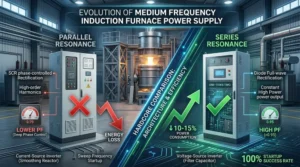
ความถี่สูงเทียบกับ. ความถี่ปานกลางเทียบกับ. เตาเหนี่ยวนำความถี่ไฟฟ้า: ความแตกต่างหลักและสถานการณ์การใช้งาน
ความแตกต่างหลักระหว่างเตาเหนี่ยวนำทั้งสามประเภทนี้อยู่ที่ ความถี่ในการทำงาน. ความแตกต่างของความถี่จะเป็นตัวกำหนดความลึกของความลึกโดยตรง “ผลกระทบต่อผิวหนัง” ของกระแสภายในโลหะและขนาดของแรงกวนแม่เหล็กไฟฟ้า, นำไปสู่ความแตกต่างที่มีนัยสำคัญอย่างมากในลักษณะการหลอมเหลวและสถานการณ์การใช้งาน.
ต่อไปนี้คือการวิเคราะห์โดยละเอียดเกี่ยวกับความแตกต่างหลักและสถานการณ์การใช้งาน:
เมทริกซ์เปรียบเทียบความแตกต่างหลัก
| คุณสมบัติ | พลังงานความถี่ | ความถี่ปานกลาง | ความถี่สูง |
| ความถี่ในการทำงาน | 50Hz หรือ 60Hz (ความถี่หลัก) | 150เฮิรตซ์ – 10khz | 10khz – 300กิโลเฮิร์ตซ์ขึ้นไป |
| ความลึกการเจาะปัจจุบัน | ลึก | ปานกลาง | ตื้นเขินมาก (พื้นผิวเท่านั้น) |
| แรงกวนแม่เหล็กไฟฟ้า | แข็งแกร่งมาก | ปานกลาง | อ่อนแอ |
| วิธีการเริ่มต้น | ต้องใช้โลหะหลอมเหลวหรือบล็อกสตาร์ทที่เหลืออยู่ (ไม่สามารถสตาร์ทด้วยความเย็นได้) | สามารถสตาร์ทเตาเย็นโดยตรงได้ | สามารถสตาร์ทเตาเย็นโดยตรงได้ |
| ขนาดอุปกรณ์ | เทอะทะ | กะทัดรัด | เล็ก |
1. เตาเหนี่ยวนำความถี่ไฟฟ้า: ระวางบรรทุกขนาดใหญ่ “ถือเบฮีมอธ”
เตาเหนี่ยวนำความถี่ไฟฟ้าใช้กระแสสลับ 50Hz หรือ 60Hz จากโครงข่ายไฟฟ้าอุตสาหกรรมโดยตรง โดยไม่ต้องใช้อุปกรณ์แปลงความถี่.
- ข้อดีหลัก: ผลการกวนด้วยแม่เหล็กไฟฟ้าที่รุนแรงทำให้มั่นใจได้ถึงองค์ประกอบและอุณหภูมิของโลหะที่สม่ำเสมออย่างยิ่ง; เนื่องจากไม่มีการสูญเสียการแปลงความถี่, โครงสร้างค่อนข้างเรียบง่ายและทนทาน.
- หลัก ข้อจำกัด: ไม่สามารถสตาร์ทโดยตรงจากเตาเย็นได้. หลังจากปิดเครื่องแต่ละครั้ง, ส่วนหนึ่งของเหล็กหลอมจะต้องเก็บไว้ในเตาหลอม, หรือต้องเพิ่มบล็อกเริ่มต้นเฉพาะสำหรับการเริ่มต้นครั้งถัดไป; อัตราการทำความร้อนช้าลง; ตัวประกอบกำลังที่ต่ำกว่า.
- สถานการณ์แอปพลิเคชัน: เหมาะสำหรับโรงหล่อขนาดใหญ่ที่มีการผลิตต่อเนื่อง. ใช้เป็นหลักในการหลอมเหล็กหล่อและโลหะที่ไม่ใช่เหล็กซึ่งมีน้ำหนักมาก, พร้อมทั้งทำหน้าที่เป็น “ถือเตา” หรือ “เตาปรับสภาพ” ในกระบวนการหลอมแบบดูเพล็กซ์ (เช่น, การดูเพล็กซ์ของเตาเหนี่ยวนำแบบคิวโพลา).
2. เตาเหนี่ยวนำความถี่ปานกลาง: ที่ “สมรรถนะรอบด้าน” ของโรงหล่อสมัยใหม่
เตาเหนี่ยวนำความถี่ปานกลางใช้เทคโนโลยีการแปลงความถี่, เช่น SCR (ไทริสเตอร์) หรือ IGBT, เพื่อแปลงไฟฟ้ากระแสสลับความถี่เป็นไฟฟ้ากระแสสลับความถี่กลาง. ปัจจุบันเป็นอุปกรณ์ที่ใช้กันอย่างแพร่หลายในภาคอุตสาหกรรมการหล่อและโลหะวิทยา.
- ข้อดีหลัก: ปรับสมดุลประสิทธิภาพการทำความร้อนและผลกระทบจากการกวนได้อย่างสมบูรณ์แบบ. สามารถของ 100% เริ่มต้นเตาเย็นโดยตรง, ทำให้สะดวกมากในการเทเตาออกจากเตาหรือเปลี่ยนเกรดเหล็ก; ความหนาแน่นของพลังงานสูง, ความเร็วความร้อนที่รวดเร็ว, และประสิทธิภาพเชิงความร้อนสูง; การดำเนินงานที่ยืดหยุ่น.
- หลัก ข้อจำกัด: ต้องมีการกำหนดค่าเพิ่มเติมของตู้จ่ายไฟความถี่กลาง, ทำให้การลงทุนอุปกรณ์เริ่มแรกสูงกว่าการตั้งค่าแบบเดิมเล็กน้อย.
- สถานการณ์แอปพลิเคชัน: ครอบคลุมข้อกำหนดการหล่อทั่วไปเกือบทั้งหมด. ใช้กันอย่างแพร่หลายสำหรับการหลอมและการยึดเกาะของเหล็กกล้าคาร์บอน, โลหะผสมเหล็ก, เหล็กพิเศษ, และโลหะที่ไม่ใช่เหล็กต่างๆ (ทองแดง, อลูมิเนียม, สังกะสี).
3. เตาเหนี่ยวนำความถี่สูง: ที่ “มีดผ่าตัด” เพื่อความแม่นยำและพื้นผิว
ความถี่ที่สูงมากของเตาเหนี่ยวนำความถี่สูงทำให้กระแสมีความเข้มข้นเกือบทั้งหมดที่ชั้นนอกสุดของโลหะ (เอฟเฟกต์ผิวที่รุนแรง).
- ข้อดีหลัก: ความเร็วความร้อนที่รวดเร็วมาก (สามารถทำความร้อนพื้นผิวได้ภายในไม่กี่วินาที); ส่งผลกระทบต่อโครงสร้างภายในของชิ้นงานน้อยที่สุด, ส่งผลให้เกิดออกซิเดชันและดีคาร์บูไรเซชันที่จำกัดอย่างมาก.
- หลัก ข้อจำกัด: ความลึกของการเจาะปัจจุบันตื้นเกินไป, และแรงกวนแม่เหล็กไฟฟ้าอ่อนมาก, ทำให้ไม่สามารถหลอมโลหะปริมาณมากโดยรวมได้.
- สถานการณ์แอปพลิเคชัน: ใช้เป็นหลักในการชุบผิวชิ้นส่วนโลหะ, การรักษาความร้อนเฉพาะที่, และการเชื่อมด้วยความถี่สูง (เช่น, ท่อเชื่อมความถี่สูง). เพื่อวัตถุประสงค์ในการหลอมละลาย, โดยจำกัดอยู่เพียงการเตรียมตัวอย่างในปริมาณน้อยในห้องปฏิบัติการเท่านั้น, หรือการกลั่นโลหะมีค่าระดับไมโคร เช่น ทองคำ, เงิน, และแพลทินัม.
คำแนะนำโดยสรุป
- หากคุณต้องการ หลอมโลหะชนิดเดียวกันอย่างต่อเนื่องเป็นชุดใหญ่, หรือหากต้องการอุปกรณ์จับยึดที่มีความจุขนาดใหญ่, ที่ เตาเหนี่ยวนำความถี่ไฟฟ้า ยังคงเป็นทางเลือกแบบดั้งเดิมและประหยัด.
- หากคุณดำเนินการก โรงหล่อสมัยใหม่ที่จัดการความหลากหลาย, ชุดขนาดเล็กถึงขนาดกลาง, มักเปลี่ยนประเภทโลหะผสม, และต้องการการสตาร์ทขณะเย็นที่มีประสิทธิภาพและยืดหยุ่นสูง, ที่ เตาเหนี่ยวนำความถี่ปานกลาง คือทางเลือกที่ดีที่สุดอย่างไม่มีข้อโต้แย้ง.
- หากคุณโฟกัสไปที่ การรักษาความร้อนพื้นผิวโลหะ, หรือ การกลั่นโลหะมีค่าระดับไมโครและการทดสอบในห้องปฏิบัติการ, คุณต้องใช้ เตาเหนี่ยวนำความถี่สูง.