ควบคุมการเผาผลาญสังกะสี (การสูญเสียการกลายเป็นไอ) ระหว่างเตาเหนี่ยวนำการหลอมทองเหลือง (15%–40% สังกะสี) และบรอนซ์ที่มีสังกะสีอยู่ตรงกลาง ระงับการระเหยของความดันไอสังกะสี และ ปิดกั้นการเกิดออกซิเดชันของพื้นผิวสระน้ำที่หลอมละลาย. เนื่องจากเตาเหนี่ยวนำมีการกวนแม่เหล็กไฟฟ้าที่รุนแรง, พื้นผิวโลหะหลอมเหลวจะรีเฟรชอย่างรวดเร็ว, ซึ่งจะช่วยเร่งการระเหยของสังกะสี. การควบคุมอย่างเป็นระบบในพื้นที่ปฏิบัติงานหลักทั้งสี่ด้านถือเป็นสิ่งสำคัญ.
1. การควบคุมอุณหภูมิและพลังการกวนอย่างเข้มงวด
- เพดานอุณหภูมิที่เข้มงวด: จุดเดือดของสังกะสีคือ 907°C, ในขณะที่อุณหภูมิการต๊าปทองเหลืองโดยทั่วไปจะอยู่ระหว่าง 1,020°C ถึง 1100°C. ทุกๆ 20°C ที่เพิ่มขึ้น, แรงดันไอสังกะสีเพิ่มขึ้น, คูณอัตราการเผาผลาญ. อุณหภูมิในการต๊าปจะต้องรักษาไว้ที่ขีดจำกัดล่างของกระบวนการอย่างเคร่งครัด.
- ลดอำนาจในการถือครอง: พลังงานเหนี่ยวนำลดลงอย่างรวดเร็วเมื่อประจุหลอมละลายจนหมดเพื่อลดการกวนแม่เหล็กไฟฟ้า, ลดไอสังกะสีที่เกิดจากความปั่นป่วนในสระหลอมเหลว.
2. สร้างชั้นปกคลุมพื้นผิวที่หนาแน่น
- ใช้ฝาครอบป้องกัน: เติมถ่านแห้งหรือผงกราไฟต์ชั้น 20–30 มม. ทันทีหลังจากชาร์จแล้ว เพื่อสร้างเกราะป้องกันทางกายภาพจากการสัมผัสกับอากาศ.
- ผสมผสานกับ Rinning Flux: เมื่อหลอมโลหะผสมสังกะสีสูง, จับคู่ถ่านกับฟลักซ์พิเศษที่มีคลอไรด์เพื่อปิดกั้นอากาศและดูดซับขี้เถ้าสังกะสีออกไซด์.
3. ปรับลำดับการชาร์จและวิธีการเติมสังกะสีให้เหมาะสม
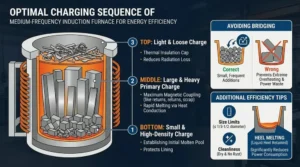
- การเติมสังกะสีบริสุทธิ์ตอนปลาย & การจมน้ำ: หากผสมด้วยโลหะบริสุทธิ์, ละลายฐานทองแดงก่อนแล้วเติมสังกะสี 10–15 นาทีก่อนแตะ. ใช้กราไฟต์กระโดดจุ่มแท่งสังกะสีลงในส่วนตรงกลางถึงล่างของอ่างอย่างรวดเร็ว, การใช้ประโยชน์จากแรงดันเฟอร์โรสแตติกเพื่อยับยั้งการระเหย.
- เศษรีไซเคิลด้านล่างโหลด: วางเศษสังกะสีสูงให้แน่นในบริเวณเตาหลอมจากล่างถึงกลาง, ใช้เศษทองแดงหนักด้านบนเพื่อยึดไว้และป้องกันการสัมผัสกับอุณหภูมิพื้นผิวสูงโดยตรง.
4. Pre-Deoxidation และการกลั่น
- กำจัดออกซิไดซ์ก่อนเติมสังกะสี: เติมฟอสเฟอร์-ทองแดง 0.1%–0.2% เพื่อกำจัดออกซิไดซ์ที่หลอมละลายอย่างทั่วถึงก่อนเติมสังกะสี. การลดออกซิเจนที่ละลายในอ่างทองแดงจะช่วยลดการเผาไหม้ของขี้เถ้าที่เกิดจากปฏิกิริยาสังกะสี-ออกซิเจนอย่างรุนแรงที่ก่อให้เกิด ZnO.
ปฏิบัติการละลาย & สรุปการควบคุมการเผาไหม้
| ขั้นตอนกระบวนการ | ข้อกำหนดพารามิเตอร์ที่สำคัญ | ผลการควบคุมการเผาไหม้ |
| การควบคุมอุณหภูมิ | การแตะอุณหภูมิต่ำกว่าของเหลวโลหะผสม + 100° C | ลดการสูญเสียการระเหยของไอลง 30%–50% |
| คุ้มครองครอบคลุม | 20–30 มม. ถ่านแห้ง/ชั้นกราไฟท์ | บล็อกออกซิเจน, ลดการเกิดออกซิเดชันของพื้นผิวด้วย 20% |
| วิธีการเติมสังกะสี | ดีออกซิเดชันของสารเรืองแสงและทองแดง + พรวดพราดจมอยู่ใต้น้ำ | เพิ่มอัตราการฟื้นตัวของสังกะสีบริสุทธิ์ให้มากกว่า 95% |