Trong quá trình nấu chảy đồng nguyên chất (thường được gọi là “đồng đỏ”) trong lò cảm ứng, quản lý hấp thụ và oxy hóa khí là thách thức cuối cùng để đảm bảo độ dẫn điện cao và mật độ dày đặc, cấu trúc vi mô không có khuyết tật. Vì đồng lỏng hoạt động giống như một “nam châm” cho hydro (H₂) và oxy (O₂), kỹ thuật không đúng dẫn đến độ xốp hoặc khét tiếng “Bệnh hydro.”
Dưới đây là thông tin chi tiết về kỹ thuật phủ than và kỹ thuật khử oxy đồng photpho được tối ưu hóa cho quá trình nấu chảy cảm ứng.
1. Cơ chế hấp thụ khí
Trong lò cảm ứng, nhiệt độ cao và trạng thái lỏng của đồng tạo ra “hiệu ứng bọt biển”:
- Hydro (H): Chủ yếu có nguồn gốc từ độ ẩm trên điện tích, dầu/mỡ, hoặc hơi nước trong không khí.
- Ôxy (ồ): Có nguồn gốc từ tiếp xúc trực tiếp với khí quyển.
- Vấn đề: Khi đồng đông cứng lại, hydro và oxy phản ứng tạo thành hơi nước:
- 2H + [ồ] ⇋ H₂O↑
- Hơi nước bị mắc kẹt này dẫn đến các lỗ phun nước cực nhỏ hoặc vĩ mô, làm giảm đáng kể độ dẫn điện và tính toàn vẹn cơ học của vật liệu.
2. Phủ than: thể chất & Lá chắn hóa học
Lò nung cảm ứng tạo ra năng lượng mạnh khuấy điện từ, làm cho bề mặt chất lỏng trở nên lồi, tăng diện tích bề mặt tiếp xúc với không khí. Than hoạt động như một rào cản quan trọng.
Kỹ thuật then chốt:
- Phải nướng trước: Không bao giờ thêm “lạnh lẽo” than. Nó phải được nướng quá 200°C để loại bỏ độ ẩm. Về cơ bản việc thêm than ẩm là “tiêm chích” hydro trực tiếp vào tan chảy của bạn.
- Thời gian & độ dày: Đắp lớp phủ ngay khi điện tích bắt đầu tan chảy. Duy trì độ dày lớp 30–50mm để không nhìn thấy đồng lỏng.
- Giảm khí quyển: Ở nhiệt độ cao, than phản ứng với oxy tạo thành carbon monoxide (CO), tạo ra sự giảm thiểu bảo vệ “cái chăn”:
- 2C + O₂ → 2CO
3. Khử oxy đồng-phốt pho: Thanh lọc sâu
Ngay cả với than củi, một số Cu₂O tất yếu sẽ hình thành. đồng-phốt pho (thường chứa ~14% Phốt pho) là tiêu chuẩn công nghiệp cho quá trình khử oxy sâu trong đồng nguyên chất.
Yếu tố cần thiết trong hoạt động:
- phản ứng: Phốt pho có ái lực với oxy cao hơn nhiều so với đồng. Nó tạo thành photpho pentoxit (P₂O₅), thoát ra dưới dạng khí hoặc bay lên thành xỉ.
- 5Cu₂O + 2P → P₂O₅↑ + 10Củ
- Kiểm soát liều lượng:
- Quy tắc: Bạn muốn đủ để loại bỏ oxy, nhưng một “phốt pho dư” mức quá cao sẽ làm giảm mạnh độ dẫn điện.
- Số tiền tiêu chuẩn: Thường xuyên 0.1% – 0.2% tổng trọng lượng tan chảy.
- Các “lao dốc” Phương pháp:
- Phép cộng phân số: Thêm vào 1/3 trong quá trình tan chảy để khử oxy trước và phần còn lại 2/3 ngay trước khi đổ.
- Sử dụng lọ chuông: Đừng chỉ ném đồng phốt-pho lên bề mặt; nó sẽ bốc hơi và lãng phí. Sử dụng lọ chuông than chì (pít tông) đẩy đồng photpho xuống đáy chén nung và khuấy nhẹ.
4. Lời khuyên nâng cao cho quá trình nấu chảy cảm ứng
Quản lý nhiệt độ
Lò nung cảm ứng nóng lên nhanh chóng. Giữ nhiệt độ nóng chảy của bạn giữa 1150° C và 1200 ° C. Cứ tăng 100°C vượt quá điểm nóng chảy, khả năng hấp thụ hydro của đồng tăng theo cấp số nhân.
Sạc sạch
Lò nung cảm ứng không được thiết kế để tinh chế nặng. Đảm bảo tài liệu của bạn được:
- Phế liệu/Trả lại: Hoàn toàn không chứa dầu, nhũ tương, hoặc vảy oxit nặng.
- Vật liệu chịu lửa: Đảm bảo nồi nấu bằng than chì hoặc lớp lót lò khô hoàn toàn trước khi bắt đầu gia nhiệt.
Mẹo chuyên nghiệp của Gemini:
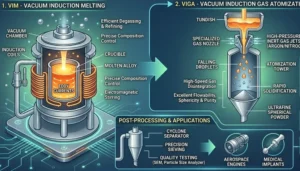
Nếu ứng dụng của bạn yêu cầu độ dẫn điện cực cao (ví dụ., >100% IACS), cân nhắc sử dụng Chất khử oxy đất hiếm (như Lanthanum hoặc Cerium) kết hợp với đồng photpho, hoặc chuyển đến Cảm ứng chân không tan chảy (Vim) để loại bỏ vấn đề khí tại nguồn.