For industrial foundries and metallurgical managers, evaluating the economics of a medium-frequency induction furnace shouldn’t rely solely on the initial quotation. Over the equipment’s 10 to 15-year design life, the initial investment usually represents only the tip of the iceberg (about 10%–15%), while operation and maintenance costs constitute the bulk of the expenditure.
Here is a complete breakdown of the Life Cycle Cost (LCC) for a medium-frequency Induction Furnace, which can serve as a core framework for equipment budgeting or developing professional technical guidelines.
1. Initial Investment Cost (CAPEX)
This covers all one-time expenses incurred before the equipment goes into operation.
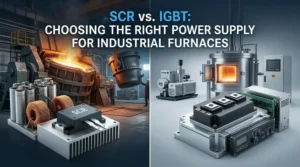
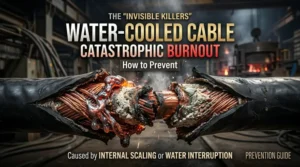
- Equipment Procurement: Includes the furnace body (steel or aluminum shell), medium-frequency power supply cabinet (thyristor or IGBT technology), capacitor bank, hydraulic tilting system, and water-cooled cables.
- Supporting Infrastructure: Upgrades and modifications for the cooling water system (closed cooling tower, water pumps, reservoirs), transformers, and high/low-voltage power distribution systems.
- Civil Engineering & Commissioning: Pouring equipment foundations, trench excavation, on-site pipeline laying, as well as supplier fees for on-site installation guidance and cold/hot commissioning.
- Personnel Training: Professional training costs for foundry operators and electrical maintenance staff.
2. Daily Operating Costs (OPEX)
Operating costs span the entire life cycle of the equipment, typically accounting for 70% sa 80%+ of the total LCC.
- Power Consumption (Absolute Core):
- Melting Power Consumption: Directly reflects the energy conversion efficiency of the equipment (i.e., power consumption per ton of steel, usually fluctuating between 500–600 kWh/ton).
- Holding & Auxiliary Power Consumption: Energy loss during standby holding, as well as the long-term power consumption of auxiliary equipment like cooling water pumps and hydraulic pumps.
- Raw Materials & Melting Loss: The oxidation loss rate of the charge during high-temperature melting. Better magnetic field design and temperature control capabilities can significantly reduce the melting loss of alloy elements, representing a massive hidden saving in long-term operating costs.
- Auxiliary Media Consumption: Replenishment fluid for cooling water, water treatment chemicals (anti-scaling and anti-rust), and regular consumption of hydraulic oil.
- Labor Costs: Wages and benefits for the furnace manager, charging operators, crane operators, and daily inspection personnel.
3. Consumables & Maintenance Costs
Regular material replacement and maintenance are essential for keeping the equipment operating efficiently and safely.
- Refractory Lining Materials & Relining:
- Procurement costs of ramming mass such as quartz sand, magnesia, or bauxite.
- Labor costs for each lining replacement, consumption of ramming tools, and time/energy costs during the baking/sintering process.
- Wear Parts & Spare Parts:
- Periodic replacement of water-cooled cables, rubber hoses, and sealing rings.
- Insulation treatment of the induction coil (insulating varnish, mica tape) and potential coil repairs.
- Vulnerable electronic components in the power cabinet (hal., damaged thyristors, RC snubber modules, control boards).
- Preventive Maintenance Fees: Costs for outsourced or in-house scheduled tasks such as busbar temperature measurement, waterway descaling/cleaning, and hydraulic system inspections.
4. Downtime & Hidden Costs
These costs are often not intuitive on financial statements but have a massive impact on the profitability of a foundry.
- Unplanned Downtime Losses: Production halts caused by sudden equipment failures (hal., furnace leakage alarms, power supply burnouts). This includes not only emergency repair labor and expedited parts costs but also breach of contract penalties for delayed deliveries and wasted idle capacity.
- Scrap & Quality Costs: Costs of remelting rejected castings due to substandard iron/steel composition caused by equipment power fluctuations, imprecise temperature control, or uneven stirring force.
- Safety & Environmental Compliance Costs: Long-term compliance expenditures for upgrading dust collection systems, noise control, and occupational health assessments.
5. End-of-Life (EOL) & Recovery Stage
The final cost settlement at the end of the life cycle usually generates a positive return due to material recovery characteristics.
- Dismantling & Disposal Fees: Costs for dismantling and legally disposing of waste refractory linings (some may be classified as industrial solid waste requiring special treatment), aging pipelines, and concrete foundations.
- Residual Value Recovery (Positive Offset):
- The induction coil contains a large amount of high-purity copper, which has an extremely high recycling value.
- Scrap steel/copper recovery revenue from metal structural components like silicon steel sheets, steel shell furnace bodies, and transformers. Typically, this recovery value can fully cover or even exceed the dismantling costs.
Optimization Advice for Foundry Managers: When evaluating LCC, avoid falling into the “procurement price only” trap. For equipment with an initial quote that is 15% higher, if it can reduce “power consumption per ton of steel” sa pamamagitan ng 5% through a better power control algorithm and extend the furnace lining life by 20%, the price difference can usually be recovered within 6 sa 12 months of operation, continuously generating net profit for the subsequent dozen years.