Dalam peleburan tembaga murni (sering dipanggil “tembaga merah”) dalam tungku induksi, mengelola penyerapan dan oksidasi gas adalah tantangan utama untuk memastikan konduktivitas listrik yang tinggi dan padat, struktur mikro bebas cacat. Karena tembaga cair bertindak seperti a “magnet” untuk hidrogen (H₂) dan oksigen (O₂), teknik yang tidak tepat menyebabkan porositas atau yang terkenal buruk “penyakit hidrogen.”
Berikut adalah rincian teknis teknik pelapisan arang dan deoksidasi fosfor-tembaga yang dioptimalkan untuk peleburan induksi.
1. Mekanisme Penyerapan Gas
Dalam tungku induksi, suhu tinggi dan keadaan cair tembaga menciptakan a “efek spons”:
- Hidrogen (H): Terutama bersumber dari kelembapan pada muatan, minyak/gemuk, atau uap air di udara.
- Oksigen (HAI): Bersumber dari kontak langsung dengan atmosfer.
- Masalahnya: Saat tembaga mengeras, hidrogen dan oksigen bereaksi membentuk uap:
- 2H + [HAI] ⇋ H₂O↑
- Uap yang terperangkap ini menghasilkan lubang sembur mikroskopis atau makroskopis, yang secara drastis mengurangi konduktivitas material dan integritas mekanik.
2. Penutup Arang: Fisik & Perisai Kimia
Tungku induksi menghasilkan kuat pengadukan elektromagnetik, yang menyebabkan permukaan cairan menjadi cembung, meningkatkan luas permukaan yang terpapar udara. Arang berfungsi sebagai penghalang penting.
Teknik Kunci:
- Harus dipanggang terlebih dahulu: Jangan pernah menambahkan “dingin” arang. Itu harus dipanggang habis 200° C. untuk menghilangkan kelembapan. Menambahkan arang basah pada dasarnya “menyuntik” hidrogen langsung ke lelehan Anda.
- Waktu & Ketebalan: Oleskan penutup segera setelah muatan mulai meleleh. Pertahankan ketebalan lapisan 30–50mm sehingga tidak ada tembaga cair yang terlihat.
- Mengurangi Suasana: Pada suhu tinggi, arang bereaksi dengan oksigen membentuk karbon monoksida (BERSAMA), menciptakan reduksi protektif “selimut”:
- 2C + O₂ → 2CO
3. Deoksidasi Fosfor-Tembaga: Pemurnian Mendalam
Bahkan dengan arang, beberapa Cu₂O pasti akan terbentuk. Fosfor-tembaga (biasanya mengandung ~14% Fosfor) adalah standar industri untuk deoksidasi mendalam pada tembaga murni.
Hal-hal Penting Operasional:
- Reaksi: Fosfor memiliki afinitas yang jauh lebih tinggi terhadap oksigen dibandingkan tembaga. Ini membentuk fosfor pentoksida (P₂O₅), yang keluar sebagai gas atau naik menjadi terak.
- 5Cu₂O + 2P → P₂O₅↑ + 10Cu
- Kontrol Dosis:
- Aturannya: Anda ingin cukup untuk menghilangkan oksigen, tapi sebuah “sisa fosfor” tingkat yang terlalu tinggi akan menurunkan konduktivitas listrik secara tajam.
- Jumlah Standar: Biasanya 0.1% – 0.2% dari total berat lelehan.
- Itu “Terjun” Metode:
- Penjumlahan Pecahan: Menambahkan 1/3 selama proses peleburan untuk pra-deoksidasi dan sisanya 2/3 sesaat sebelum dituang.
- Gunakan Stoples Lonceng: Jangan membuang fosfor-tembaga begitu saja ke permukaan; itu akan menguap dan terbuang. Gunakan stoples grafit (penyelam) untuk mendorong fosfor-tembaga ke dasar wadah dan mengaduknya perlahan.
4. Tip Tingkat Lanjut untuk Peleburan Induksi
Manajemen Suhu
Tungku induksi memanas dengan cepat. Jaga suhu leleh Anda di antara keduanya 1150°C dan 1200 °C. Untuk setiap kenaikan 100°C melebihi titik lelehnya, kapasitas penyerapan hidrogen tembaga meningkat secara eksponensial.
Mengisi Kebersihan
Tungku induksi tidak dirancang untuk pemurnian berat. Pastikan materi Anda lengkap:
- Memo/Pengembalian: Benar-benar bebas minyak, emulsi, atau timbangan oksida berat.
- Refraktori: Pastikan wadah grafit atau lapisan tungku kering sebelum memulai pemanasan.
Tip Pro Gemini:
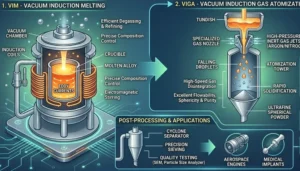
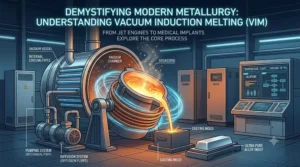
Jika aplikasi Anda memerlukan konduktivitas ekstrim (MISALNYA., >100% IACS), pertimbangkan untuk menggunakan Deoksidan Tanah Langka (seperti Lantanum atau Cerium) dalam hubungannya dengan fosfor-tembaga, atau pindah ke Melting induksi vakum (VIM) untuk menghilangkan masalah gas pada sumbernya.