Controlling zinc burn-off (vaporization loss) during the induction furnace melting of brass (15%–40% Zn) and zinc-bearing bronze centers on suppressing zinc vapor pressure volatilization and blocking molten pool surface oxidation. Because induction furnaces feature strong electromagnetic stirring, the molten metal surface refreshes rapidly, which accelerates zinc evaporation. Systematic control across four key operational areas is essential.
1. Strict Control of Temperature and Stirring Power
- Strict Temperature Ceiling: The boiling point of zinc is 907°C, whereas brass tapping temperatures typically range between 1020°C and 1100°C. For every 20°C rise, zinc vapor pressure surges, multiplying burn-off rates. Tapping temperature must be kept strictly at the lower process limit.
- Reduce Power for Holding: Rapidly lower induction power once the charge is fully molten to weaken electromagnetic stirring, reducing zinc vapor brought up by molten pool turbulence.
2. Establish a Dense Surface Cover Layer
- Apply Protective Cover: Immediately add a 20–30 mm layer of dry charcoal or graphite powder after charging to form a physical barrier against air contact.
- Combine with Refining Flux: When melting high-zinc alloys, pair charcoal with a chloride-based specialty flux to block air and absorb zinc oxide dross.
3. Optimize Charging Sequence and Zinc Addition Methods
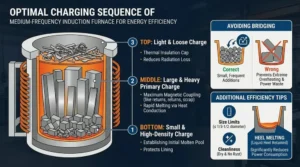
- Late Pure Zinc Addition & Submersion: If formulating with pure metals, melt the copper base first and add zinc 10–15 minutes before tapping. Use a graphite plunge bell to quickly submerge zinc ingots into the mid-to-lower section of the bath, leveraging ferrostatic pressure to inhibit volatilization.
- Bottom-Load Recycled Scrap: Place high-zinc scrap tightly in the lower-to-middle furnace region, using heavy copper scrap above to hold it down and prevent direct exposure to high surface temperatures.
4. Pre-Deoxidation and Refining
- Deoxidize Before Zinc Addition: Add 0.1%–0.2% phosphor-copper to thoroughly deoxidize the melt prior to adding zinc. Lowering dissolved oxygen in the copper bath sharply reduces dross burn-off caused by violent zinc-oxygen reactions forming ZnO.
Melting Operations & Burn-off Control Summary
| Process Step | Key Parameter Requirements | Burn-off Control Effect |
| Temperature Control | Tapping temp below alloy liquidus + 100°C | Reduces vapor volatilization loss by 30%–50% |
| Covering Protection | 20–30 mm dry charcoal/graphite layer | Blocks oxygen, reducing surface oxidation by 20% |
| Zinc Addition Method | Phosphor-copper deoxidation + submerged plunging | Boosts pure zinc recovery rate to over 95% |