In the melting of pure copper (often called “red copper”) within an induction furnace, managing gas absorption and oxidation is the ultimate challenge for ensuring high electrical conductivity and a dense, defect-free microstructure. Since liquid copper acts like a “magnet” for hydrogen (H₂) and oxygen (O₂), improper technique leads to porosity or the notorious “hydrogen sickness.”
Here is the technical breakdown of charcoal covering and phosphor-copper deoxidation techniques optimized for induction melting.
1. The Mechanism of Gas Absorption
In an induction furnace, the high temperatures and liquid state of copper create a “sponge effect”:
- Hydrogen (H): Primarily sourced from moisture on the charge, oil/grease, or water vapor in the air.
- Oxygen (O): Sourced from direct contact with the atmosphere.
- The Problem: As the copper solidifies, hydrogen and oxygen react to form steam:
- 2H + [O] ⇋ H₂O↑
- This trapped steam results in microscopic or macroscopic blowholes, which drastically reduce the material’s conductivity and mechanical integrity.
2. Charcoal Covering: The Physical & Chemical Shield
Induction furnaces generate strong electromagnetic stirring, which causes the liquid surface to become convex, increasing the surface area exposed to air. Charcoal serves as a vital barrier.
Key Techniques:
- Must be Pre-baked: Never add “cold” charcoal. It must be baked at over 200°C to remove moisture. Adding damp charcoal is essentially “injecting” hydrogen directly into your melt.
- Timing & Thickness: Apply the covering as soon as the charge begins to melt. Maintain a layer thickness of 30–50mm so that no liquid copper is visible.
- Reducing Atmosphere: At high temperatures, charcoal reacts with oxygen to form carbon monoxide (CO), creating a protective reducing “blanket”:
- 2C + O₂ → 2CO
3. Phosphor-Copper Deoxidation: Deep Purification
Even with charcoal, some Cu₂O will inevitably form. Phosphor-copper (typically containing ~14% Phosphorus) is the industry standard for deep deoxidation in pure copper.
Operational Essentials:
- The Reaction: Phosphorus has a much higher affinity for oxygen than copper does. It forms phosphorus pentoxide (P₂O₅), which either escapes as gas or rises into the slag.
- 5Cu₂O + 2P → P₂O₅↑ + 10Cu
- Dosage Control:
- The Rule: You want enough to remove oxygen, but a “residual phosphorus” level that is too high will sharply decrease electrical conductivity.
- Standard Amount: Usually 0.1% – 0.2% of the total melt weight.
- The “Plunging” Method:
- Fractional Addition: Add 1/3 during the melting process for pre-deoxidation and the remaining 2/3 just before pouring.
- Use a Bell Jar: Do not simply toss phosphor-copper onto the surface; it will vaporize and be wasted. Use a graphite bell jar (plunger) to push the phosphor-copper to the bottom of the crucible and stir it gently.
4. Advanced Tips for Induction Melting
Temperature Management
Induction furnaces heat up rapidly. Keep your melting temperature between 1150°C and 1200°C. For every 100°C increase beyond the melting point, the hydrogen absorption capacity of copper increases exponentially.
Charge Cleanliness
Induction furnaces aren’t designed for heavy refining. Ensure your materials are:
- Scrap/Returns: Completely free of oil, emulsions, or heavy oxide scales.
- Refractories: Ensure the graphite crucible or furnace lining is bone-dry before starting the heat.
Gemini Pro-Tip:
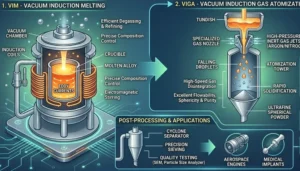
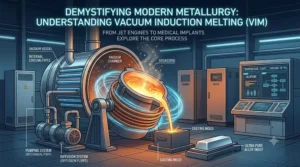
If your application requires extreme conductivity (e.g., >100% IACS), consider using Rare Earth deoxidants (like Lanthanum or Cerium) in conjunction with phosphor-copper, or move to Vacuum Induction Melting (VIM) to eliminate the gas problem at the source.